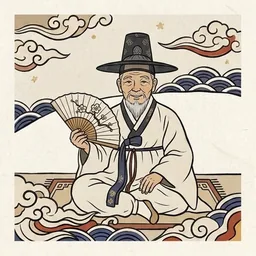
Dream of a Deceased Person
In Korean dream reading, a deceased loved one usually brings a good omen: their care reaching you, not a warning that anyone is about to die.
- Fortune
- Wealth
- Category
- People
Good or Bad Omen?
A good omen
Tradition treats the dead as people who still look out for their descendants, so a peaceful or cheerful visit reads as protection and a turn for the better. The tone softens into a gentle reminder when they look sad, stay silent or ask you to come along, and even then it points to something to tend, never to a threat.
Interpretation
A dream about a deceased person is, in most Korean readings, a good dream: the visit is understood as care from family who have passed on, not as a summons and not as news that someone else will die. If your late grandmother or father appeared, haemong (Korean dream interpretation) would first ask how they looked and what they did, because those details shape the reading far more than the fact that they came. Koreans call this kind of dream josang-kkum, an ancestor dream, and the traditional view is generous. A calm or smiling face, a meal eaten together or an object pressed into your hands is read as protection and blessing, often around a worry that is about to ease or a family matter that is about to settle. A troubled face, tears or silence does not mean punishment; it is taken as a nudge that something has been left unattended, in the household or in your own life. The modern reading runs alongside the old one rather than against it. The people we loved stay woven into memory, and they tend to return in sleep around anniversaries, holidays, big decisions or moments when grief has not finished moving. Read that way, the dream is mostly about you: what they taught you, what you miss, and what you would still like to ask them. Either way, it is a remembrance, not a prophecy.
In Korean Dream Lore
Behind the Korean reading sits a belief many families still hold: ancestors keep watching over their descendants. That bond is renewed through jesa (ancestral memorial rites) on the anniversary of a death, charye (holiday rites) at Seollal and Chuseok, and seongmyo, the visit to tend and bow at family graves. It is common to hear someone say a late parent appeared because the rites were near, or because the grave had not been visited in a while, and some families respond by going to tidy the grave or setting out a favourite dish. A smiling ancestor is welcomed as a good sign, and one who hands over food, a ring or a bundle is said to be passing down a blessing. Some families even tell a taemong (a conception dream) in which a late grandparent offers fruit, though such stories are kept as family lore, not as a forecast for anyone. There is also an old saying that you should not follow the dead when they beckon. Told gently, it simply means you may say no: in the dream you can let go of their hand, and waking up is the end of it.
In Japanese Dream Reading
Japan has its own long habit of welcoming the dead home. During Obon in summer, families light fires and lanterns to guide ancestors back for a few days and send them off again, so a dream of a late relative around that season feels natural to many people. The phrase yumemakura ni tatsu, literally to stand at someone's pillow in a dream, describes the dead appearing with something to say. Japanese yume-uranai treats the deceased as a messenger: a smiling face is read as a lucky dream, while a silent one is taken as a quiet prompt to look back on how you have been living.
Readings by Situation
A deceased person smiling at you
This is one of the brightest versions of the dream. Korean readers take a smiling face as reassurance that the person is at peace and approves of the path you are on, and many people wake from it with a lighter heart about a decision they had been circling.
Talking with a late father, mother or grandparent
A conversation, especially a warm one, is read as guidance arriving at the right moment. Notice the subject more than the exact words: if your late father talked to you about work or family, that is likely where your own mind is asking for his steady voice right now.
A deceased person giving you something
Receiving food, money, clothing or a keepsake is a classic good sign in haemong, read as a blessing being handed down. Think about what the object meant to them; a grandmother's cooking pot or a father's watch often stands for a habit or strength you already carry from them.
A deceased person who says nothing
Silence is not a bad omen. Tradition reads a quiet, watching figure as a reminder that something has been put off, perhaps a visit, a phone call to a relative or a promise you made. Japanese dream reading offers a similar idea: the silence invites you to look at your own days.
A deceased loved one coming back to life
Seeing someone alive again, sometimes as if they had never left, usually reflects how much they are still with you in memory. In Korean reading it can also point to something you thought was finished, an old plan or friendship, returning with fresh life.
A deceased person crying
Tears in the dream are read with care rather than alarm. They often mirror grief you have not yet let out, or a family matter that feels unsettled, such as relatives who have drifted apart. Tending to that, or simply allowing yourself to miss them, is the usual response.
What It Reflects in Waking Life
Dreams of the dead often arrive when longing is close to the surface: a birthday or anniversary, a holiday table with an empty chair, a song or smell that catches you off guard. They can also appear when something between you was left unfinished, a conversation that never happened or a goodbye that came too quickly. Another common trigger is a big decision, a move, a new job or a family change, when part of you wishes you could ask the person who always knew what to say. None of this is a diagnosis. It is the ordinary work of a heart that loved someone and is still carrying them.
Love and Relationships
In matters of the heart, this dream tends to turn your attention to the love you received: how a grandparent fussed over meals, how a parent showed up without being asked. Couples may find it a good moment to talk about which family ways they want to keep. If a late relative seemed to welcome your partner in the dream, read it as your own sense that the relationship feels right.
Money and Work
For work and money, the useful reading is about what you inherited in character rather than in cash. Many people dream of a late parent during a busy or uncertain stretch, and the dream brings back their way of working: showing up early, keeping their word, living within their means. Let it steady your attitude and the pace you keep. It is not a sign to make any financial move.
Advice
After the dream, do one small thing in their memory. Look through old photos, tell a friend or child a story about them, cook the dish they were known for, or visit their grave or a quiet place you shared. If they said something in the dream, write it down while it is fresh and see what it stirs in you over the next few days.
What to Watch
Try not to treat the dream's words as orders or as a forecast; they are better read as reflections of your own thoughts. If these dreams keep leaving you unsettled, or grief feels heavier than usual, it can help to talk it through with family or someone you trust instead of carrying it alone.
Frequently Asked Questions
Is it bad if a deceased person calls me or asks me to come with them?
No, it is not a sign that you will die. Korean tradition has an old saying not to follow the dead when they beckon, but it is meant as comfort: you are allowed to refuse. Many people read the dream as a reminder to slow down and look after themselves. It is not a prophecy.
Why do I keep dreaming about my deceased mother or grandmother?
Repeated dreams usually mean the person is still very present in your thoughts, often around anniversaries, holidays, stressful periods or decisions where you would have asked their opinion. In Korean homes people also link them to upcoming memorial rites or an unvisited grave. They do not predict anything; they show how much the bond still matters.
If a deceased person tells me something in a dream, should I believe it?
Treat it as something to reflect on, not an instruction to follow. Dream words are not a prophecy, and they often say what you already sense but have not admitted. If the message is kind, such as to rest or call your sister, it may be worth acting on because it makes sense on its own.
Is dreaming of the dead good or bad in Korean dream interpretation?
Mostly good. Haemong generally reads a visit from a late family member as protection and blessing, especially when they smile, talk warmly or hand you something. Sad or silent visits are read as gentle reminders rather than bad luck, and none of these dreams foretell anyone's death or illness.
Is a dream of a deceased loved one a real visit or a spiritual message?
Korean tradition speaks of such a dream as a visit, and many families take comfort in that, while modern readings see memory and love at work. Neither view treats the dream as a prophecy. Whatever you believe about its spiritual side, the most useful part of the message is what it stirs in you: comfort, a reminder, or something you still want to say.