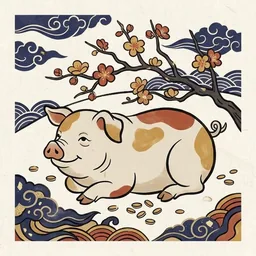
Dream of a Cow
Yes, a cow is a good omen in Korean dream reading: wealth that builds slowly and holds, plus capable people nearby. A thin or runaway cow only softens it.
- Fortune
- Wealth
- Category
- Animals
Good or Bad Omen?
A good omen
It leans good because the animal carries its old associations of wealth, steadiness and hard work into most scenes, so even an awkward version keeps a good core. The reading shifts when that strength is draining away: a thin, sick or runaway cow is read as slow-built fortune leaking out, a hint to look after what you have rather than a forecast of loss. A cow that chases you can go either way, and the scene below sets out both branches.
Interpretation
Yes, dreaming of a cow is a good sign. In haemong, the Korean tradition of dream reading, the cow is an animal of wealth and of the steady, dependable kind of luck that piles up season by season instead of arriving in a rush. Dream columns in Korean newspapers read it as property, profit and a useful person, someone capable who works for you or beside you. The reasoning is plain farm arithmetic. Before tractors an ox ploughed the fields and hauled the harvest, and for a farming household it was the largest single asset it owned, so a cow led into the house in a dream reads as a real addition to the household's fortunes. A modern, psychological reading keeps the same core but moves it inward: the cow is the part of you that is patient, strong and willing to carry a load, and the dream can surface when you have been working steadily at something and part of you wonders whether it counts. Seen that way, the dream is less a promise of a windfall than an acknowledgement of slow, solid effort. The details shift the reading one way or the other, so the scenes below take them one at a time.
In Korean Dream Lore
The cow was never just livestock in Korean farm life. It ploughed, hauled and bore the work of the year, and it was the household's biggest piece of property. A proverb still in use shows how much it mattered: so ilko oeyanggan gochinda, 'mending the cowshed after losing the cow', Korea's version of locking the stable door after the horse has gone. The same background lies behind ugoltap, 'ox-bone tower', a nickname for universities from the years when a farming family would sell an ox to pay a child's fees. In effect, the cow was the yardstick for a household's property. Dream columns draw on this. Bringing a cow into the house, or killing and butchering one, is read as a good dream of wealth, interest or a capable person arriving. The cow is also a recognised animal of taemong, a conception dream, the kind a family recalls around the news of a child. One dream-reading column pairs a bull with a son and a gentle cow with a daughter, then adds that none of this is absolute. Take it as lore, not as a forecast: a dream cannot tell anyone whether there is a pregnancy or what a baby's sex will be. The ox is also the second animal of the twelve-year zodiac, and the Ox sign has its own page.
In Japanese Dream Reading
In Japan the cow, ushi, is bound up with Tenjin, the deified scholar-statesman Sugawara no Michizane, and the ox is spoken of as his messenger. Tenmangū shrines, Kitano Tenmangū in Kyoto among them, keep a statue of a reclining ox that visitors stroke, a nade-ushi, on the part that matches whatever they are wishing for. Why the ox belongs to Tenjin is told differently from shrine to shrine, so it is best called each shrine's own legend. Japanese yume-uranai, dream reading, takes the cow as abundance, sincerity and patience. Riding an ox is read as success in society, a kichimu, a lucky dream. Being chased by one is read as a keikokumu, a warning dream, cautioning against extravagance and against living beyond your means.
Readings by Situation
A fat cow coming into the house
Dream columns read this scene as a good dream of wealth and profit arriving. A well-fed cow walking through the gate, settling in the yard or being led indoors is read as property, income or a dependable helper arriving, something with weight that stays. The house is only the setting: it is where a household keeps its fortunes. The plumper and calmer the cow, the more the dream reads as gain that lasts.
Leading or riding a cow
Leading a cow by its rope is read as taking charge of something substantial, such as a business, a piece of property or a team. Riding one is the more confident version: a steady rise in standing rather than a sudden leap. If the cow dug in its heels or the ride was bumpy, the dream points to an undertaking that needs patience more than speed, and it still counts as a good dream.
A thin or sick cow
This is the version that softens the usual good reading. A cow that is thin, lame or ill, or one that slips its rope and wanders off, is read as the slow strength of a household or a project leaking away. The dream suggests checking what you depend on: a worn-out tool, a neglected relationship, a job that has been quietly draining you. It says nothing about anyone's health. It speaks of what you have built and asks you to look after it.
A cow giving birth to a calf
A calf is increase: the herd grows and one gain brings another. A cow calving is read as wealth or capacity multiplying, perhaps a project that starts producing something of its own. A calf nuzzling its mother is gentler and speaks of care and growth within a family. The scene also sits close to taemong imagery, but a calf in a dream no more announces a pregnancy than any other animal does.
A bull or cow chasing or goring you
Popular readings split here, and neither is the single correct one. One takes a powerful animal at your heels as opportunity or money that keeps following you, luck that will not leave you alone. The other hears a warning: a load heavier than you can carry, or a pace and a spending of strength beyond what you can keep up. If you ran in terror, the second is worth a look; if you turned and faced the bull, the first fits better. Being gored is the sharper version and is best read as a collision with a heavy demand, not as an injury.
Butchering a cow or preparing beef
Dream columns read this plainly as a good dream, the animal turned into something of value: wealth gained, a long effort paying out, a large task finally broken into usable pieces. It can be unsettling to watch, and you do not have to like the image for the reading to hold. A modern view sees the same scene as finishing something big and taking the benefit from it. Cutting up meat in a kitchen reads in the same direction.
What It Reflects in Waking Life
A cow dream can arrive at a stage when you want things to be solid and want a fair return for effort that has gone on for a while: a long project nearing its end, a probation period, years of looking after a family, a venture that has not yet shown a profit. It can also come to the person who quietly carries things for everyone else, the reliable one in a team or household whose tiredness goes unnoticed. The dream then works as recognition from yourself that you have been bearing weight. It does not diagnose anything, and tiredness here is a feeling worth taking at its word. Sometimes it simply follows a day among farm animals or a beef dinner and means no more than that.
Love and Relationships
In love the cow speaks of slow, dependable bonds rather than sparks: trust that deepens over seasons, and a partner who shows care by turning up and carrying things rather than with grand words. Couples may feel a calm, domestic phase. Singles may notice that the person worth knowing is the steady one nearby, not the dazzling one. If the cow was thin or wandering off, ask whether one of you has been giving more than the other without saying so.
Money and Work
For money and work the cow teaches an attitude: patience, diligence and the faith that ordinary effort piles up. It favours the colleague who keeps showing up and finishing things over the one chasing a quick win, and it suggests that being the reliable, unglamorous one is itself a kind of capital. It also asks you to notice who is pulling the load with you and to give them credit out loud.
Advice
Write down what the cow looked like and what it did, whether it was fat or thin, came towards you, was led or ran, before the details fade, since these decide the reading. Then borrow the cow's pace. Pick one slow, worthwhile task you have been rushing or neglecting and give it a plain, regular amount of time this week. Thank one person who has been quietly carrying part of the load with you.
What to Watch
The thing to watch is mistaking steadiness for a duty to carry everything. A cow dream flatters patience, but patience is not the same as silent overload. If you are the one hauling more than your share, the dream is a reason to say so, not to endure more. A thin or runaway cow is a reminder to tend what you have, and nothing in it predicts a loss.
Frequently Asked Questions
Is dreaming of a cow good or bad?
Good, in Korean dream reading. A cow stands for wealth that builds steadily, for capable people around you and for the reward of patient work. A thin, sick or runaway cow softens the reading into a reminder to look after what you have, and being chased by one splits into two readings, but none of these versions is a forecast of harm.
What does it mean to be chased by a bull or a cow in a dream?
Two readings are in circulation. One treats the chase as opportunity or money following you, luck that is hard to shake off. The other treats it as a warning about a load or a pace you cannot sustain, the keikokumu of Japanese dream reading. Your feeling during the dream is the best guide: excitement leans to the first, dread to the second.
Is a cow dream a taemong?
Not necessarily. The cow is a recognised taemong animal in Korea, so a family may recall one after the news of a child, but a cow dream can just as easily be about wealth or work with no baby involved. Whether a dream counts as a taemong is something a family decides afterwards. The dream itself cannot show that anyone is or will be pregnant.
What is the spiritual meaning of a cow dream?
Spiritually, readers take the cow as a symbol of patience, steady provision and quiet strength, which fits both the Korean and the Japanese picture of the animal. That is a tradition of reading symbols, not something that has been proven, so treat it as a prompt for reflection: where in your life is slow, faithful effort being asked of you, and where is it already paying back?
Is a bull dream different from a cow dream?
The underlying reading is the same. One Korean word, romanised as "so" and pronounced "soh", covers cow, ox and bull alike, so a Korean dream column simply speaks of a "so" dream where English has to choose. This page uses cow as the general word and names the bull where the scene calls for it. A bull tends to colour the dream with force and a gentle cow with care, but the reading underneath, wealth that builds slowly, does not change.