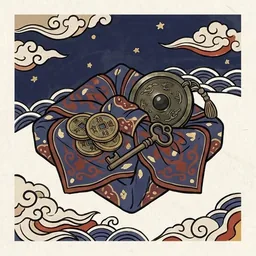
Dream of Money
A money dream is no promise of cash. Finding or receiving it usually means wishes moving forward; losing it is read case by case, so the omen is mixed.
- Fortune
- Wealth
- Category
- Objects
Good or Bad Omen?
Mixed: it depends on the details
Mixed, because the same symbol points two ways. Money arriving, whether found, earned or handed over kindly, reads as effort and hopes gaining ground. Money slipping away, being snatched or chased after mostly mirrors worry about having enough. What tips it is how the money came and how you felt: calm pleasure leans lucky, while panic over a lost wallet or anxious grabbing leans towards a dream about strain rather than a forecast of loss.
Interpretation
Dreaming of money does not mean cash is about to land in your account, and it does not automatically mean the opposite either. In haemong, the Korean art of reading dreams, as it is practised today, picking up money or being handed it is usually read as wishes moving forward, while losing it, having it taken or giving it away is weighed case by case. Some haemong writers also read cash in reverse, and that split is why this page calls the omen mixed rather than simply lucky. What decides your own reading is less the amount than the story around it: who gave you the money, whether you earned it, found it or grabbed it, and how you felt when you woke. A modern, psychological reading adds another layer. Money is the most convenient image the mind has for value, so a dream about it is often about worth, security and being appreciated, or about the quiet worry of not having enough. In that sense it sits close to a dream of a house, which also speaks of security. Seen that way, the dream is a mirror of where your sense of value sits right now, not a statement from your bank.
In Korean Dream Lore
Ask Koreans to name a wealth dream and cash is seldom the first answer. The dreams people actually tell each other about with a hopeful grin are symbolic: a pig, feces, blood, a house on fire. Fire is itself split, widely read as prosperity though some readers see loss in it. Banknotes and coins sit in a looser place. Haemong writers and dream dictionaries today do not agree on them. Many count finding or receiving money as a gilmong, a lucky dream, a sign that what you are working towards is moving; others apply a reverse logic and say money put into your hand means money going out, or worry following behind. One reading you will often come across splits by form: coins picked up from the ground are taken as small worries or minor expenses, while crisp notes or a thick bundle lean towards real gain. None of these is a single rule handed down through generations. It is how the craft is practised now, and it is fair to weigh them against the feeling of your own dream.
In Japanese Dream Reading
Japanese yume-uranai, the dream reading found in magazines, books and fortune sites, often treats money as a symbol of affection or vital energy rather than literal kin'un, money luck. Having money stolen is commonly described as a sakayume, a reverse dream, with a good meaning: what is taken in the dream is read as fortune turning your way. Picking money up, by contrast, is sometimes read as a hint to watch your spending or your energy. These are what yume-uranai writers commonly say, and the details shift from one book to the next.
Readings by Situation
Picking up money on the street
Finding money underfoot is the version people ask about most. Popular Korean haemong mostly reads it as an unexpected chance or a bit of help, a sign that something you have wished for is within reach. One common split looks at what you found: a few coins are read as small worries or petty expenses, while folded notes or a whole bundle lean towards real gain. If you pocketed it with a guilty glance around, the dream may be asking whether you feel you deserve good things.
Receiving money from a parent or a stranger
Being handed money reads well in most haemong today, especially when it is given warmly: support, recognition or an opening arriving through another person. From a parent it often mirrors feeling looked after, or wishing to be. From a stranger it points to help from a direction you had not considered. If the exchange felt uneasy, lean towards the reverse reading and treat it as a mild prompt to keep an eye on outgoings.
Losing your wallet
This one feels awful in the moment, yet it is read case by case rather than as a loss foretold. A wallet holds your cards, your name and your everyday means, so losing it often mirrors feeling scattered, overstretched or unsure of your footing. A wallet that turns up again before you wake is read as a worry resolving. Take the dream as a nudge to gather loose ends in waking life.
Having money stolen
A theft dream mostly reflects a sense that something you value, such as your time, your effort or the credit for your work, is being taken without your say. Some readers in Japan and Korea even give it a good, reverse meaning. Whichever reading you prefer, the useful question is where you feel short-changed at the moment, and whether you can say so calmly.
Giving or lending money
Handing money over is split. Giving it away freely can read as kindness that comes back to you, or as setting down a burden you no longer need to carry. Lending money you then fret about, or being pressed to give more than you have, usually mirrors a relationship where the give-and-take feels lopsided. The dream does not tell you to refuse anyone; it asks whether your own limits are clear to you.
Counting a pile of notes
Sitting with a stack of notes and counting them tends to reflect a stocktaking mood: you are weighing what you have earned or built and checking whether it adds up. Calm, satisfying counting reads as effort being recognised. Counting again and again because the total keeps changing points more to anxiety about resources than to any shortfall ahead, and suggests your mind wants a clearer picture.
What It Reflects in Waking Life
Money dreams often turn up when worth is on your mind: before a pay review, after a purchase you are unsure about, while waiting to hear whether your work was accepted, or simply in a month when bills feel heavier than usual. Because money is the easiest picture the mind has for value, the dream can be about being valued as much as about funds. Finding money may mirror a hope that your effort will be noticed; losing it may mirror a fear of falling behind or of letting someone down. The feeling in the dream tells you more than the figure.
Love and Relationships
Money in a dream can stand in for care: who gives, who receives and whether the exchange feels fair. Receiving money warmly may reflect feeling valued by a partner or family; giving it freely suggests a wish to show affection in practical ways. A dream full of debts or missing money may point to a bond where one person feels they keep paying in attention and getting little back, something worth raising gently.
Money and Work
Read for work and finances, the dream is a prompt to notice what you value rather than a tip about funds. A calm dream of gain suits steady habits: keeping track of everyday spending, finishing tasks properly and letting recognition grow from consistency. An anxious dream of losing money suits a quieter look at where your time and energy are going. Neither version is a reason to chase a quick win or to make a large change on the strength of one night's sleep.
Advice
Ask yourself two things: how did the money come to you, and how did it feel? Those answers carry more meaning than the amount. If the dream left you hopeful, let the mood carry you into something you have been putting off, such as following up on work you are waiting to hear about. If it left you uneasy, spend ten minutes looking at one commitment that worries you, then set it aside for the day. A small, concrete step settles money worry better than turning it over at night.
What to Watch
Please do not make financial decisions because of a dream, whether it seemed to promise a windfall or warn of a loss. A money dream reflects mood and values, not what your accounts will do. If money worries keep you awake night after night, talking them through with someone you trust, or with a qualified adviser for practical matters, will help far more than decoding the dream.
Frequently Asked Questions
Does dreaming of money mean money is coming?
Not literally. Many Korean readings of finding or receiving money are hopeful, treating it as a sign that plans and efforts are moving forward, but the dream makes no promise about income. It is better read as a picture of what you hope for and how valued you feel at the moment.
What does it mean to lose money in a dream?
Usually not a real loss. Losing money or a wallet in a dream most often mirrors feeling stretched, distracted or anxious about keeping up. Some readers, especially in Japanese dream reading, even treat stolen money as a reverse dream with a good meaning. Either way, it is a cue to tidy loose ends, not a warning of hardship.
Do money dreams come true in reverse?
Some readers say so and others do not. In Korean haemong, one camp says money received in a dream means money going out, while another reads it as straightforward good luck. Because both views are in circulation, the most reliable guide is your own feeling in the dream: calm and pleased leans lucky, anxious leans towards worry.
What is the spiritual meaning of a money dream?
On this site we read it as a dream about self-worth and the exchange of energy between you and others: what you give, what you receive and whether that flow feels balanced. Gaining money suggests feeling replenished or recognised; losing it suggests feeling drained. It is an invitation to look at what you value, not a message from outside.
Is a money dream a taemong?
Not typically. A taemong, a conception dream that Korean families often recall around a pregnancy, tends to feature animals, fruit, flowers or jewellery rather than banknotes or coins. A dream about money says nothing about whether anyone is or will be pregnant, and it is best read for what it shows about worth and security.