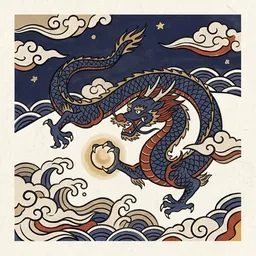
Gap-jin (甲辰) Day Pillar: Personality, Love and Career
Gap-jin (甲辰) is a tall tree on rich, damp soil: a capable builder who takes charge of a big mess, works hard, and gets calmer and wiser as the years go by.
- Builder
- Takes charge
- Resourceful
- Steady drive
- Quietly proud
- Mellows with time
At a glance
- Day stem (the "self")
- Gap (甲) · yang Wood
- Day branch
- Jin (辰) · Dragon · yang Earth
- Growth stage of the day stem
- Decline (衰)
- Nayin ("sound") element
- Lamp Fire (覆燈火) · Fire
- Void branches (kongwang)
- In (寅) · Myo (卯)
- Stem that combines with yours
- Gi (己) → Earth
- Six-harmony partner
- Yu (酉)
- Clashing branch
- Sul (戌)
- Triad branches
- Sin (申) · Ja (子)
- Traditional label
- Baekho (白虎)
Hidden stems
- Eul (乙)Rob Wealth (劫財)
- Gye (癸)Direct Resource (正印)
- Mu (戊)Indirect Wealth (偏財) · main qi
Stems stored inside the branch, each shown with its ten god relative to your day stem. The last one is the main qi.
Stem and branch. The stem controls the branch. You press on your surroundings and act on them; practical drive is high and so is the effort.
Growth stage of the day stem. Just past the peak: calm, experienced and careful with energy. Wisdom counts for more than force.
Traditional label. One of seven pillars the Korean tradition marks as Baekho, "white tiger": intense, sudden and dramatic in how events arrive, said to ask for care with health and haste.
Nature and personality
The Gap-jin (甲辰) day pillar is the Wood Dragon: a tall, straight tree rooted in damp, fertile ground. In a person that reads as capable, ambitious and practical, someone who takes charge of whatever is in front of them and quietly turns it into something that works. The push is steady rather than showy, and it tends to mellow as the years pass. In saju, Korea's four pillars system, a birth moment is written as four pairs of characters, and the day pillar is the pair for your birth date. Its upper character, the day master, stands for you; its lower character, the day branch, stands for your private temperament and nearest circle. Here the day master is 甲, yang wood: the great tree with a single trunk. The branch is 辰, the dragon, which belongs to earth, specifically the soft, wet soil of late spring when fields are being ploughed and planted. Wood presses on earth, so the stem controls the branch, and this pillar acts on its surroundings instead of waiting for them. It is the person who inherits a half-finished project and has a plan on the whiteboard by the end of the month, or who ends up running the renovation, the club accounts or the family paperwork because they can see what needs doing and cannot unsee it. Practical drive is high, and so is the effort: Gap-jin rarely feels at ease while something nearby is unfinished. Inside every branch sit hidden stems, smaller energies tucked within, and each carries a ten gods label, saju's way of naming how that energy relates to the day master. The dragon holds three. The main one is 戊, Indirect Wealth (偏財): broad earth, a feel for scale, for resources and for openings others have not noticed yet. Beneath it is 癸, Direct Resource (正印), gentle rain: learning, protection, a mind that likes to understand before it commits. The faintest is 乙, Rob Wealth (劫財), a small vine-like wood that shares with peers and also quietly compares itself with them. The day master sits at the growth stage called Decline (衰), one of twelve stages that follow a life from birth to rest. The name sounds gloomy but it simply comes after the peak: the tree has stopped racing upward and begins to thicken, with less hurry and more judgement. The nayin, the poetic nickname of the pillar, is Lamp Fire (覆燈火), the flame of a lamp, not a bonfire: a steady, sheltered light people use to find their way at night, a good picture of someone who is more often leaned on than loud. Gap-jin is also one of the pillars that carry the traditional Baekho (白虎, white tiger) label. Old texts tied it to intense will and a strong character; modern readers more often take it as a forceful presence and a willingness to act when others hesitate. It is one label among many and decides nothing on its own.
Strengths
- Turns a vague plan into a working system
- Hard-working drive that lasts past the first burst
- Sees the scale of a job and what it really needs
- Calm, seasoned judgement that deepens with age
- Dependable once they have given their word
Challenges
- Takes charge so fast that others stop offering help
- A heavy sense of duty makes rest feel like falling behind
- Quiet comparing with peers, even while being generous
- Hears advice as pressure when the mind is made up
Love and relationships
Sit across from a Gap-jin person during a bad week and you will probably find them already doing something about it: finding the plumber's number, drafting the awkward email, rearranging their own weekend so yours is lighter. Affection is practical and a little managerial, and it is meant sincerely. The day branch is traditionally called the spouse palace, the seat of the closest partner, and here it holds big earth and gentle rain, which tradition reads as a wish for someone with substance, calm and a real home life. The weak spot follows from the stem controlling the branch. Gap-jin can run a relationship the way it runs a project, solving instead of simply sitting beside you, and may not say aloud that it is tired or hurt. The Rob Wealth hidden in the dragon adds a thread of comparing: with friends' couples, or with a partner's old circle. What helps is a partner who is steady enough to take charge back now and then, asks what is needed before offering a plan, and lets the builder rest without feeling that something is slipping. Tradition pairs 甲 with 己, soft farmland, as a natural attraction; treat it as a lean, not a promise.
Work and career
Gap-jin does best with a scope it can own: a department, a build, a programme, a shop, a season of the school year. The main hidden stem, Indirect Wealth, points toward work with real resources and moving parts, such as operations and project management, construction and architecture, property and land, logistics, farming and forestry, running or founding a small business. The Direct Resource beneath it adds a taste for qualifications and teaching, so training, school administration and professional services also fit. The lamp-fire image says something useful: this pillar does not need the spotlight, only a say in how the work is done. Rigid roles with no authority wear it down. The risk is becoming the bottleneck, the one person who knows where everything is. Writing processes down and handing over whole tasks, not fragments, is the habit that lets a Gap-jin grow the work beyond what they can personally hold.
Money
Money here is a tool for building something: a workshop, a home, a family fund, an expanding venture. With Indirect Wealth as the main hidden star, Gap-jin usually has a good eye for where value lies and a taste for earning through several channels, though the pillar says nothing about what any investment will return. The leak tends to be the Rob Wealth side: covering a friend's share, lending without a date for repayment, upgrading things for the household before one's own needs. A fixed transfer into savings on payday, and a habit of writing down the amount and date when you lend, keep the generosity from turning into resentment later.
Energy and wellbeing
A strong, straight tree on wet clay carries a lot, and in this pillar the load tends to settle in the shoulders, jaw and the habit of not stopping. Earth is linked in tradition with routine and digestion, so regular meals and a proper lunch away from the desk matter more than they look. Wood wants to stretch and be outdoors, so walking, stretching or time among plants helps the trunk stay supple. Because the pillar can feel it must finish everything before resting, a fixed evening cut-off is worth more than a good intention. Take this as everyday lifestyle advice for a tall tree, not as medical advice.
Who you get on with
Traditionally the dragon's six harmony partner is the rooster (酉), so a rooster day such as Eul-yu (乙酉) tends to feel easy and complementary, with the dragon's ambition meeting the rooster's polish. The dragon also sits in a water triad with the monkey (申) and the rat (子): three branches flowing the same way. The same-stem pillars Gap-sin (甲申) and Gap-ja (甲子) are the closest examples, and the rat's water feeds the tree directly. The dog (戌) is the dragon's traditional clash, as in Gap-sul (甲戌): two strong earths with firm views on how the land should be used, so friction comes from competing plans, not from dislike. Elements help too: water nourishes this tree, fire gives its effort a visible outcome, and metal pruning, in the form of a frank mentor, shapes it. The void branches (空亡) for this pillar are the tiger (寅) and the rabbit (卯), both wood, which tradition reads as peers and siblings being a little less reliable or arriving later. Take that as nuance that depends on the rest of the chart.
How life tends to unfold
Daewoon are the ten-year luck cycles of saju, each one a stem-and-branch pair that colours a decade the way a season colours a year. With the Decline stage in the day pillar, many Gap-jin people are handed responsibility early, and the arc is less about a late flowering than about a steadily deepening hand: skill and judgement that grow richer with the decades. Water cycles tend to feel nourishing and good for study; fire cycles give the effort a visible outcome and some recognition; earth cycles bring more resources and more to carry; metal cycles bring structure, standards and sharp critics; wood cycles bring more peers, partners and competitors at once. When the tiger or rabbit appears in a cycle or a year, tradition says matters tied to peers or shared ventures feel less anchored, a cue for clearer agreements, not for worry. Which decade feels like which depends on the whole chart and on the exact birth time.
Advice
Once a week hand over a task that you could do faster yourself, and do not check it afterwards. Put rest in the calendar with the same seriousness as a deadline. Before you present a plan, ask one person what they would change, so that it becomes theirs as well. Write down what you lend, and say plainly when you are tired: people cannot help a builder who always looks fine.
Frequently asked questions
Is Gap-jin a strong or a weak day master?
Strength cannot be judged from the day pillar alone, because saju mainly weighs the birth month and the whole chart. Within the pillar, the wood stem has only a trace of wood in the dragon and a little water to feed it, so it leans on the rest of the chart for support. The Decline stage is more about maturity than frailty.
Does the Decline stage mean Gap-jin people are worn out or unlucky?
No. Decline is the stage that comes just after the peak in the twelve-stage cycle, and its image is ripeness: less showing off, more judgement, a calmer pace. In daily life it often looks like a person who seems older and steadier than their age and who prefers solid results to noise. It describes temperament, not fortune.
Is the Baekho (white tiger) label on Gap-jin something to worry about?
Not really. Baekho is a traditional label attached to a handful of day pillars, said to point to a forceful will and intensity. Today it is mostly read as courage and presence under pressure. It is one marker among many, and it does not decide your relationships, work or money; the rest of the chart matters more.
Learn the terms on this page
Is this your day pillar?
Your day pillar comes from your exact birth date, not your birth year. Enter it in our Four Pillars calculator and it shows all four of your pillars.
New to saju? Saju (四柱, "four pillars") describes a person by the year, month, day and hour of birth. The day pillar is the centre of it: its stem is you, and its branch is your closest circle and your home life.