Gap-sul (甲戌) Day Pillar: Personality, Love and Career
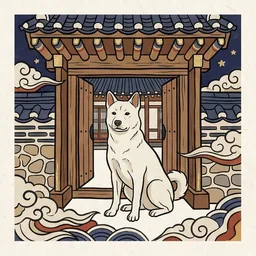
Gap-sul (甲戌) is a tall tree on a dry hill with a beacon on the ridge: loyal, dutiful and practical, it is quick to see what is not fair or right.
- Loyal
- Principled
- Watchful
- Dutiful
- Dryly witty
- Slow to trust
At a glance
- Day stem (the "self")
- Gap (甲) · yang Wood
- Day branch
- Sul (戌) · Dog · yang Earth
- Growth stage of the day stem
- Nurture (養)
- Nayin ("sound") element
- Fire on the Mountaintop (山頭火) · Fire
- Void branches (kongwang)
- Sin (申) · Yu (酉)
- Stem that combines with yours
- Gi (己) → Earth
- Six-harmony partner
- Myo (卯)
- Clashing branch
- Jin (辰)
- Triad branches
- In (寅) · O (午)
Hidden stems
- Sin (辛)Direct Officer (正官)
- Jeong (丁)Hurting Officer (傷官)
- Mu (戊)Indirect Wealth (偏財) · main qi
Stems stored inside the branch, each shown with its ten god relative to your day stem. The last one is the main qi.
Stem and branch. The stem controls the branch. You press on your surroundings and act on them; practical drive is high and so is the effort.
Growth stage of the day stem. Being raised: gentle and receptive, supported by family and mentors, growing slowly but surely.
Nature and personality
People with a Gap-sul (甲戌) day pillar tend to be loyal, dutiful and watchful: the one still checking that the doors are locked and everyone got home, who also has a dry, exact opinion about whether the plan makes sense. The image is a big tree rooted on a late-autumn hillside, with a signal fire burning on the ridge above it. Your day pillar is the stem-and-branch pair that names the day you were born in Korean saju, the Four Pillars system. The upper character is the day master, which stands for you; the lower is the day branch, your home ground and inner circle. Here the day master is 甲, yang wood, a tall single-trunk tree with its own idea of straight. The branch is 戌, the dog, which is dry earth at the very end of autumn: hard, stony ground that stores heat and keeps watch. Wood presses on earth, so the stem controls the branch. This tree does not wait for its surroundings to arrange themselves. It digs in, acts on the place where it stands and keeps at it, which looks like the person who stays to the end of the volunteer day, or who rewrites the shared rota because the old one kept failing. Three hidden stems sit inside the dog, each carrying a ten gods label, one of ten names for how another stem relates to the day master. The main energy is 戊, mountain earth, Indirect Wealth: a practical hold on resources, property and things that can be built. Under it lies 丁, a candle flame, Hurting Officer: a talent for putting things into words and a reflex to question rules that make no sense. The faintest is 辛, polished metal, Direct Officer: a conscience about standards and doing things in the right order. So the pillar carries both respect for order and the itch to challenge it, and that tension is its signature. The growth stage is Nurture (養), the picture of a seed fed in the dark before it enters the world, so Gap-sul often takes in a great deal quietly before it shows. The nayin, the poetic nickname of the pillar, is Fire on the Mountaintop (山頭火): a beacon, visible from far away, lit to warn and guide other people rather than to warm itself.
Strengths
- Loyalty that holds in bad weather
- A firm sense of fair play and duty
- Practical, hands-on follow-through
- Exact, plain speech when something is off
- Quiet watchfulness that notices what others miss
Challenges
- Slow to trust, and slow to forgive once trust is broken
- Criticism that comes out as dry sarcasm
- Carrying other people's duties without asking for help
- Strict about rules for others, bristling at rules set for oneself
Love and relationships
Gap-sul rarely opens with big declarations. Affection arrives as showing up: the lift to the airport at an unsocial hour, the leaking tap fixed without being asked, a remembered question about which relative is unwell. The dog branch has a reputation for loyalty, and the Direct Officer (辛) inside makes commitment feel like a matter of honour, so once this person says yes they mean it for the long term. Getting there takes time. Trust is tested before it is given, and early dating can look reserved or even sceptical. The hidden Hurting Officer (丁) supplies the other side: a dry, accurate tongue that points out the flaw in the plan at exactly the wrong moment, meant as help. Traditionally the day branch is called the spouse palace, the seat of the partner in a chart, and here it holds both a Wealth and an Officer star, the two classical partner stars, which is why Gap-sul tends to treat a partner's welfare as a personal responsibility. What it needs back is a partner who says thank you for what is carried, states their own needs plainly, and can hear a blunt observation without hearing a verdict. A cold silence from the Gap-sul side often means 'I am hurt, ask me', not 'I am done'.
Work and career
Gap-sul works best where there are standards worth keeping and something solid to build. A typical picture is the colleague who is trusted with the keys, the budget or the safety checklist, and who is first to say that the new process has a hole in it. The Direct Officer points to structured settings: public service, education, construction and engineering, quality control, safety, operations, property and facility management, archives and administration. The Hurting Officer adds a critic's and craftsperson's edge, so editing, inspection, design review and skilled trades also suit, as does any job where you are paid for noticing what is wrong. Indirect Wealth in the main seat likes work that ends in something tangible: a built thing, a managed property, a running system. The pillar does less well under arbitrary bosses and rules that exist for show; there it either grinds quietly or speaks bluntly, and neither feels good. Stating the objection with a proposed fix attached makes the sharp tongue useful instead of costly.
Money
Indirect Wealth is the main hidden star in the dog, a traditional sign of a pragmatic approach to money: earning through concrete work, valuing property and things that last, and being comfortable with a long grind. Earth also stores, so Gap-sul tends to keep a reserve and dislikes owing anyone. The leak is duty. The Direct Officer's sense of responsibility makes it easy to cover a relative's bill or lend to a friend and never mention it, and the Hurting Officer likes to buy the better tool or the course that proves it can do the job. A workable habit is a named obligations budget, a yearly amount for family help and loans you will not chase, set at the start of the year so that generosity is a decision, not a drip. A plain savings account with a fixed monthly transfer suits the pillar's temperament.
Energy and wellbeing
In the five-element picture this pillar is wood standing on very dry ground with a small flame inside, a type that tradition reads as running dry and tense under pressure rather than running hot. The usual sign is the jaw and shoulders carrying the day's responsibilities, and a mind that keeps patrolling at night. Moisture helps in everyday terms: enough water, a warm bath, walks near a river or lake. Wood wants movement, so hill walking or regular stretching suits better than sitting still; a hillside is, after all, its natural habitat. Because the dog is never fully off duty, one evening a week with no tasks at all is worth protecting. This is lifestyle symbolism, not medical advice.
Who you get on with
Traditionally the dog's six-harmony partner is 卯, the rabbit: a gentle wood sign that settles the guard dog and puts some green on the dry ground. Days with a rabbit branch, such as Eul-myo (乙卯), tend to feel like easy company. The dog's triad, three branches that run in one direction, is with the tiger (寅) and the horse (午); the same-stem pillars Gap-in (甲寅) and Gap-o (甲午) are trees growing the same way, the horse quick and expressive, the tiger another independent trunk. The dog's clash is the dragon (辰), wet earth against dry, two kinds of ground that each think they are the practical one. Gap-jin (甲辰) is the same-stem version. It is friction between loyal, opinionated characters, not a curse, and it settles when each says what they actually want. By element, water people soften the dry ground, other wood gives company and shared direction, and fire people bring some cheer to the watchful dog. The traditional combination partner of 甲 is 己, soft farmland earth, said to feel like a natural pull. The void branches (空亡) are the monkey and the rooster; in tradition, places in a chart where those branches fall feel less anchored, a nuance that depends on the rest of the chart.
How life tends to unfold
Daewoon are the ten-year luck cycles of saju, each coloured by a stem and a branch and each reading like a season that lasts a decade. Nurture is a stage of taking in, so the early decades often look like absorbing: learning from family, school or a first workplace, and carrying duties earlier than peers, with visible results arriving afterwards. Water and wood cycles tend to feel like rain and company for the dry hillside, with more ease, allies and room to grow. Fire cycles make the candle flame louder: more voice, more visibility and more friction with authority. Earth cycles weigh in with property, responsibility and hard practical choices; metal cycles bring formal roles, standards and evaluation, which suit the Direct Officer and can also feel like being marked. A dragon cycle or year touches the clash, which often shows up as a move, a change of post or a rearranged household. Fire on the Mountaintop fits the later arc: a person others look to, steady and visible from far off. When each of these arrives depends on the rest of the chart.
Advice
Write down the rule you are angry about together with the change you would make, and send the second part. Pick one duty a month to hand back or share, so that loyalty does not become your only job. Give new people three meetings before deciding what they are. And let a warm sentence travel as far as the practical help does: 'I am glad you called' costs nothing and tells the other person what the toolbox cannot.
Frequently asked questions
Is the Gap-sul day pillar stubborn?
In a particular way, yes. Yang wood on dry earth is firm on principle and slow to change a view it has thought through, but it is usually flexible about method. Gap-sul people tend to hold the line on what is fair and then argue about how. It is better described as dependable than as rigid, and a clear reason moves them faster than pressure does.
What does Fire on the Mountaintop mean for Gap-sul?
Fire on the Mountaintop (山頭火) is the nayin, a classical nickname attached to each pair of characters. It pictures a beacon on a ridge, seen from far away and lit for the benefit of others, not for its own warmth. For Gap-sul it suggests a person who becomes a reference point, someone people look to for direction, which is often read as arriving later.
What are the void branches for the Gap-sul day pillar?
In the sixty-day cycle, every group of ten days leaves out two branches, called void (gongmang in Korean). For Gap-sul they are the monkey (申) and the rooster (酉). Tradition says matters tied to those branches feel lighter or less firmly anchored when they appear in a chart. It is a shading, not a flaw, and it depends on the other pillars.
Learn the terms on this page
Is this your day pillar?
Your day pillar comes from your exact birth date, not your birth year. Enter it in our Four Pillars calculator and it shows all four of your pillars.
New to saju? Saju (四柱, "four pillars") describes a person by the year, month, day and hour of birth. The day pillar is the centre of it: its stem is you, and its branch is your closest circle and your home life.