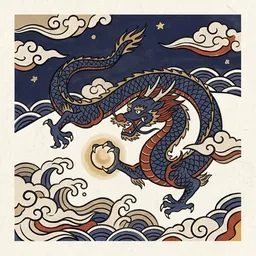
Gyeong-jin (庚辰) Day Pillar: Personality, Love and Career
Gyeong-jin (庚辰) is a vein of ore in damp spring soil: firm, fair and sharp, held up from below, and it has the old Goegang label for a will of its own.
- Fair-minded
- Quietly supported
- Firm
- Sharp-tongued
- Self-taught
- Late-ripening
At a glance
- Day stem (the "self")
- Gyeong (庚) · yang Metal
- Day branch
- Jin (辰) · Dragon · yang Earth
- Growth stage of the day stem
- Nurture (養)
- Nayin ("sound") element
- White Wax Metal (白蠟金) · Metal
- Void branches (kongwang)
- Sin (申) · Yu (酉)
- Stem that combines with yours
- Eul (乙) → Metal
- Six-harmony partner
- Yu (酉)
- Clashing branch
- Sul (戌)
- Triad branches
- Sin (申) · Ja (子)
- Traditional label
- Goegang (魁罡)
Hidden stems
- Eul (乙)Direct Wealth (正財)
- Gye (癸)Hurting Officer (傷官)
- Mu (戊)Indirect Resource (偏印) · main qi
Stems stored inside the branch, each shown with its ten god relative to your day stem. The last one is the main qi.
Stem and branch. The branch feeds the stem. The day master is supported from below, so help and nourishment tend to arrive without much asking.
Growth stage of the day stem. Being raised: gentle and receptive, supported by family and mentors, growing slowly but surely.
Traditional label. One of four pillars the tradition calls Goegang, "the chief star": unusually forceful, decisive and proud, with a strong sense of authority and all-or-nothing swings.
Nature and personality
The Gyeong-jin (庚辰) day pillar is a seam of metal ore lying in the wet earth of a spring hillside, the dragon's own ground: a firm, fair-minded and independent personality that is held up from below and seldom shows how much support it has. People born on a Gyeong-jin day tend to be upright, decisive and protective of what they judge to be right, with a settled confidence that does not need to advertise itself. In saju, the Korean Four Pillars system, a chart has four pillars (year, month, day, hour), each a stem on top and a branch below, one of the twelve animals. The day pillar is the personal one: its stem is the day master, the core self, and its branch is the private side of you and your nearest circle. Here the day master is 庚, yang metal, raw ore or an axe blade rather than a jewel. The branch is 辰, the dragon, the one mythical creature among the twelve, and an earth sign tied to damp, loamy ground. Earth gives birth to metal, so in saju terms the branch feeds the stem: the day master is supported from below. In everyday life that often looks like help arriving without much asking, such as a relative who offers a deposit, a senior who puts your name forward, or a lead from someone you were kind to years ago. The quiet risk is being so well supported that you rarely feel the need to explain yourself or ask. Three hidden stems sit inside the dragon, each tagged with a ten god, a saju term for how another energy relates to the day master. The main one is 戊, Indirect Resource: broad mountain earth, the unconventional kind of learning, self-taught know-how and private working-out. Next comes 癸, Hurting Officer: rain, a sharp tongue, a talent for critique and little patience for rules that are only habit. The faintest is 乙, Direct Wealth: young wood, the traditional combining partner of 庚, and the steady, earned kind of wealth. The day master's growth stage is Nurture (養), the stage of a child being carried and raised before it is seen by the world: protected, slow to ripen, ready later than it looks. The nayin, the poetic name attached to each pair, is White Wax Metal (白蠟金): fine metal, pale and smooth like candle wax, bright but not yet cast into its final shape. Gyeong-Jin is also one of the day pillars that carry the traditional label Goegang (魁罡), a traditional name given to a small group of pillars said to be commanding, decisive and all-or-nothing. It is read as strong will and a sense of authority, and it is one label among many that does not decide anything alone.
Strengths
- Fair-minded, with a firm sense of right and wrong
- Self-taught and quick to grasp how things work
- Natural authority that does not need to be loud
- Speaks plainly and sees what is weak in a plan
- Draws practical help from people who respect you
Challenges
- Sharp words that land harder than intended
- Little patience for rules that nobody can explain
- An all-or-nothing streak when you feel crossed
- Slow to ask for help even when it is on offer
Love and relationships
Loyalty comes first in how Gyeong-jin loves, and it is shown through consistency more than declarations: the same person on a Tuesday as at the anniversary dinner, with the same standards for both. In many traditional readings Wealth is the partner star in a man's chart and Officer stars are the partner stars in a woman's, and because 庚 combines with the hidden Direct Wealth 乙, tradition pictures a steady, committed pull towards one person rather than many. In saju the day branch is nicknamed the spouse palace, where tradition looks for the closest partner. A dragon holding Hurting Officer there means a partner will get honest comments, including the unwelcome ones, and the Goegang label adds a wish to be the one who decides the big things. Gyeong-jin can sound like a judge in an ordinary argument and rarely notices. A good match is someone confident enough to say 'that was too sharp' without a fight, who shares the decisions rather than handing them all over, and who is not frightened by strong opinions. In return the partner gets protection that is quiet but real, and a person who keeps promises long after the mood has gone.
Work and career
Work goes best where there is a standard to hold and the freedom to hold it. This is the person who is asked to settle the dispute in the team, who edits the draft until it reads cleanly, and who is calm when the decision has to be made and no one else wants to make it. Management and operations, editing and quality assurance, engineering, teaching, mediation, administration and arbitration, planning, and craft work such as jewellery or fine metalwork can all give the firmness a home. The Hurting Officer makes arbitrary rules and flattery-driven hierarchy hard to tolerate, and the pillar usually does better with a clear remit than with a clever title. The Indirect Resource favours self-directed study, so people often become experts through their own reading and practice rather than through a formal route. The thing to watch is delegation: with so much support underneath, it can be tempting to carry decisions alone rather than share them.
Money
Support from below is the pillar's money story: income tends to come from a position or a skill that others lean on, and help such as family resources, a mentor's introduction or an employer who keeps you on arrives without too much chasing. The hidden Direct Wealth 乙 is the traditional picture of earned, tidy wealth, built by regular work rather than speculation. Spending leans towards quality and things that last, such as a good tool, a well-made coat or books, and away from shows of status. The less obvious leak is being so well supported that nothing is ever planned. A monthly automatic transfer into a separate savings account, and a yearly look at what you actually spend, keeps that support from becoming drift.
Energy and wellbeing
Metal over earth is a steadying shape, and the usual theme is the stuckness of a pillar with a heavy earth base: thoughts that settle in and routines that harden. Walking, stretching and a change of scene keep the mind moving; so does a small amount of unstructured time with nobody to correct. The dragon is damp earth that stores water, which tradition links with moods that run deep and quiet, so talking to a friend before the thought hardens into a verdict does more good than powering through. Treat this as a lifestyle lens, and see a doctor for real health worries.
Who you get on with
Traditionally the dragon's six harmony partner is the rooster (酉), and the Eul-yu (乙酉) pillar holds both the rooster and the stem 乙 that combines with 庚, a classic image of two metals leaning gently together. Note that the rooster and the monkey (申) are this pillar's void branches (申酉), which tradition reads as a link that feels lighter or comes later than expected. The dragon also forms a water triad with the monkey and the rat (子), which tends to bring quick, familiar conversation. The clash is the dog (戌), another earth sign: two firm wills in the same field. It is often a pairing of equals who disagree about methods more than about aims. By element, fire tempers the metal and gives it shape, water softens the pillar's edge and brings out its words, and wood gives it something to work on. Gi-myo (己卯), the pillar just before it in the cycle, is gentler earth over a rabbit, and Sin-sa (辛巳) just after it is polished metal over a snake. The rest of each chart decides how any pairing really goes.
How life tends to unfold
Gyeong-jin's life is read in daewoon, the great ten-year luck cycles of saju. Each is a stem-and-branch pair that colours a decade the way a season colours a year, and when they begin is worked out from the birth date. With the Nurture stage, the early decades often feel like preparation: a lot is absorbed, a lot is kept private and the pillar's confidence shows later than its ability. In general, earth cycles feed the metal and tend to bring resources, mentors and stability; water cycles give the sharp mind a voice and can bring writing, teaching or public work; wood cycles bring something to build on and earn from; fire cycles shape the ore, which can feel like pressure but often gives it a clear form; and metal cycles bring peers, rivals and decisions about who to lead. The branches 申 and 酉 are traditionally void, so their years can feel less anchored; write things down and let agreements be explicit. Exactly what a given decade brings is a matter for the whole chart.
Advice
Say the unfinished thought aloud before the verdict. Let one person a week be wrong about something small without correcting them. Ask for the help you are already being offered while it is still a request and not a rescue. And when you notice the all-or-nothing voice, remember that you can change your mind and keep your standards; both are allowed.
Frequently asked questions
What is Goegang, and does it make Gyeong-jin a hard pillar?
Goegang is a traditional label attached to a few day pillars, Gyeong-jin among them. It is said to indicate a strong will, authority and an all-or-nothing temperament. Some older texts treated it with caution, but it is one label among many, and it does not decide anyone's relationships, work or luck. Most modern readers take it as firmness and a sense of fairness.
Is Gyeong-jin a metal pillar or an earth pillar?
Both, and that is the point of the pillar. The day master is 庚, yang metal, and the branch is 辰, the dragon, which is earth. Earth gives birth to metal, so the branch supports the stem from underneath. The nayin, White Wax Metal, is metal again. In practice this means a firm outer self with plenty of support underneath it.
What does the Nurture stage mean for the Gyeong-jin day pillar?
Nurture is one of the twelve growth stages and pictures a child being carried and raised before it meets the world. For Gyeong-jin it suggests a slow, protected start, with strengths that are absorbed quietly and tend to show in full later on. It is not weakness; it is a reminder that this pillar often needs time and trust before it steps out.
Learn the terms on this page
Is this your day pillar?
Your day pillar comes from your exact birth date, not your birth year. Enter it in our Four Pillars calculator and it shows all four of your pillars.
New to saju? Saju (四柱, "four pillars") describes a person by the year, month, day and hour of birth. The day pillar is the centre of it: its stem is you, and its branch is your closest circle and your home life.