Byeong-jin (丙辰) Day Pillar: Personality, Love and Career
Byeong-jin (丙辰) is the spring sun over a wet field: a giving, well-mannered pillar that wants to be of use, to do things right and to not run dry too soon.
- Generous
- Well-mannered
- Quietly ambitious
- Hospitable
- Dutiful
- Over-giving
At a glance
- Day stem (the "self")
- Byeong (丙) · yang Fire
- Day branch
- Jin (辰) · Dragon · yang Earth
- Growth stage of the day stem
- Capping (冠帶)
- Nayin ("sound") element
- Earth in the Sand (沙中土) · Earth
- Void branches (kongwang)
- Ja (子) · Chuk (丑)
- Stem that combines with yours
- Sin (辛) → Water
- Six-harmony partner
- Yu (酉)
- Clashing branch
- Sul (戌)
- Triad branches
- Sin (申) · Ja (子)
Hidden stems
- Eul (乙)Direct Resource (正印)
- Gye (癸)Direct Officer (正官)
- Mu (戊)Eating God (食神) · main qi
Stems stored inside the branch, each shown with its ten god relative to your day stem. The last one is the main qi.
Stem and branch. The stem feeds the branch. Energy flows outward into the world, which makes for expressiveness and generosity, and a risk of being drained.
Growth stage of the day stem. Coming of age: ambition, pride in appearance and a wish to be recognised for what you can do.
Nature and personality
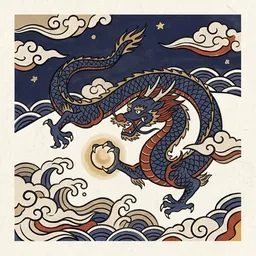
Byeong-jin (丙辰) is the spring sun pouring light and warmth over a freshly watered field, and people born on this day tend to be generous, well-mannered and quietly ambitious: givers who want to be useful and want to do it properly. They are often the host, the organiser or the patient explainer in a group, with a tidy, presentable look and little taste for doing things halfway. In Korean saju, the Four Pillars system, the day pillar (ilju) is the two-character label of your birth date. Its upper character, the day master, is the core self; the lower one, the branch, is an animal sign standing for your private side and closest circle. The day master here is 丙, yang fire, the sun, which shines on everyone without picking favourites. The branch is 辰, the dragon, the one mythical creature among the twelve and an earth sign tied to the damp ground of late spring. Fire generates earth in the five-element cycle, so the stem feeds the branch: warmth goes out to the field and the field turns green. Energy flows outward into the world, which gives this pillar its expressiveness and generosity, and also the risk of being drained, since the sun keeps giving whether or not anything comes back. The dragon holds three hidden stems, each tagged with a ten god, a saju label for how another energy relates to the day master. The main one is 戊, broad earth, Eating God: the gift for expression, cooking, teaching and craft, and for making others comfortable. The middle one is 癸, rain, Direct Officer: the sense of rules, standing and responsibility, which gives this pillar its manners and its care for reputation. The faintest is 乙, young wood, Direct Resource: learning, mentors and being looked after, the fuel that keeps the sun going. The day master's growth stage is Capping (冠帶), the coming-of-age moment when a young person first puts on the cap and adult clothes: dressed up, wanting to be seen, eager to do well. The nayin, the traditional poetic name for the pillar, is Earth in the Sand (沙中土): loose, light soil, adaptable and open, still waiting to be firmed into something.
Strengths
- Warm hospitality that makes people feel expected
- Good manners and a sense of duty
- Explains patiently and teaches well
- Handy with food, craft and making things nice
- Adapts to new roles without fuss
Challenges
- Says yes first and counts the cost later
- Keeps a silent tally when giving is not returned
- Worries about appearances and reputation
- Hides tiredness behind a composed smile
Love and relationships
A Byeong-jin partner is the one who has already booked the table, remembered your allergy and put tissues in the bag before the sad film. Love shows up as hosting: cooking, planning, gifts that fit, proper introductions to family, a care package when you are ill. The Capping stage makes courtship feel like an occasion; they dress for it and mean it. The day branch is traditionally the spouse palace, the seat of the partner in a chart, and here it holds the Direct Officer, which tradition reads as taking commitment seriously and wanting a steady, respectful partner of good character who keeps their word. Because the stem feeds the branch, the giving runs mostly one way, and the weak spot is the silent tally: giving and giving, then withdrawing behind a polite face when nothing comes back. The kind cure is to say the want aloud and let the partner do their share, which they usually will once told. Someone who thanks you in specifics, plans something for you without being asked and does not mistake your steadiness for lack of needs fits well. Tradition also notes 丙 combining with 辛, the polished jewel, as a natural pull; that is a lean and not a rule.
Work and career
Byeong-jin does best in work that brings other people along. This is the person who writes the onboarding guide and then sits with the new hire to explain it, who runs the volunteer rota with grace, who makes the company offsite feel as though somebody thought it through. Teaching, training and tutoring, hospitality and event work, publishing and editing, HR and community roles, public administration, cultural and non-profit organisations, food and catering, and gardening or farming-linked work all match the sun-over-field image. The hidden Direct Officer favours institutions with clear roles and a visible path upward, such as schools, public offices and established firms, while the hidden Direct Resource favours learning-heavy settings and good mentors. The thing to watch is the unrecognised extra: this pillar says yes to the favour, the cover shift and the colleague's urgent request, and the work can end up invisible. Naming your scope and sharing credit plainly protects both the generosity and the career.
Money
Money flows outward from this pillar as easily as warmth does. The stem feeds the branch, and none of the three hidden stems is a wealth star, so tradition reads income as coming from a role, a skill or a steady post and not from side hustle; the Direct Officer fits a regular salary and the sense of earning a standing. The spending pattern says more: meals for the whole group, the gift that is slightly too good, the contribution to a relative's need, the upgrade for the shared home. A fixed amount moved to savings on payday before the giving begins, together with a separate, named giving budget, makes the generosity sustainable and takes the guilt out of both sides. Everyday habits only, no financial advice.
Energy and wellbeing
Where this pillar leaks is energy, not strength: the sun keeps shining and the field keeps taking. The common pattern is a long run of hosting and helping followed by a flat, tired week, often with the public smile still on. Capping adds a wish to look composed, so fatigue is the last thing to be admitted. Earth responds to regular rhythm, so fixed meals, steady sleep and one free evening a week that belongs to nobody else carry more weight than an occasional holiday. Wood and water, the two sources hidden inside the dragon, suggest time among plants and near water as refills: a park walk, a long bath, a small pot of herbs on the sill. This is traditional lifestyle symbolism, not medical advice.
Who you get on with
The dragon's six harmony partner, the pairing tradition sees as fitting together easily, is the rooster (酉): metal polishing earth into form. Rooster days such as Jeong-yu are the usual place to look for easy company. In the water triad the dragon travels with the monkey (申) and the rat (子), which tend to feel familiar and quick to understand; Byeong-sin (丙申), the sun over the monkey, shares this triad. The rat is also void for this pillar (子丑), a tradition that reads links with those two branches as lighter or later to arrive, which is nuance and not fault. The clash is the dog (戌), another earth: two principled storehouses, each sure of its own way, so friction usually concerns standards and who is right, and it eases when both say what they need. By element, wood feeds the sun and often brings encouragement; water keeps the field from baking and adds structure; metal turns generosity into form and polish; other earth is steady company; fellow fire friends can compete for the sunniest spot. 丙 combining with 辛 toward water is the traditional special pairing. Everything depends on the rest of each chart.
How life tends to unfold
Saju reads life in ten-year luck cycles called daewoon, each a stem-and-branch pair that colours a decade the way a season colours a year; the starting age and direction come from the birth date. The Capping stage suggests a pillar that begins adult life early, taking on responsibility, learning manners and wanting to be recognised for good work. Earth in the Sand suggests a character that keeps adapting, so the middle decades often bring a change of field or role as the soil is pressed into something firmer. In general, wood cycles feed the fire with learning and mentors; water cycles bring structure, titles and duties, which may feel heavy but build standing; metal cycles give form to the generosity, as results and recognised work; fire cycles raise visibility and output, with exhaustion to watch; earth cycles build a base, a home and a reliable circle. Traditionally the rat and ox (子丑) are void for this pillar, so dealings tied to those years are best put in writing. Which decade does what depends on the rest of the chart.
Advice
Decide your giving limit before the favour is asked: hours, money, evenings. A prepared 'I can do this part' is kinder than a yes that turns into resentment. Let others host once in a while and receive without compensating. Put one stretch of unreachable time in the calendar every week. When you feel unseen, say what you did and what would help instead of waiting to be noticed. The warmth is not in question; what needs protecting is its source.
Frequently asked questions
Is the Byeong-jin day pillar a people-pleaser?
Not exactly, though giving is its signature. The stem feeds the branch, so energy goes outward, and the hidden Direct Officer adds a wish to do things properly and be well regarded. From outside that can look like people-pleasing. Underneath it is more about duty and warmth, and the fix is boundaries and asking for help, not changing the character.
What does the Capping stage mean for Byeong-jin?
Capping is the third of twelve growth stages and pictures a young person's coming-of-age ceremony, when the cap and adult clothes are first put on. For Byeong-jin it reads as polish, ambition and a wish to be seen as capable, along with an early sense of responsibility. It is a stage of dressing for the part, not a ranking of strength.
Do void branches make Byeong-jin unlucky?
No. Void branches (空亡) are the two branches left over in the ten-day cycle that contains this pillar, here the rat and the ox. Tradition says things linked to them feel lighter or less anchored, and sometimes arrive later. It is a nuance on the map and not a curse, and every pillar has its own pair. The rest of the chart weighs far more.
Learn the terms on this page
Is this your day pillar?
Your day pillar comes from your exact birth date, not your birth year. Enter it in our Four Pillars calculator and it shows all four of your pillars.
New to saju? Saju (四柱, "four pillars") describes a person by the year, month, day and hour of birth. The day pillar is the centre of it: its stem is you, and its branch is your closest circle and your home life.