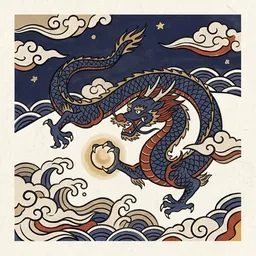
Im-jin (壬辰) Day Pillar: Personality, Love and Career
Im-jin is a lake held by a dam: deep, strong-willed and private. It takes duty to heart, sets high bars and keeps much of its own feeling out of view.
- Disciplined
- Strong-willed
- Private
- Deep-thinking
- Duty-bound
- Exacting
At a glance
- Day stem (the "self")
- Im (壬) · yang Water
- Day branch
- Jin (辰) · Dragon · yang Earth
- Growth stage of the day stem
- Storehouse (墓)
- Nayin ("sound") element
- Long-Flowing Water (長流水) · Water
- Void branches (kongwang)
- O (午) · Mi (未)
- Stem that combines with yours
- Jeong (丁) → Wood
- Six-harmony partner
- Yu (酉)
- Clashing branch
- Sul (戌)
- Triad branches
- Sin (申) · Ja (子)
- Traditional label
- Goegang (魁罡)
Hidden stems
- Eul (乙)Hurting Officer (傷官)
- Gye (癸)Rob Wealth (劫財)
- Mu (戊)Seven Killings (七殺) · main qi
Stems stored inside the branch, each shown with its ten god relative to your day stem. The last one is the main qi.
Stem and branch. The branch controls the stem. There is a constant pull of pressure and duty that builds discipline and inner tension together.
Growth stage of the day stem. The storehouse: thrifty, patient and good at keeping things inside, like treasure locked in a vault.
Traditional label. One of four pillars the tradition calls Goegang, "the chief star": unusually forceful, decisive and proud, with a strong sense of authority and all-or-nothing swings.
Nature and personality
The Im-jin (壬辰) day pillar is a reservoir held behind an old earth dam: deep, composed, strong-willed and more private than it appears. People born on an Im-jin day tend to be disciplined, serious about their commitments and hard to move once they have decided, with a great deal going on beneath a still surface. In saju, the Korean Four Pillars system, the day pillar (ilju) is the pair of characters for the day you were born, a heavenly stem over an earthly branch. The stem is the day master, the self; the branch is your private temperament and closest circle. Here the day master is 壬, yang water, the great open river. The branch is 辰, the Dragon, an earth sign: wet, heavy earth, which tradition calls a storehouse of water. Earth dams water, so the branch controls the stem. There is a constant pull of pressure and duty that builds discipline and inner tension together, a sense of what is expected that is usually set highest by the person themselves. Three hidden stems sit in the Dragon, each with a ten gods role, one of ten labels for how another energy relates to the day master. The main one, 戊, is Seven Killings: the heavy hand of challenge, standards and responsibility, the dam itself. The middle one, 癸, is Rob Wealth: rain from the same sky, a peer who shares and also competes. The faintest, 乙, is Hurting Officer: the flower in the dam wall, a talent for expression and the urge to question rules that make no sense. Duty and the wish to say it differently live in the same house, which is where this pillar's inner tension comes from. The day master sits at the Storehouse stage (墓) of the twelve growth stages, a place where things are laid by and kept, not an ending. It adds a stored-up, reserved quality and a long memory. The nayin, the traditional poetic name, is Long-Flowing Water (長流水): a great river that does reach the sea, a patient reminder that held water is meant to move. Im-Jin also carries the traditional label Goegang (魁罡), given to a small group of day pillars. It is said to mark strong will, decisiveness and a sense of authority, and it is one detail among many.
Strengths
- Reliable once committed, and hard to knock off course
- A firm sense of fairness and high personal standards
- Steady under pressure, often the one who leads in a crisis
- Long memory and patience for the long game
- A keen critical eye and an original way of putting things
Challenges
- Holds stress and feelings in until they come out sharply
- Stubborn once decided, even when new facts arrive
- Standards high enough to be hard on self and others
- Slow to ask for help or to show doubt
Love and relationships
Im-jin takes a long time to say yes and a longer time to say no. The Storehouse stage keeps feelings in store: this person may watch for months, decide quietly that you are permanent, and then tell you in a way that is closer to an announcement than a confession. The day branch is the spouse palace, the seat of the closest partner, and it holds the Dragon with Seven Killings as its main force, so the pillar wants a partner it can respect and holds itself to the same standard. The Hurting Officer inside makes the words sharp when something offends their sense of fairness: one crisp sentence, then a silent evening. Warmth is usually in what they do rather than what they say, such as the long message saved as a draft and never sent, or the ticket booked for the day they remember matters to you. The Goegang label is traditionally read as strong will, and in love that can make compromise feel like a cost. A good partner here is steady, honest, comfortable with private time and not alarmed by directness, someone who says what they feel in the room rather than afterwards and does not mistake reserve for coldness. Im-jin's own task is to send the draft.
Work and career
Im-jin is the person who is handed the file nobody else wants to open, and comes back with a clear answer and a plan. Seven Killings as the main hidden stem tolerates pressure, responsibility and rank; the Hurting Officer adds exacting taste and a voice. Together they suit the leadership of small teams, engineering and infrastructure, project and programme management, architecture and planning, audit, compliance and quality control, research and investigative work, editing and criticism, and strategy. The Goegang tradition associates the pillar with command and authority, so many Im-jin people find themselves in charge sooner than they intended. The Dragon is a poor flatterer of superiors and wears down under arbitrary rules, two bosses, or a boss who cannot explain a decision. It does best when the mandate is clear and the standards are its own. The practical risk is perfectionism that makes delegating hard: teach someone the standard once, in words, instead of redoing their output.
Money
This pillar has no true wealth star of its own, and 午, one of the fire branches that stand for wealth for water, is one of its void branches, so money is not the loudest note. Rob Wealth in the Dragon points to a traditional pattern: resources shared with, and sometimes drawn away by, peers, family and obligations, such as a loan never mentioned again or a group bill you quietly cover. The Storehouse stage balances that with a strong instinct to save and to keep reserves out of sight. Habits that work: decide in advance what you can give as a gift and never as a loan, keep a separate pot for family help, and let a fixed monthly transfer to savings run so that the dam is never drawn down by kindness alone. This is household budgeting, not investment advice.
Energy and wellbeing
Heavy earth pressing on water gives the picture of stored-up tension, the kind many people feel in the shoulders under pressure, released in bursts or not at all. The branch controls the stem, so the usual theme is an overworked sense of duty. Habits that give the water an outlet suit this pillar: swimming or river walks, stretching, regular long sleep, time with one person you can say anything to, and an expressive outlet for the Hurting Officer, such as writing, drawing, music or a notebook for the drafts you do not send. Long-Flowing Water is a hint that movement matters more than stillness. This is lifestyle symbolism, not medical advice.
Who you get on with
Traditionally the Dragon's six harmony partner is the Rooster (酉); earth and metal together are said to make metal, and metal feeds water, so rooster-branch days such as Eul-yu (乙酉) are read as a source of calm and support. The Dragon also forms a water triad with the Monkey (申) and the Rat (子), and the same stem on the Monkey is Im-sin (壬申), the same river with a lighter hand. The Dog (戌) is the Dragon's clash, earth against earth, two stubborn people each convinced the other should move; tradition treats it as friction of will, which eases when roles are agreed in advance. Gye-Sa (癸巳), the next day, is yin water on the Snake: the same long river, more flexible. The void branches (空亡) here are the Horse (午) and the Goat (未), and tradition reads links through those animals as looser. By element, metal people feed and calm the reservoir, wood people give the water somewhere to go, fire people bring warmth and a break from duty, and another heavy-earth person can double the pressure. The year, month and hour pillars of both charts would change this picture.
How life tends to unfold
Think of daewoon as ten-year weather systems: luck cycles, each named by a stem and a branch, that move through the sixty pillars from a start age set by your birth date. A day master at the Storehouse stage often matures slowly and by weight: early responsibilities, a feeling of being older than the calendar, then a middle stretch in which stored skill and reputation are finally drawn on. Metal cycles tend to feel like relief and support; water cycles bring peers and stamina and, in excess, a flood of obligations; wood cycles give the Hurting Officer an outlet, with more speaking and making; fire cycles bring money and warmth, though 午 is a void branch, so tradition reads such years as less anchored and worth putting on paper; earth cycles intensify the pressure and can mean both the highest rank and the heaviest load. A Dog year clashes with the Dragon and is read as a shake-up in which stored things come out, messy but also a clear-out. Texts on the Goegang label describe lives with sharper swings than most. Exactly when each cycle begins and what it holds depends on the whole chart.
Advice
Send the draft. Choose one person with whom you do not have to be the reliable one. Teach your standard to someone once, in words, and let them reach it their own way. Give the held water somewhere to go on a schedule: a river walk, a page of writing, a Sunday swim. Treat the high bar as yours, not the world's, and check once a month which duties are still really yours to carry.
Frequently asked questions
What is Goegang, and does it make Im-jin a good or bad day pillar?
Goegang (魁罡) is a traditional label attached to a small group of day pillars, Im-jin among them. Older texts link it with strong will, decisiveness, authority and an all-or-nothing streak, sometimes with warnings about extremes. Modern readers more often take it as determination and leadership. It is one detail in a chart, not a verdict on love, money or work.
Does the Storehouse stage, sometimes translated as tomb, mean something bad?
No. It is one of twelve stages in a cycle, named for a store or grave where things are laid away. In saju it reads as energy kept and collected rather than lost: a reserved nature, a good memory and a habit of keeping things in reserve. For Im-jin it explains why feelings come out late, and why the person is rich in what they have stored up.
Why do Im-jin people feel a constant sense of duty even when life is easy?
The Dragon branch controls the water stem, and its main hidden stem is Seven Killings, the ten god of pressure, standards and responsibility. That pairing is read as an inner supervisor who is always on duty. It builds discipline and reliability, and it can also tire the person. Learning to put the supervisor off shift now and then is the usual lesson.
Learn the terms on this page
Is this your day pillar?
Your day pillar comes from your exact birth date, not your birth year. Enter it in our Four Pillars calculator and it shows all four of your pillars.
New to saju? Saju (四柱, "four pillars") describes a person by the year, month, day and hour of birth. The day pillar is the centre of it: its stem is you, and its branch is your closest circle and your home life.