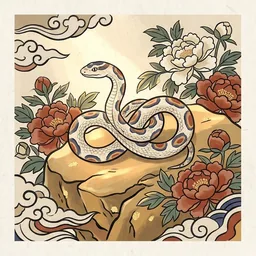
Eul-sa (乙巳) Day Pillar: Personality, Love and Career
Eul-sa (乙巳) is the wood snake, a vine in flower that climbs to the sun. Witty, warm and graceful, it shines in a crowd, then needs a good rest to refill.
- expressive wit
- quietly magnetic
- generous with energy
- refined taste
- sensitive and observant
- persuasive in a soft voice
At a glance
- Day stem (the "self")
- Eul (乙) · yin Wood
- Day branch
- Sa (巳) · Snake · yin Fire
- Growth stage of the day stem
- Bathing (沐浴)
- Nayin ("sound") element
- Lamp Fire (覆燈火) · Fire
- Void branches (kongwang)
- In (寅) · Myo (卯)
- Stem that combines with yours
- Gyeong (庚) → Metal
- Six-harmony partner
- Sin (申)
- Clashing branch
- Hae (亥)
- Triad branches
- Yu (酉) · Chuk (丑)
Hidden stems
- Mu (戊)Direct Wealth (正財)
- Gyeong (庚)Direct Officer (正官)
- Byeong (丙)Hurting Officer (傷官) · main qi
Stems stored inside the branch, each shown with its ten god relative to your day stem. The last one is the main qi.
Stem and branch. The stem feeds the branch. Energy flows outward into the world, which makes for expressiveness and generosity, and a risk of being drained.
Growth stage of the day stem. The bathing stage: youthful, charming and restless. Sensitivity and attractiveness come with changeable moods.
Nature and personality
The Eul-sa (乙巳) day pillar is the wood snake: a flowering vine winding up toward the strong sun of early summer. People born on an Eul-sa day tend to be graceful, quick-witted and expressive, with a gift for saying the right thing in a soft voice, and an inner life that is busier and sharper than the calm surface suggests. In Korean saju, the Four Pillars system, every day of the sixty-day cycle has a two-character label called the day pillar. The upper character, the day stem, is known as the day master and stands for you yourself; the lower one, the day branch, describes your private circle and inner temperament. Here the stem is 乙, yin wood, the climbing and trailing kind of growth that bends around obstacles and still gets where it was heading. The branch is 巳, the snake, a fire sign that tradition ties to the hours before noon and the start of summer. Wood feeds fire, so in saju terms the stem feeds the branch. Energy leaves this person and goes outward: into talk, into styling and making things look right, into helping a friend draft the difficult message. That is why Eul-sa so often seems generous and expressive, and also why the same person can end an evening of being brilliant company feeling emptied. The snake holds three hidden stems, small energies tucked inside a branch, each named with a ten gods role, which is saju's set of ten ways another stem can relate to the day master. The main one is 丙, Hurting Officer: a talent for expression, a sharp eye for what is false and a reluctance to take a rule on trust. Beneath it sit 庚, Direct Officer, which stands for standards, structure and reputation, and 戊, Direct Wealth, a feel for what is solid and worth keeping. Wood feeds fire and fire makes earth, so talent here is meant to turn into something concrete. The day master's growth stage is Bathing (沐浴), the washing of a newborn: fresh, exposed and impressionable, which adds charm and a quick pull toward new people. The nayin, the pillar's poetic nickname, is Lamp Fire (覆燈火), the flame of a shaded lamp that lights one room warmly rather than a whole field.
Strengths
- persuades with wit and warmth, not pressure
- fine sense of style, tone and timing
- reads a room and adjusts without losing itself
- generous with ideas, time and encouragement
- turns a flair for words or looks into something usable
Challenges
- gives out more energy than it takes back in
- a dry remark can land harder than intended
- drawn to novelty, so follow-through can thin out
- stays charming when tired, so others miss the strain
Love and relationships
Eul-sa tends to court with words and attention to detail: the message that is exactly in your register, the outfit chosen because they remembered you liked blue, the joke that only the two of you get. Bathing is a stage of openness, so first impressions are warm and people are often drawn in quickly. The hidden Hurting Officer (丙) adds a love of conversation that has some bite, so a partner who can match them in banter and does not find candour rude is a good fit. In a chart the day branch is read as the spouse palace, the traditional seat of the partner, and the snake's palace holds Direct Officer (庚), which tradition reads as a wish for a partner with standards and a clear sense of commitment, along with Direct Wealth (戊), a taste for steadiness at home. The pillar's weak point in love is depletion: giving and entertaining until there is nothing left, then going quiet. A relationship works best when the partner notices the tiredness behind the charm and when Eul-sa says plainly that tonight they would rather stay in.
Work and career
This pillar does best where words, taste and people meet. Picture the colleague who rewrites a muddled proposal into three clean paragraphs, or the one the team sends to present because the client relaxes around them. Fields that match the image of a vine in the sun include writing and editing, teaching, public relations, design and styling, hospitality, the arts, counselling, and sales or consulting built on trust instead of pressure. The Hurting Officer is clever and a little rebellious toward authority, so Eul-sa works better with a boss who gives room than with one who micromanages. The Direct Officer in the snake supplies a real liking for good standards, so roles with clear quality and a visible name attached tend to satisfy. Guard against saying yes to every request; being everyone's favourite helper is a quick way to burn through the oil in the lamp.
Money
The Direct Wealth (戊) in the snake points to a wish for a steady, understandable income rather than gambles, and the chain from wood to fire to earth suggests that money tends to follow skill: a craft, a voice or a reputation turned into earnings. Spending runs toward taste: good fabrics, a nice meal, a gift chosen with care, a table for friends. None of this is a flaw, but small pleasures add up faster than they feel. Setting a fixed amount aside on payday, before the generous impulses of the month, keeps the lamp supplied.
Energy and wellbeing
In five-element terms this is yin wood feeding strong fire, and the traditional image is a person who burns bright and tires fast. Rest is not a luxury for Eul-sa: tradition links fire with excitement, sleep and a busy mind, so regular bedtimes, quiet evenings after social days and a screen-free hour matter more than for most. The void branches for this pillar are 寅 and 卯, both wood, and tradition says the wood's own roots sit thin, so time among plants, a daily walk and plenty of water refill what talking spends. This is lifestyle symbolism, not medical advice.
Who you get on with
Traditionally the snake has a six-harmony bond with 申, the monkey, a bright, resourceful sign that matches its pace and sense of humour, so people with a monkey branch often feel easy company here. The snake also forms a metal triad with 酉 (rooster) and 丑 (ox); that grouping leans toward polish, order and good manners, and friends from those branches tend to share a feel for detail. The clash is 亥, the pig: fire against water, a warm and unhurried sign set beside a sharp, quick one, which often shows up as a misread joke or a mismatch of tempo, not as enmity. By element, water people cool and refresh the vine, earth people give a place to rest, and metal people can sharpen it, sometimes pleasantly through the combination of 乙 with 庚. The neighbouring pillars are Gap-jin (甲辰), the tall tree over the dragon before, and Byeong-o (丙午), the open sun over the horse after, which is the snake's hidden fire made plain. As for the void branches 寅 and 卯, tradition says those areas of a chart feel less anchored; take that as nuance, subject to the rest of the chart.
How life tends to unfold
The ten-year luck cycles of saju, called daewoon, move through the sixty pillars in sequence, each tinting one decade with its own stem and branch. Eul-sa begins from the Bathing stage, so early life is often curious and changeable, with many circles tried before a favourite one is chosen. Water or wood cycles tend to feel supportive and give the vine something to drink and climb. Fire cycles bring more spotlight and more output, good for visibility and tiring if nothing is saved back. Earth cycles tend to bring practical rewards and responsibilities, and metal cycles bring structure, titles and honest critics. Lamp Fire suggests influence that is warm and close, valued by the people who know you well. Tradition adds that when a tiger or rabbit year or cycle arrives, the void wood is filled and the pillar can feel steadier. All of it depends on the rest of the chart.
Advice
Decide before the event how much of yourself it gets, and leave while you still have something in hand. A friend who hears 'I'm going to head out at nine' remembers a good evening, not a sudden vanishing. Keep one task each week that is slow and unobserved, like cooking, drawing or tidying, so the lamp is trimmed. When a sharp remark is on the tip of your tongue, ask who it is for. If the answer is that it is a joke at someone's expense, let it pass; wit lasts longer when it is kind.
Frequently asked questions
Is the snake in the Eul-sa day pillar a bad sign?
No. In Korean tradition the snake is a symbol of wisdom, renewal and careful intelligence, and in saju the branch 巳 is simply the fire of early summer. It describes a person who is perceptive, polished and a little private. The pillar is neither lucky nor unlucky; its tone depends on how it combines with the year, month and hour pillars of the whole chart.
What does the Hurting Officer in Eul-sa mean?
Hurting Officer is the name of a ten god, the saju term for one of ten ways another stem relates to your day master. It stands for expression, talent and a questioning mind. In Eul-sa it sits as the main hidden stem of the snake, so it is read as a gift for words and style and a dislike of empty rules, not as a tendency to hurt anyone.
Which day pillars get along well with Eul-sa?
Tradition points to the monkey as the snake's six-harmony partner, so pillars with a 申 branch are often described as easy company, and the rooster and ox as friends in the same metal triad. Pig branches clash with the snake, which means friction of tempo, not doom. Real compatibility reads the whole chart, so treat these as tendencies and not verdicts.
Learn the terms on this page
Is this your day pillar?
Your day pillar comes from your exact birth date, not your birth year. Enter it in our Four Pillars calculator and it shows all four of your pillars.
New to saju? Saju (四柱, "four pillars") describes a person by the year, month, day and hour of birth. The day pillar is the centre of it: its stem is you, and its branch is your closest circle and your home life.