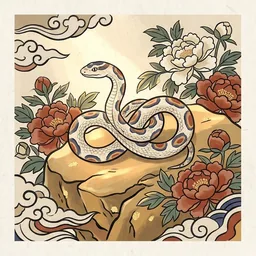
Jeong-sa (丁巳) Day Pillar: Personality, Love and Career
Jeong-sa (丁巳) is a lamp inside a kiln: focused, intuitive and intense, loyal to a few things and to a few people, and strongest when it goes deep and not wide.
- Focused
- Intuitive
- Intense
- Self-reliant
- Sharp-tongued
- Selective
At a glance
- Day stem (the "self")
- Jeong (丁) · yin Fire
- Day branch
- Sa (巳) · Snake · yin Fire
- Growth stage of the day stem
- Peak (帝旺)
- Nayin ("sound") element
- Earth in the Sand (沙中土) · Earth
- Void branches (kongwang)
- Ja (子) · Chuk (丑)
- Stem that combines with yours
- Im (壬) → Wood
- Six-harmony partner
- Sin (申)
- Clashing branch
- Hae (亥)
- Triad branches
- Yu (酉) · Chuk (丑)
Hidden stems
- Mu (戊)Hurting Officer (傷官)
- Gyeong (庚)Direct Wealth (正財)
- Byeong (丙)Rob Wealth (劫財) · main qi
Stems stored inside the branch, each shown with its ten god relative to your day stem. The last one is the main qi.
Stem and branch. Stem and branch share one element. The energy is concentrated and single-minded, strong in focus and short on variety.
Growth stage of the day stem. The height of strength: confident and commanding, with a real risk of overreaching or going it alone.
Nature and personality
The Jeong-sa (丁巳) day pillar is a lamp burning inside a kiln: concentrated, watchful and intense, a person of few interests held with great depth. People born on a Jeong-sa day tend to be intuitive, composed on the surface and very focused underneath, someone who can stay with one problem for hours and reads the mood of a room before anyone has spoken. In saju, the Korean Four Pillars system, the day pillar is the pair of characters for your birth day. The upper one is the day stem, the day master, which stands for you; the lower one is the day branch, one of twelve animals, and it describes your private temperament and nearest circle. Here the day master is 丁, yin fire: a lamp or candle flame, small and steady and easy to steer. The branch is 巳, the snake, also fire, the heat of early summer when everything is rising. Because stem and branch share one element, the energy is concentrated and single-minded: strong in focus, short on variety, and happier going down than going wide. Three hidden stems sit in the snake, each given a ten god, a label for how another stem relates to the day master. The main one is 丙, yang fire, the sun, which counts as Rob Wealth: the energy of equals and rivals, self-reliant, competitive, ready to share with peers and to measure itself against them. In the middle sits 庚, yang metal, Direct Wealth: orderly, earned, craftsmanlike worth. The residual one is 戊, a great mountain of earth, the Hurting Officer: a talent for expression with an edge, and little patience for pomp or rules without a reason. The day master sits at the Peak stage (帝旺), the fullest strength in the twelve growth stages, so Jeong-sa often feels capable early, and its lesson is more about rest and variety than about finding power. The nayin, a poetic nickname for the pillar, is Earth in the Sand (沙中土): fine loose grains that become something only through many small, repeated efforts.
Strengths
- Deep concentration on one thing at a time
- Reads people and situations quickly and quietly
- A sharp, original way of expressing ideas
- Capable and self-reliant from a young age
- Steady loyalty to the few it trusts
Challenges
- Narrow focus that can miss the wider picture
- A hidden habit of comparing yourself with your peers
- Sharp words when feeling cornered or overlooked
- Finding it hard to rest, or to let anyone see the effort
Love and relationships
In love, Jeong-sa is selective: few people get in, and those who do get nearly the whole flame. Think of the person who ignores the whole party to have one long conversation in the corner, or who writes a message three times and sends the shortest version. Attention is complete and so is memory; what you say once may come back in a gift months later. The day branch is traditionally called the spouse palace, the place in a chart that stands for the closest partner, and here the main hidden star is Rob Wealth, the energy of peers. Tradition reads that as a wish for an equal rather than someone to look after or be looked after by, with plenty of private space. The Hurting Officer in the branch gives a sharp tongue in disagreement, so the first thing that comes to mind is not always the thing to say. What helps is a partner who is secure and has their own interests, who gives quiet time without taking it as rejection, and who is honest without making a contest of it. Jeong-sa in turn does best when they say what the silence means before the other person has to guess.
Work and career
Work suits Jeong-sa when it rewards depth and leaves room to concentrate. Research and analysis, software and programming, ceramics, glass and metalwork, investigative writing and editing, strategy, specialised technical trades and careful craft all give a single-minded flame somewhere to go; the Direct Wealth in the branch adds steady pay for skill that has been honed. A kiln is a good picture: one long, controlled burn that makes something durable. The Hurting Officer makes close supervision and empty ritual hard to bear, and a direct, dry critique can be a real gift in a team that wants honesty. The Rob Wealth suggests that close partnerships and shared profits are worth setting out clearly in advance, since a peer and a rival can look the same from inside. Short breaks and a second, quite different interest keep the narrow beam from becoming a tunnel.
Money
Direct Wealth in the middle of the branch points to earning through honed skill and steady, well-defined pay, while the main hidden star, Rob Wealth, is the traditional picture of money moving among peers: shared costs, lent amounts, keeping up with a group. The pattern is rarely wasteful so much as entangled. Agreeing on shared expenses before they start, keeping a separate account for joint spending, and writing down any sum lent to a friend all protect good relationships. A fixed monthly amount put aside on payday gives the single-minded side of the pillar something to be single-minded about.
Energy and wellbeing
With fire in the stem, the branch and the main hidden stem, and the day master at Peak, the usual theme is not overheating so much as long unbroken stretches: skipped meals, little sleep, a screen at midnight, then an abrupt crash. A kiln has to cool slowly, so wind-down time matters: half an hour of something slow after a day of intensity, regular meals, a timer for breaks, and a walk by water if you can. The two void branches for this pillar are cool, wet winter branches, which tradition reads as a pillar that has to supply its own cooling and rest. Treat this as a lens on habits, not as a statement about health.
Who you get on with
Traditionally the snake has a six-harmony partner in the monkey (申) and shares a metal triad with the rooster (酉) and the ox (丑). The Jeong-yu (丁酉) pillar is the same flame over the rooster and a classic example of that triad; the ox is one of this pillar's void branches (子丑), which tradition reads as a link that feels thinner or arrives later. The pig (亥) is the snake's clash: water against fire, a loose, sociable tempo against a reserved and focused one. It is a contrast rather than a curse, and many close pairs of this kind work well once each respects the other's pace. By element, wood people fuel the lamp, earth people give the flame somewhere to rest, and fellow fire people will understand the intensity without asking for it to be explained. A 壬 day master, yang water, the great river, is said to combine with 丁 toward wood, which tradition reads as a way to bring out the softer side. Beyond the day pillar, it all depends on the rest of each chart.
How life tends to unfold
Daewoon are the ten-year luck cycles of saju, each a stem-and-branch pair that colours a decade as a season colours a year; the start age is worked out from the birth date. With a day master at Peak strength, Jeong-sa tends to feel capable early, and the decades often turn on one question: how to use all that concentration without narrowing the life around it. In general, wood cycles add fuel, which can intensify what is already burning; fire cycles double down on drive, and are worth balancing with rest; earth cycles turn the flame into finished work and a clearer public voice; metal cycles bring work, money and structure into focus, with the Direct Wealth star active; and water cycles press on the fire, which can feel like pressure at first and often settles into steadiness and responsibility. Rat (子) and ox (丑) are void for this pillar, so in years or cycles where they appear, matters tied to them may feel less anchored, a prompt to pace yourself rather than a warning. How any one decade plays out depends on year, month and hour pillars too.
Advice
Build in the pause before the sharp sentence; the point usually survives a softer wording. Choose a second interest that is unlike the first and give it an hour a week. Let rest be a scheduled thing, with a slow end to the day, like a kiln that cools. Put shared money and shared plans on paper early, and tell the people close to you what your silence means.
Frequently asked questions
Is a double-fire day pillar like Jeong-sa too hot?
Fire is the element of the stem, the branch and the main hidden stem, so this pillar is concentrated, but saju does not call that too much by itself. A focused flame is a kind of talent, and a chart with water, metal or earth elsewhere can be quite balanced. Reading it takes all four pillars. On its own the pillar suggests depth over variety, and a real need to rest after intensity.
Does Rob Wealth in the Jeong-sa pillar mean losing money?
No. The name sounds alarming but it only labels the energy of peers who share your own element: friends, rivals, siblings and colleagues. Here it is the main hidden stem, which tradition reads as strong self-reliance, a competitive streak and a habit of sharing with equals. It becomes a money matter only through choices such as lending freely or splitting costs loosely, which are habits you can set.
What does it mean that the rat and the ox are void for Jeong-sa?
Gongmang, or void branches, come from counting days in tens against twelve animals, which always leaves two animals unused, and each day pillar has its own pair. Tradition says the areas of life such a branch stands for feel lighter or less anchored when it turns up in a chart or luck cycle. For Jeong-sa those are the rat and the ox, a nuance to keep in mind and not a flaw.
Learn the terms on this page
Is this your day pillar?
Your day pillar comes from your exact birth date, not your birth year. Enter it in our Four Pillars calculator and it shows all four of your pillars.
New to saju? Saju (四柱, "four pillars") describes a person by the year, month, day and hour of birth. The day pillar is the centre of it: its stem is you, and its branch is your closest circle and your home life.