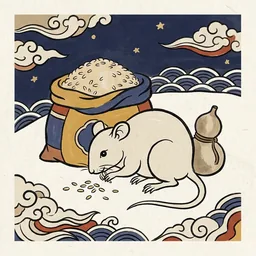
Byeong-ja (丙子) Day Pillar: Personality, Love and Career
Byeong-ja (丙子) is a winter sun over a stream: calm and dutiful on top, with a warm fire in the heart and a sense of duty that is never fully off the clock.
- Dutiful
- Composed
- Inwardly warm
- Disciplined
- Self-pressuring
- Late bloomer
At a glance
- Day stem (the "self")
- Byeong (丙) · yang Fire
- Day branch
- Ja (子) · Rat · yang Water
- Growth stage of the day stem
- Conception (胎)
- Nayin ("sound") element
- Water of the Mountain Stream (澗下水) · Water
- Void branches (kongwang)
- Sin (申) · Yu (酉)
- Stem that combines with yours
- Sin (辛) → Water
- Six-harmony partner
- Chuk (丑)
- Clashing branch
- O (午)
- Triad branches
- Jin (辰) · Sin (申)
Hidden stems
- Im (壬)Seven Killings (七殺)
- Gye (癸)Direct Officer (正官) · main qi
Stems stored inside the branch, each shown with its ten god relative to your day stem. The last one is the main qi.
Stem and branch. The branch controls the stem. There is a constant pull of pressure and duty that builds discipline and inner tension together.
Growth stage of the day stem. A seed of potential: ideas are forming, plans come before action, and nurture matters a great deal.
Nature and personality
The Byeong-ja (丙子) day pillar is a winter sun hanging over a mountain stream: a warm, bright person with a cool, composed surface and a sense of duty that never quite switches off. People born on a Byeong-ja day tend to be responsible and self-disciplined, take their obligations seriously and carry more inner heat than they show, which others usually discover only when something matters. A day pillar is the stem-and-branch pair for your birth day, and in saju, the Korean four pillars system, it is the pair that describes you rather than your family or your era. Its upper character, the day master, is the self; its lower character, the branch, is one of twelve animals and stands for your private life and nearest circle. The day master here is 丙, yang fire, the sun. The branch is 子, the rat, which carries water, and water controls fire. So instead of being fed from below, the sun sits above a river, and the pillar has a constant pull of pressure and obligation that grows discipline and inner tension at the same time. A picture saju readers like for this is sunlight spread across moving water, brightest where the current crosses it. In daily life it often means someone who is hard to rattle in public and hard on themselves in private. The rat's hidden stems, the smaller energies stored in a branch, are both water, and each is labelled by a ten gods role, one of ten names for how a stem relates to the day master. The main one is 癸, soft rain, the Direct Officer: rules, reputation and orderly responsibility, the conscientious member of the team. The residual one is 壬, the great river, the Seven Killings: raw challenge, deadline pressure, the pull to take on the hardest job. Tradition calls officers of both kinds together a mixed pair and reads it as someone pulled between two standards, the proper way and the way that beats the odds. The day stem stands at the growth stage called Conception (胎), the seed just formed and not yet visible, which is why many of these people are slow to be seen and show their colour late. The nayin, a classical image attached to each pair, is Water of the Mountain Stream (澗下水): a small, clear brook running between two hills, quiet, steady and cool-headed.
Strengths
- Reliable in a crisis, with a clear head when others rush
- Keeps promises and takes responsibility without being asked
- Self-discipline that carries long projects
- A warm, bright presence that comes through the composure
- Sees what a situation will cost before committing
Challenges
- Holding yourself to standards nobody else set
- Taking on too much because someone has to
- Keeping real wishes and feelings out of sight
- Rumination when the day's duties finally stop
Love and relationships
Showing up is this pillar's love language: the message that arrives after the exam result, the quiet repair of your bicycle on a Sunday, the person who is at the station on time in the rain. Byeong-ja people rarely announce feelings with fireworks. They commit, and then keep the commitment with a consistency that can take a partner months to fully notice. The day branch is called the spouse palace, the seat of the closest partner, and here it holds a rat: watchful, careful with feelings, quick to read a room and slow to open the inner door. The two officer gods hidden inside lean toward seriousness about commitment, rules and what a relationship owes people, which is a gift when things are hard and a weight when every disagreement becomes a matter of principle. What they need is permission to be off duty: a partner who can say you do not have to be in charge tonight, who is reliable without being demanding, and who asks what you want rather than what you ought to do. Humour helps a great deal, and so does a partner who is glad to be the one who plans the holiday.
Work and career
Hand a Byeong-ja person the thing that is on fire and they will calmly write the checklist. This is a pillar for roles where trust, procedure and steady judgement matter: operations and project management, administration and compliance, engineering and research, finance operations, education, healthcare support and public service. In Korea the Direct Officer is traditionally linked to formal institutions and public office, the world of the civil service exam, large organisations and clearly defined ranks, and these people often do well inside a structure where expectations are plain. The Seven Killings adds an appetite for hard assignments: the turnaround, the emergency, the project nobody else wanted. The risk is becoming the colleague who always gets the difficult job because they never refuse it. Clear boundaries about scope, and a habit of naming what a task will cost, keep a dependable reputation from turning into burnout.
Money
No wealth god sits inside the rat, so money here tends to come through position and responsibility, such as a salary, a steady role or a promotion, more than through deals and side ventures. The pressure gods inside give a cautious eye for downside: these people read the fine print, keep a cushion and feel uneasy when the account is thin. The flip side is under-spending on yourself, since every dollar looks like a duty first. An automatic transfer to savings on payday handles the dutiful part without thought; a small fixed monthly amount whose only job is pleasure handles the other. Check the balance on a set day rather than whenever worry strikes.
Energy and wellbeing
Fire above water makes a picture of warm drive pressed by cool worry, and the everyday version is a person who is busy all day and then lies awake at night re-running the list. The rat is the midnight hour, so late-night rumination is the pillar's usual weak spot. Habits that bring some warmth into the water help: sunlight and a brisk walk in daytime, warm meals and drinks, a hot bath or a visit to a Korean bathhouse in the evening, and a closing ritual that marks the end of duty for the day, such as writing tomorrow's list down and closing the notebook. None of this is medical advice; it is only a way of organising everyday habits.
Who you get on with
The rat's six harmony partner is the ox (丑), a slow, steady earth animal that gives the water somewhere to settle, and people with an ox branch tend to feel grounding and reliable to a Byeong-ja person. The water triad is the rat, the dragon (辰) and the monkey (申). The dragon is the sturdier partner of the two, while the monkey is one of this pillar's void branches (申酉). Void branches, or gongmang, are the two animals left over when the sixty pillars are counted in groups of ten, and tradition reads links to them as thinner or slower to arrive. The horse (午) is the traditional clash: the rat at midnight facing the horse at noon, water against fire, opposite hours of the day. It is a contrast of tempo and temperature rather than a curse, and the horse often brings the spontaneity that the dutiful rat forgets. The day stem 丙 is also said to combine with 辛, yin metal, toward water, a graceful pairing that can soften the fire further. By element, wood is the traditional go-between, since water feeds wood and wood feeds fire; earth acts as a dam that eases the pressure; and fire friends understand the hot side of the pillar without explanation.
How life tends to unfold
Saju reads life in ten-year stretches called daewoon, the great luck cycles. Each stretch is ruled by one stem-and-branch pair, they follow one another in sequence, and the age at which the first begins is worked out from your birth date. With the day master at the Conception stage, the seed phase, this pillar often develops later than it looks: early adulthood tends to be a time of quiet preparation, carrying responsibilities and gathering skill, with the person's own voice often becoming clearer from the thirties on. In general, wood cycles act as a mediator, easing the pressure while adding fuel; fire cycles bring allies and confidence, and also more rivals; earth cycles turn energy into output and can dam the pressure, which often feels like a release; metal cycles bring money, contracts and partnerships, though metal also generates water, so the load may rise too; and water cycles intensify duty, with promotion and strain arriving together. What an actual decade brings depends on the rest of the chart.
Advice
Make two lists: the duties that are truly yours, and the ones you picked up because nobody else would. Hand back or drop one from the second list this month and see what happens. Treat rest as part of the job rather than a reward after it, and say your own wish out loud before checking whether it is convenient. When the pressure rises, a brisk walk in daylight does more than another hour at the desk.
Frequently asked questions
Is Byeong-ja a weak day pillar because water controls fire?
No, and saju does not rank pillars. The water branch does press on the fire stem, which is why the pillar is associated with pressure and duty, but whether a day master is strong or weak is judged from the whole chart: the season of birth, the other pillars and the luck cycles. Many readers see this pillar as discipline under heat, a fire that has learnt to hold steady.
Are Byeong-ja people natural leaders?
Often, in a particular style: not the loudest voice, but the person others look to when something has to be carried through. The Direct Officer and the Seven Killings are the traditional stars of authority, responsibility and handling hard tasks, so these people tend to be trusted with accountability. The risk is leading by doing everything yourself, so delegating is the skill worth practising.
What do Seven Killings and Direct Officer mean in Byeong-ja, and is that stressful?
They are two of the ten gods, the traditional labels for how other stems relate to your day master. Both describe energy that presses on you: the Direct Officer as rules, standing and orderly duty, the Seven Killings as sharper challenge and urgency. The name sounds dramatic, but it describes pressure that, handled well, becomes courage, discipline and a talent for crisis. It turns stressful mainly when you carry it alone.
Learn the terms on this page
Is this your day pillar?
Your day pillar comes from your exact birth date, not your birth year. Enter it in our Four Pillars calculator and it shows all four of your pillars.
New to saju? Saju (四柱, "four pillars") describes a person by the year, month, day and hour of birth. The day pillar is the centre of it: its stem is you, and its branch is your closest circle and your home life.