Eul-yu (乙酉) Day Pillar: Personality, Love and Career
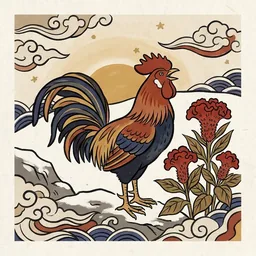
Eul-yu (乙酉) is the wood rooster: a bloom by bright, sharp metal. Neat and exact, it sets a high bar for itself and turns the strain of a day into polish.
- refined
- exacting
- disciplined
- clean-edged
- starts fresh
- inner tension
At a glance
- Day stem (the "self")
- Eul (乙) · yin Wood
- Day branch
- Yu (酉) · Rooster · yin Metal
- Growth stage of the day stem
- Severance (絕)
- Nayin ("sound") element
- Spring Water (泉中水) · Water
- Void branches (kongwang)
- O (午) · Mi (未)
- Stem that combines with yours
- Gyeong (庚) → Metal
- Six-harmony partner
- Jin (辰)
- Clashing branch
- Myo (卯)
- Triad branches
- Chuk (丑) · Sa (巳)
Hidden stems
- Gyeong (庚)Direct Officer (正官)
- Sin (辛)Seven Killings (七殺) · main qi
Stems stored inside the branch, each shown with its ten god relative to your day stem. The last one is the main qi.
Stem and branch. The branch controls the stem. There is a constant pull of pressure and duty that builds discipline and inner tension together.
Growth stage of the day stem. A break and a fresh start: independent and unconventional, with several turning points in a lifetime.
Nature and personality
The Eul-yu (乙酉) day pillar is the wood rooster: a flower growing in a place full of bright, sharp metal, like a bloom beside garden shears. People born on an Eul-yu day tend to be refined, exact and self-disciplined, with a clear sense of how things should be done and a mind that never quite stops editing. In Korean saju, the Four Pillars system, each birth day carries a two-character label from a sixty-day cycle: the day pillar. Its upper character, the day master, is you; its lower one, the day branch, is your private life and the people closest to you. The day master here is 乙, yin wood, the soft and flexible plant: a flower, grass or vine, not a tree. The branch 酉 is the rooster, which carries metal, and tradition associates it with the clear light of dusk and the fine cutting edge of a needle or a blade. In the five-element cycle metal cuts wood, so the branch controls the stem. This is one of the more pressured arrangements in the cycle, and it is not an unhappy one: there is a constant pull of duty and expectation that builds discipline and inner tension together. In daily life this is the person whose notes are colour-coded, whose arrival is five minutes early and who feels a small physical discomfort at a crooked picture frame. There are two hidden stems inside the rooster, both from the metal family and both tagged with ten gods, the ten roles that show how another stem relates to the day master. The residual one is 庚, Direct Officer, which means rules, reputation, responsibility and fair play. The main one is 辛, Seven Killings, an old dramatic name for the stem that challenges the day master: intensity, rivals, tests and an inner drive that will not accept second-rate. Both press on wood, one politely and one directly, so duty and challenge are the climate of the inner circle. The 庚 is also the stem that tradition pairs with 乙 in a combination, so there is a pull toward order that feels almost like a bond. The day master's growth stage is Severance (絕), the point of a clean break where one line ends and another begins, as a seed lies on bare ground. It tends to give independence, a readiness to start again and less inherited ease. The nayin, the pillar's poetic nickname, is Spring Water (泉中水): a thin, clear stream from a rock, small and unfailing.
Strengths
- high standards and a sharp eye for quality
- disciplined, reliable and well prepared
- clear, clean communication and good taste
- can start over cleanly after a break
- takes duty seriously, and keeps promises
Challenges
- perfectionism that makes rest feel unearned
- criticism, aimed at themselves first and then others
- holds tension in the body and the jaw
- cutting people off quickly when trust is bruised
Love and relationships
An Eul-yu partner notices the crooked frame and also the thing you did not say. They are attentive, tidy in their attachments and not inclined to give their heart quickly: they wait until they are sure, and then they commit with a seriousness that surprises people. Love shows up as being on time, remembering the date and choosing the present carefully. The rooster is the traditional spouse palace, the seat of the partner in a chart, and both of its hidden stems belong to the authority family. This suggests that they seek a person with composure, principles and a clear voice, someone they can respect, since they find it hard to love what they cannot admire. The weak spot is the checklist that no one agreed to. Eul-yu can quietly evaluate a partner by the standard they apply to themselves, and the Severance stage means that when trust is bruised they can cut cleanly, sometimes before the other person knew there was a problem. A partner who is steady, specific with praise and unafraid to say 'that was harsh' without drama is the best match. Eul-yu does best when they say the want in the first week of a problem, not the sixth.
Work and career
Work that fits Eul-yu rewards precision, polish and reliability. Typical scenes are the editor who catches the wrong date in the footnote, the planner whose event runs to the minute and the analyst who finds the formula error in the spreadsheet. The metal rooster suits editing and proofreading, quality assurance, audit and compliance, translation, fine craft such as jewellery, tailoring and calligraphy, styling and design, patisserie, curation and any job where the details are the point. The Direct Officer inside the rooster gives a respect for structure, so they do well in organisations with clear rules and in roles with a defined standard. The Seven Killings gives them nerve in a crisis. The risk is the burn: a drive to be flawless can take over a whole week, so building a finish line into each task, called done, is a skill worth practising. Eul-yu tends to be more effective as the one who sets a standard than the one who enforces it on a tired team.
Money
No money star of its own sits among the rooster's hidden stems, which are both authority stems, so this pillar tends to earn through skill, position and reputation, not through trading or bargains. Pay usually rises with the quality of the work and the trust it earns. Spending leans toward fine things: good tools, clothing that fits, a well-made bag, a decent pen. The impulse is to buy once and buy well, which is sound, with the occasional exception when a bad week is met with an expensive repair. A scheduled monthly review of income, bills and savings, with a few minutes on the same day each month, suits this pillar's love of order and keeps small leaks visible.
Energy and wellbeing
In the five-element view this pillar is a delicate plant among a lot of metal, and tradition reads that as a tendency to hold strain: clenched shoulders, a tight jaw, a mind that keeps editing at midnight. Softening themes are water, warmth and slack time. A warm bath, a slow walk with no destination, loosening the shoulders and a no-screen half hour before bed help the plant uncurl. Plant care, music and time with something that is not judged for tidiness, such as a garden, is also restful. This is traditional lifestyle symbolism, not medical advice; for ongoing pain or sleeplessness, see a doctor.
Who you get on with
Traditionally the rooster's six-harmony partner is the dragon (辰), a wet earth that holds and feeds metal rather than pressing on it, and people with a dragon branch in their chart tend to feel a settled kind of ease. The rooster also forms a metal triad with the ox (丑) and the snake (巳); the wood ox pillar Eul-chuk (乙丑) is a close cousin, with the same stem and the same metal note in its branch. These signs feel familiar fast, with shared standards and shared dryness, though too much metal together can become mutual critique. The rooster's clash is the rabbit (卯), a wood sign, and since the day master is itself wood the clash can feel personal: the rabbit is gentle in manner and hits the same nerve. It is friction between two sensitive people, and usually softens with plain talk. By element, water people soothe the pressure and feed the plant, fire people warm and soften the metal, and wood companions feel like a relief. The void branches (空亡) for this pillar are the horse (午) and the goat (未), where tradition sees things feel less anchored. It all depends on the rest of the chart.
How life tends to unfold
The ten-year luck cycles of saju are called daewoon, and each one is coloured by its own stem and branch. For Eul-yu the Severance stage often means a start that is self-made: less safety net, more early responsibility, and a sense of beginning again at more than one point in life. The pressure of the branch makes the early decades feel disciplined and strenuous, with order and skill built early. In tradition, water cycles turn the metal's pressure into nourishment, because metal feeds water and water feeds wood, so they often feel like relief and growth. Fire cycles melt and shape the metal, easing its edge and giving the quiet flower more room to be visible. Wood cycles bring peers and fellowship. Metal and earth cycles intensify the sense of duty, which can feel heavy, and they are also the decades where skill becomes mastery. The Spring Water nayin suggests a small, clean, dependable supply that grows steady with time. Which decade feels like which depends on the whole chart.
Advice
Write down what finished looks like before you start, and then stop when you get there. Praise something you did not need to fix, once a day, and say it aloud to the person nearest. Make the first complaint small and early so the last one is never a verdict. Give your body an hour that is not for performing: a bath, a slow walk or a nap. Your standards are an asset; the work is to aim them at the project and not at yourself.
Frequently asked questions
Does the branch controlling the stem make Eul-yu a difficult or unlucky pillar?
No. Metal pressing on wood is one of the more pressured arrangements in the cycle, but pressure is not misfortune. It builds discipline, polish and a high standard, and many Eul-yu people are the most reliable people in their circles. The cost is inner tension, which good rest and a gentler inner voice can ease. No day pillar is luckier than another.
What does the Severance stage mean for the Eul-yu day pillar?
Severance (絕) is one of the twelve growth stages and pictures a clean break, a seed on bare ground before a new line begins. In a reading it points to independence, a readiness to start again, and less inherited ease or reliance on others. It is not a statement about breaking relationships, though it can describe a person who ends things decisively.
Why does Eul-yu have both Direct Officer and Seven Killings, and are they different?
Both come from the same family of ten gods and press on the day master, but they differ in tone. Direct Officer (正官) is the formal, rule-bound pressure of duty, reputation and fair play. Seven Killings (七殺) is the intense, challenging kind that tests and sharpens. Together they make a climate of expectation, which suits discipline and high-quality work.
Learn the terms on this page
Is this your day pillar?
Your day pillar comes from your exact birth date, not your birth year. Enter it in our Four Pillars calculator and it shows all four of your pillars.
New to saju? Saju (四柱, "four pillars") describes a person by the year, month, day and hour of birth. The day pillar is the centre of it: its stem is you, and its branch is your closest circle and your home life.