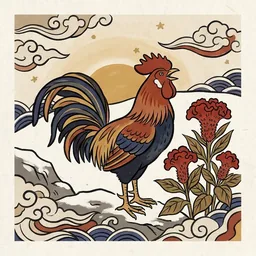
Gye-yu (癸酉) Day Pillar: Personality, Love and Career
Gye-yu (癸酉) is rain on a polished gem: clear, neat and well backed, with a sharp eye for flaws, a love of study and a wish to get it all just right.
- Clear-minded
- Refined
- Discerning
- Well supported
- Studious
- Perfectionist streak
At a glance
- Day stem (the "self")
- Gye (癸) · yin Water
- Day branch
- Yu (酉) · Rooster · yin Metal
- Growth stage of the day stem
- Illness (病)
- Nayin ("sound") element
- Sword-Edge Metal (劍鋒金) · Metal
- Void branches (kongwang)
- Sul (戌) · Hae (亥)
- Stem that combines with yours
- Mu (戊) → Fire
- Six-harmony partner
- Jin (辰)
- Clashing branch
- Myo (卯)
- Triad branches
- Chuk (丑) · Sa (巳)
Hidden stems
- Gyeong (庚)Direct Resource (正印)
- Sin (辛)Indirect Resource (偏印) · main qi
Stems stored inside the branch, each shown with its ten god relative to your day stem. The last one is the main qi.
Stem and branch. The branch feeds the stem. The day master is supported from below, so help and nourishment tend to arrive without much asking.
Growth stage of the day stem. Sensitive and thoughtful with a strong inner life. The body may tire easily; imagination and care run deep.
Nature and personality
The Gye-yu (癸酉) day pillar is fine rain or morning dew resting on a polished metal surface: a clear-minded, tidy and discerning temperament, quiet in manner and exact in taste. People born on a Gye-yu day tend to notice what is slightly off in a room, a sentence or a plan, to care a lot about getting things clean and right, and to be looked after by others more often than they admit. In Korean saju, the Four Pillars system, the day pillar (ilju) is the pair of characters that stands for the day you were born. The upper character, the day master, is the self; the lower one, the branch, is your inner circle and private temperament. Here the day master is 癸, yin water: not a river or an ocean but the most delicate water there is, mist, dew, drizzle, a spring seeping out of rock. It is receptive, sensitive and quietly intelligent, and it takes the shape of whatever vessel it is poured into. The branch is 酉, the rooster, a metal sign tied to dusk and to the crisp air of autumn. In the five-element cycle metal produces water, so the branch feeds the stem: dew forms because there is a cool, bright surface to gather on. In daily life that looks like help turning up without much asking, such as a senior who smooths the path, a family that keeps your place at the table, or a teacher who remembers what you were working on. Every branch also holds hidden stems, smaller energies tucked inside, and each is labelled with a ten god, one of ten names for how another stem relates to the day master. The rooster holds 庚 (Direct Resource, the lesser one) and 辛 (Indirect Resource, the main one). Resource means learning, protection and being cared for. Direct Resource is the formal kind: school, a recognised qualification, a parent's steady concern. Indirect Resource is the private kind: a self-taught skill, a quiet obsession, a hunch you trust. Neither hidden stem is a wealth or authority star, so ambition tends to show up as mastery more than as chasing, and Gye-yu often prefers to know a subject properly before putting themselves forward. The day master sits at the stage called Illness (病), the seventh of the twelve growth stages that picture a life from birth to renewal. The name is not a medical remark. It is the image of someone who has become sensitive, who feels weather and mood in the body and turns inward to think. It lends Gye-yu a fine perception and a tendency to tire in loud rooms. The nayin, the traditional poetic name of a pillar, is Sword-Edge Metal (劍鋒金): a blade at its finest point, which suits a mind that cuts cleanly and a tongue that sometimes does too.
Strengths
- Keen eye for detail and quality
- Precise, well-chosen words in speech and writing
- Studies thoroughly and keeps good notes
- Calm presence that others feel safe around
- Adapts to people without losing its own taste
Challenges
- Perfectionism that sees the flaw before the whole
- A cool, cutting remark when tired or let down
- Over-analysing, so decisions wait on more information
- Leaning on helpers, which slows trust in its own judgement
Love and relationships
Gye-yu tends to fall slowly and with taste. This is the person who notices that your coat sleeve is fraying and says nothing, then turns up with a quiet, well-chosen fix; who remembers which songs you skip; whose idea of romance is a carefully prepared evening rather than a grand gesture. The rooster's two Resource stars make care feel like looking after and being looked after, so affection often takes a mentoring shape, and the partner can feel both cherished and gently corrected. In saju the day branch is called the spouse palace, the seat of the closest partner in a chart, and here it holds nothing but Resource. Tradition reads that as a wish for a partner who is both a place to rest and a person to learn from, someone steady, clean in habits and honest. The Sword-Edge nayin shows its edge in a quarrel, as a short, precise sentence that is hard to unhear. What helps is a partner who gives specific praise, shares the planning and says plainly what bothers them. In return Gye-yu does well to raise a complaint while it is still small, instead of storing a list of tiny flaws to present later. Tradition also says 癸 is drawn to 戊, a broad, steady mountain of earth, and combines with it toward fire; read it as a liking for grounded, warm people, an old pattern rather than a rule.
Work and career
Work goes best when quality is the whole point. Gye-yu is the colleague who proofreads the deck at six in the evening and is the first person asked to check the contract, the translation, the label artwork or the lab notes. Fields that fit the polished-metal image include editing and translation, research, archive and library work, teaching, design, jewellery and other fine-detail crafts, accounting and auditing, and quality control of any kind. The two Resource stars favour paths with a mentor or a recognised craft, so an apprenticeship, a specialist qualification or a guild-like community usually serves better than a free-for-all. The weak point is exposure: this pillar often waits to be asked. Put your name on the work and send the summary yourself. Set a time limit on polishing too, because a version that is good enough and delivered beats a perfect one that arrives next quarter.
Money
No wealth star sits among the rooster's hidden stems, which tradition reads as money arriving through skill, reputation and the people who value your judgement rather than through chasing. Spending follows taste: one good pen, a well-made bag, repairing something instead of replacing it, paying a little more once for what will last. The leak is not carelessness but the long search for the perfect option, plus a habit of buying books, tools and equipment for projects not yet begun. A simple routine works well: an automatic monthly transfer to savings on payday, a fixed quality budget for things you will really use for years, and a one-week wait before any purchase that is not essential.
Energy and wellbeing
Both elements in this pillar, water and metal, are cool and clear in the five-element picture, with no fire or wood among the main characters. Tradition reads that as a person who benefits from warmth and movement: a warm drink in the afternoon, a walk in sunlight, stretching, and friends who make you laugh. The sensitivity of the Illness stage means that noise, clutter and tension soak into the body, so a tidy sleeping place and a few quiet minutes in the middle of the day matter more than they do for most. Metal is linked with breathing in the old texts, so slow breaths on an open-air walk are a gentle habit. This is traditional lifestyle symbolism, not medical advice; if you are tired for a long time, see a doctor.
Who you get on with
Traditionally the rooster's closest partner is the dragon (辰), its six-harmony match: earth that stores water, giving the dew somewhere to settle. Dragon-branch days such as Gap-jin (甲辰) are where to look for that feeling of being held. The rooster also forms a metal triad with the snake (巳) and the ox (丑), three branches that tend to feel organised and mutually competent; Gye-sa (癸巳) and Gye-chuk (癸丑) even share your water stem, so they can feel like relatives from the same cycle. The rabbit (卯) is the traditional clash, a blade meeting a flower: the rooster's precision against the rabbit's soft avoidance of conflict. It is a difference of tempo more than a curse, and it often settles when both say what they need in plain words. By element, other water and metal types feel like home; earth people give the water banks and steadiness; wood people bring play and ease, though they may look a little untidy to a pillar this exacting. Everything beyond the day pillar depends on the rest of each chart.
How life tends to unfold
Daewoon are the ten-year luck cycles that run alongside a life, each coloured by a stem and a branch. Gye-yu is the tenth of the sixty pillars, the last of the first run of ten, and its early decades are often a time of being guided: a family, a school or a mentor shapes the taste, and the most useful early decision is which craft to learn properly. In the middle years, cycles carrying wood tend to draw the water out into making and showing, a period of output and visibility. Fire cycles bring warmth and the pillar's wealth element, with work that earns and relationships that take up more room. Earth cycles add structure and responsibility, which can feel heavy but give the water a bed to run in. Metal and water cycles are the pillar's own kind and often feel like a deepening: more study, more inwardness, more people leaning on your judgement. Traditionally the dog (戌) and the pig (亥) are the void branches here, meaning that matters tied to them can feel less firmly anchored when they appear in a cycle or a year; treat it as a prompt to double-check details, not as a warning. Which decade is which depends on the rest of the chart.
Advice
Ship the work at ninety per cent and let the last ten be done in conversation, since other people see the flaw you cannot stop seeing at a different size. For every correction you make, give one specific appreciation, and say it in the same breath. Ask one person whose judgement you respect to read your draft, then take the first two sentences of their reply seriously and the rest lightly. Keep one drawer, one shelf or one playlist deliberately untidy, so that your sense of order has a place to rest.
Frequently asked questions
Is the Gye-yu day pillar a perfectionist?
Often, in the sense of taste rather than anxiety. The rooster's metal gives a fine eye for what is out of place, and the Sword-Edge nayin adds a precise, cutting way of saying so. It becomes a strength when it is pointed at a craft and a weakness when it is pointed at people. Setting a deadline for polishing helps a great deal.
What does the Sword-Edge Metal nayin mean for Gye-yu?
A nayin is a classical poetic name attached to each pair of characters, a bit like a nickname for the pillar. Sword-Edge Metal is a blade at its sharpest point, so it points to a mind that discriminates well and speaks exactly. It does not mean harshness is destined; it is a reminder that the edge works best when it is used deliberately.
Does the Illness growth stage mean Gye-yu people are unhealthy?
No. Illness is simply the seventh of twelve stage names that picture a life cycle, and it describes a state of heightened sensitivity and turning inward, not poor health. For Gye-yu it fits a person who picks up on atmosphere quickly and needs quiet to recover. Saju is a lens on temperament and habits, never a medical diagnosis.
Learn the terms on this page
Is this your day pillar?
Your day pillar comes from your exact birth date, not your birth year. Enter it in our Four Pillars calculator and it shows all four of your pillars.
New to saju? Saju (四柱, "four pillars") describes a person by the year, month, day and hour of birth. The day pillar is the centre of it: its stem is you, and its branch is your closest circle and your home life.