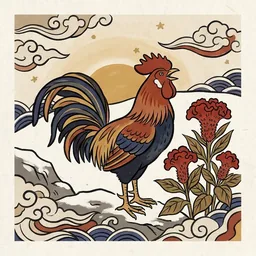
Gi-yu (己酉) Day Pillar: Personality, Love and Career
Gi-yu (己酉) is rich soil that gives up a gem: a warm, giving, sharp-eyed talker and maker who is at its best when the work is shared and seen by all.
- Expressive
- Generous
- Fine-tuned
- Sharp-eyed
- Craft-minded
- Easy to drain
At a glance
- Day stem (the "self")
- Gi (己) · yin Earth
- Day branch
- Yu (酉) · Rooster · yin Metal
- Growth stage of the day stem
- Birth (長生)
- Nayin ("sound") element
- Earth of the Great Post Road (大驛土) · Earth
- Void branches (kongwang)
- In (寅) · Myo (卯)
- Stem that combines with yours
- Gap (甲) → Earth
- Six-harmony partner
- Jin (辰)
- Clashing branch
- Myo (卯)
- Triad branches
- Chuk (丑) · Sa (巳)
Hidden stems
- Gyeong (庚)Hurting Officer (傷官)
- Sin (辛)Eating God (食神) · main qi
Stems stored inside the branch, each shown with its ten god relative to your day stem. The last one is the main qi.
Stem and branch. The stem feeds the branch. Energy flows outward into the world, which makes for expressiveness and generosity, and a risk of being drained.
Growth stage of the day stem. A newborn's stage: hopeful, quick to learn and well supported by others, with a fresh start in the air.
Nature and personality
The Gi-yu (己酉) day pillar is garden soil that yields a polished jewel: a giving, tasteful and articulate personality that expresses itself through words, craft and care, and has a clear eye for what is well made. People born on a Gi-yu day tend to be generous with their time and ideas, neat in how they present things, and happiest when they are making something useful for others. A day pillar is the pair of characters, taken from Korea's sixty-day cycle, that marks the day you were born in the Four Pillars system called saju. Its upper character, the day master, is you yourself; the lower one, the branch, describes your private temperament and closest circle. The day master here is 己, yin earth: tilled, fertile soil rather than rock. The branch is 酉, the rooster, whose element is metal, the refined kind, a bell, a blade edge, a gem. The rooster is also the bird that calls the day open, which suits a pillar that likes to announce, explain and name things. In saju earth produces metal, so the stem feeds the branch. Energy flows outward into the world, which makes for expressiveness and generosity, and a risk of being drained. It is the friend who spends the evening helping you reword a difficult email, and then finds there is nothing left for their own. The rooster holds two hidden stems, each named by a ten god, which is a saju label for how another stem relates to the day master. The main one is 辛, polished metal, called Eating God: appetite for good things, ease, craft and the pleasure of making. The fainter one is 庚, raw sharp metal, called Hurting Officer: the talent to speak up, the eye for flaws and the dislike of rules that no one can justify. Both are output stars, which is why this pillar is more about giving out than taking in. The day master's growth stage is Birth (長生), the first breath of a newborn, a fresh start with a quick, curious energy. The nayin, the poetic nickname, is Earth of the Great Post Road (大驛土): a broad main road with relay stations where news, travellers and goods pass, and the person standing in the middle of the traffic.
Strengths
- Clear, vivid expression in speech and writing
- Taste and an eye for detail and quality
- Generosity that makes people feel looked after
- Quick learner who is happy to try again
- Honest critic who improves what others make
Challenges
- Giving until there is little left for yourself
- Sharp remarks that arrive faster than the kind ones
- Perfectionism about finish, which can delay starting
- Wanting thanks without asking for it
Love and relationships
A Gi-yu person says love through things made and said: the playlist built around your mood, a carefully worded card, a dinner plated as if you were guests at a restaurant. The stem feeds the branch, and the branch is traditionally called the spouse palace, the seat of the partner in a chart. The branch here holds only output stars, so the pattern is one of giving and shaping the relationship through talk, humour and attention to how things feel. The weak spots come from the same place. The hidden Hurting Officer can turn a small disappointment into a precise sentence that lands harder than intended, and the pillar may pour so much in that it quietly counts what came back. What Gi-yu needs is a partner who answers with words as well as deeds, who laughs at the jokes and who says what they appreciate out loud. A listener who is patient with detail suits them; someone who stays silent for days and expects to be guessed does not.
Work and career
Work goes best when Gi-yu is asked to make, explain or refine. The typical scene is the colleague who is handed everyone's slides before the big meeting and returns them sharper, with the one sentence that makes the point. Fields that fit include writing, editing and translation, teaching and training, design and styling, cooking and food, music, jewellery and fine craft, communications and customer-facing work, and quality review of any kind. Because both hidden stems are output stars, expression is the career, not a side effect. Roles with no voice, such as pure data entry under a manager who never asks for opinions, may feel airless. The Great Post Road also hints at work with many people passing through: a hub, a front desk, a studio with visitors. The risk is saying yes to every request, so a clear scope and a named fee for the extra tasks are worth setting early.
Money
Neither hidden stem is a wealth star, so Gi-yu usually earns through skill, voice and reputation rather than through hunting for deals. Tradition says output feeds income when it is turned into a finished thing, so a portfolio, a recipe collection or a reliable service is worth more than an idea in progress. Spending leans toward good tools, good meals and gifts. A simple guard is an automatic transfer to savings on payday and one small budget for treating others, so generosity has a ceiling you set yourself, not one set by the end of the month.
Energy and wellbeing
The earth stem pours out energy into the metal branch, so the usual theme is depletion: a voice that is tired by the afternoon, a week of helping everyone, a head full of other people's drafts. Regular meals, which echo the earth element, quiet time with no one to answer, enough sleep and a short walk outdoors help restore the soil. Also giving yourself a finishing time for the day, after which you stop polishing, is a lifestyle change that works. This is a five-element reading of habits, not medical advice.
Who you get on with
Traditionally the rooster has a six-harmony bond with the dragon (辰), a pairing said to turn toward metal; it is earth with metal, a supportive, practical match. The rooster also forms a metal triad with the ox (丑) and the snake (巳), so people with those branches often feel in step at once: similar standards, similar humour, a shared fondness for doing things properly. The clash is the rabbit (卯), the edge against the sapling, and the rabbit is also a void branch for this pillar (寅卯), which tradition reads as a link that feels thinner or less binding. The day master 己 combines with 甲 toward earth, so a 甲 day master is the classic partner of the stem. In terms of elements, fire people refine and warm metal and often bring out a Gi-yu's confidence, while water people can soothe the pillar's overworked edge. Neighbours in the cycle are Mu-sin and Gyeong-sul. As always, these are tendencies, and the rest of each chart decides how they play out.
How life tends to unfold
Saju reads a life in ten-year luck cycles called daewoon, each with its own stem and branch, and the starting age is worked out from the birth date. Gi-yu's growth stage is Birth, which often shows as an early start: a lively youth, an early interest in language or making, and a willingness to try new places and people. The Great Post Road nayin adds a feel of movement through the middle years, with changes of city, job or circle. Cycles with more earth and fire tend to support and warm, and fire in particular often brings recognition. Metal cycles intensify the outgoing side, with more work, more audience and more risk of overextension. Water cycles bring income opportunities from what you make, and wood cycles bring structure, rules and bosses. Traditionally 寅 and 卯 are void branches for this pillar, so cycles or years carrying them can feel less settled, which is a good cue to write agreements down. How each decade feels depends on the rest of the chart.
Advice
Finish, hand over, and stop polishing: pick a point at which the work is good enough to be shared, and send it. Say the kind sentence before the accurate one. Keep one project that no one asked for and no one will see, because a giver needs a place where nothing is owed. And when you feel drained, take it as a signal to stop giving for a day, not as a sign that you have no more to give.
Frequently asked questions
What kind of personality does the Gi-yu day pillar have?
Gi-yu is usually expressive, tasteful and generous, with a sharp eye for detail and quality. The earth stem feeds the metal rooster, so energy flows outward into words, craft and care for others. The same flow can leave Gi-yu drained, which is why rest and clear boundaries matter for this pillar.
Why is Gi-yu said to speak so directly?
The rooster branch hides 庚, called Hurting Officer in saju, the star of speech that challenges rules and notices flaws. Alongside it sits 辛, Eating God, the star of ease and craft. Together they make talk a main channel for this pillar: vivid and witty, sometimes sharper than intended, and best softened by saying the kind part first.
Does Gi-yu clash with the rabbit?
In traditional branch relations the rooster (酉) and the rabbit (卯) are a clash, meaning two opposite tempos. Here the rabbit is also one of this pillar's void branches, which tradition reads as muting the link rather than sharpening it. Many rooster and rabbit pairs are close friends. It is a tendency, not a rule.
Learn the terms on this page
Is this your day pillar?
Your day pillar comes from your exact birth date, not your birth year. Enter it in our Four Pillars calculator and it shows all four of your pillars.
New to saju? Saju (四柱, "four pillars") describes a person by the year, month, day and hour of birth. The day pillar is the centre of it: its stem is you, and its branch is your closest circle and your home life.