Sin-yu (辛酉) Day Pillar: Personality, Love and Career
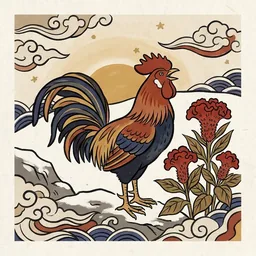
Sin-yu (辛酉) is a gem in a metal case, the rooster: exact, proud and honest, it has high bars, keeps its own counsel, and needs a bit of room to soften.
- Precise
- Self-contained
- Principled
- High standards
- Dignified
- Single-minded
At a glance
- Day stem (the "self")
- Sin (辛) · yin Metal
- Day branch
- Yu (酉) · Rooster · yin Metal
- Growth stage of the day stem
- Prime post (建祿)
- Nayin ("sound") element
- Pomegranate Wood (石榴木) · Wood
- Void branches (kongwang)
- Ja (子) · Chuk (丑)
- Stem that combines with yours
- Byeong (丙) → Water
- Six-harmony partner
- Jin (辰)
- Clashing branch
- Myo (卯)
- Triad branches
- Chuk (丑) · Sa (巳)
Hidden stems
- Gyeong (庚)Rob Wealth (劫財)
- Sin (辛)Companion (比肩) · main qi
Stems stored inside the branch, each shown with its ten god relative to your day stem. The last one is the main qi.
Stem and branch. Stem and branch share one element. The energy is concentrated and single-minded, strong in focus and short on variety.
Growth stage of the day stem. The stage of a person at a post of their own: steady strength, independence and the ability to stand on your own feet.
Nature and personality
The Sin-yu (辛酉) day pillar is a finished jewel inside its own metal setting, the rooster at the hour of sunset: a precise, self-contained and quietly proud temperament with high standards and a clear eye for what is right and what is slightly off. Because both halves of the pillar are metal, people born on a Sin-yu day tend to be focused, tidy and exact, and they take craft, truth and their own word seriously. In saju, the Korean four pillars system, the day you were born is written as a pair of characters called the day pillar. The upper one is the day master, which is you; the lower one, the day branch, is one of twelve animals and shows your private temperament. Here the stem 辛 is yin metal, the finished and refined kind: jewellery, a fine needle, a surgeon's instrument. The branch 酉 is the rooster, metal again, tied to the eighth month, when the harvest is in and the autumn air turns dry and clear. Since stem and branch share one element, the energy is concentrated: strong in focus and weak in variety, a person who would rather do one thing exactly right than ten things well enough. The rooster adds its own character. It is the animal of dawn, neat, upright, alert and a little vain about its feathers, and in Korean folklore goblins vanish at its first crow. That is a good picture of the Sin-yu knack for ending confusion with a clear sentence. Inside the branch are only two hidden stems, both metal, each tagged with a ten god, saju's ten labels for how an energy relates to the day master. The main one is 辛, Companion, a self-reliant core that measures itself against its own standard. The residual one is 庚, Rob Wealth, a blunter, harder metal that shares what it has and compares itself with others. The growth stage of the day master is Prime post (建祿), the moment a person takes up their own office and earns their own living: capable, independent and unwilling to depend on others for the basics. The nayin, a poetic nickname each pair carries, is Pomegranate Wood (石榴木): a tree with a tough rind and a crowd of bright seeds, which hints that there is far more colour inside than the surface suggests.
Strengths
- An exact eye for errors, quality and proportion
- Keeps promises and expects the same of others
- Works well alone with little supervision
- Clear, honest speech with no padding
- Dignified composure when things go wrong
Challenges
- Perfectionism that makes both starting and finishing harder
- Criticism that lands as a verdict, not a suggestion
- A narrow track: hard to switch plans or try the messy option
- Reluctance to accept help or admit uncertainty
Love and relationships
Standards come before sparks here. A Sin-yu person is rarely swept away; they notice who is punctual, who means what they say and who treats waiters well, and they decide slowly. When committed they are loyal and tidy-minded, and their love language is competence: the booking made, the form filled in, the thing fixed quietly before you noticed it was broken. The weak spot is that the same sharp eye turns on the partner. A comment meant as help can feel like a grade, and a partner who is told what is wrong more often than what is right may start to shrink. The branch holds Rob Wealth, which tradition links with a strong sense of mine and yours and a keen watch on fairness, so privacy, money and time all matter. What they need is someone honest and steady who is not afraid of a direct remark, who says that stung without drama, and who can tease them out of seriousness. A partner who competes in silence is a poor fit; one who is simply at ease with themselves is a very good one.
Work and career
Quality is the home territory of this pillar. Think of the colleague who spots the misplaced decimal in a slide at five to five, or the editor whose changes are always smaller and better than expected. Editing and proofreading, auditing and quality assurance, engineering and precision manufacturing, jewellery and watchmaking, tailoring, laboratory and data work, and contract or technical drafting all use the exactness. Prime post is the growth stage of someone who holds their own seat, so a desk of your own, or a small studio or practice, tends to suit better than a role that is mostly meetings. The practical trap is delegating and finishing: set what good enough means before the task begins, and let a colleague with a different pace see the work before it is perfect.
Money
Money is earned by the person's own effort and counted carefully. Many Sin-yu people keep a neat ledger, know to the coin where the month went and would rather buy one excellent tool than three adequate ones. The Companion and Rob Wealth in the branch both belong to the family of peers, so two themes tend to come up: comparing yourself with people at your level, and lending or sharing with peers more than you planned. Two habits keep it clean. Decide the amount you are willing to lend before you are asked, and treat it as a gift from the start. And keep a small line in the budget that exists purely for enjoyment and is not required to be useful.
Energy and wellbeing
With metal on top and metal below, the typical pattern is tension: a clenched jaw, a tight schedule, an evening spent re-checking something that was fine. Dryness is the traditional autumn image, so softening things help: a warm bath, a walk in damp green places, swimming, stretching, an hour with no goals attached. Water is said to soften metal's edge, and wood, such as a garden or a houseplant, gives it something living to shape. Regular sleep is worth protecting because the mind is so busy at night. This is an elements-based reading of habits, not health advice.
Who you get on with
Tradition gives the rooster a six harmony partner in the dragon (辰), a warm, damp earth that holds and feeds metal; dragon days such as Gap-jin or Byeong-jin are the place to look for easy company. It also sits in a metal triad with the snake (巳) and the ox (丑). The ox is one of this pillar's void branches (子丑), which tradition reads as a link that feels thin or arrives late, so the snake is the more present of the two. The traditional clash is the rabbit (卯), wood against metal, like scissors meeting grass: a gentle and flexible pace beside a precise one, and often a lesson in softness. Separately, 辛 is said to combine with 丙, the sun, toward water, a picture of light warming a polished surface, and a 丙 day master often draws out the lighter and more playful side of you. Among the five elements, earth supports you, water gives you an outlet, and fire gives shape and recognition, if it is not too fierce. Two metal people together can be sharp and efficient and tend to need a third element of warmth.
How life tends to unfold
Saju counts a life in ten-year luck cycles called daewoon. Each decade is governed by one stem-and-branch pair, and the age at which the first begins is worked out from your birth date. With the day master at Prime post, many Sin-yu people stand on their own feet early: a first job, a first rent, a first rule of their own. In general, metal cycles stack more of the same and can make you sharper and narrower; water cycles soften the edge and give an outlet for talent; fire cycles bring heat, deadlines, authority and recognition, the forge that works metal into shape; wood cycles bring materials to work on, such as projects and income; and earth cycles bring cushioning, teachers and family support. Your other three pillars decide how any decade actually plays out, so treat all of this as tendency and not as schedule.
Advice
Define done before you start, and stop there. For every correction you give, say one thing that is right, out loud. Put one gloriously untidy interest into the week, something you do badly on purpose, because it keeps the whole system from locking up. Tell somebody about your doubts earlier than feels comfortable; it will cost less than carrying them alone.
Frequently asked questions
Is the Sin-yu day pillar too strict or perfectionist?
It leans exact more than harsh. Metal over metal gives a sharp eye, firm standards and a distaste for sloppiness, and many Sin-yu people are hardest on themselves. Whether this becomes rigidity depends on the other pillars and on habits; setting a definition of done and sharing drafts early are the usual ways to keep the exactness useful.
What does it mean that both stem and branch are metal in Sin-yu?
When the day master and the day branch share one element, saju reads the energy as concentrated and single-minded, with strong focus and not much variety. For Sin-yu that means everything runs through one channel: precision, standards and self-reliance. The balance usually comes from other elements elsewhere in the chart and from the luck cycles.
Is Sin-yu a lonely day pillar?
No, though it can look private. This pillar keeps its counsel and picks friends carefully, so the circle is often small and long-lasting. The Rob Wealth in the branch makes fairness among peers important, and one void-branch link is read as thin.
Learn the terms on this page
Is this your day pillar?
Your day pillar comes from your exact birth date, not your birth year. Enter it in our Four Pillars calculator and it shows all four of your pillars.
New to saju? Saju (四柱, "four pillars") describes a person by the year, month, day and hour of birth. The day pillar is the centre of it: its stem is you, and its branch is your closest circle and your home life.