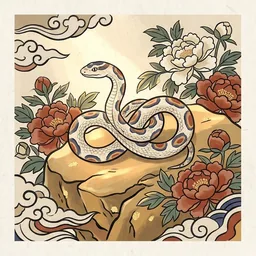
Gi-sa (己巳) Day Pillar: Personality, Love and Career
Gi-sa (己巳) is garden soil warmed by a snake's fire: calm, sharp and able, it is a fast learner who plans in a quiet way and says less than it knows.
- Watchful
- Composed
- Quick learner
- Private planner
- Dry wit
- Self-assured
At a glance
- Day stem (the "self")
- Gi (己) · yin Earth
- Day branch
- Sa (巳) · Snake · yin Fire
- Growth stage of the day stem
- Peak (帝旺)
- Nayin ("sound") element
- Wood of the Great Forest (大林木) · Wood
- Void branches (kongwang)
- Sul (戌) · Hae (亥)
- Stem that combines with yours
- Gap (甲) → Earth
- Six-harmony partner
- Sin (申)
- Clashing branch
- Hae (亥)
- Triad branches
- Yu (酉) · Chuk (丑)
Hidden stems
- Mu (戊)Rob Wealth (劫財)
- Gyeong (庚)Hurting Officer (傷官)
- Byeong (丙)Direct Resource (正印) · main qi
Stems stored inside the branch, each shown with its ten god relative to your day stem. The last one is the main qi.
Stem and branch. The branch feeds the stem. The day master is supported from below, so help and nourishment tend to arrive without much asking.
Growth stage of the day stem. The height of strength: confident and commanding, with a real risk of overreaching or going it alone.
Nature and personality
The Gi-sa (己巳) day pillar is garden soil warmed by a snake's fire: a calm, watchful personality that thinks well ahead and shows only part of what it knows. People born on a Gi-sa day tend to learn fast, keep their plans to themselves and turn out to be more strategic than their easygoing manner suggests. In Korean saju (the Four Pillars system), the day you were born is written as a pair of characters called the day pillar. The upper one, the day stem or day master, stands for you; the lower one, the day branch, is one of twelve animals and describes your private temperament and your closest circle. Here the day master is 己, yin earth. It is not a mountain but tended soil: a vegetable plot, the bank of a rice paddy, ground that is soft, receptive and meant to grow things. The branch is 巳, the snake, which carries fire, and fire is what makes earth: ash and warmth turn into soil. So the branch feeds the stem. In daily life this looks like help that arrives without much asking, such as a senior who puts your name forward, or a relative who lends a spare room just when you need one. Every branch holds hidden stems, smaller energies tucked inside, and each is labelled by a ten god, one of ten roles that another stem can play toward the day master. The snake's main hidden stem is 丙, the sun, a Direct Resource: learning, approval from teachers and elders, the orderly kind of support. Beside it sits 庚, the Hurting Officer, a gift for expression, a sharp eye for flaws and an allergy to pointless rules, and 戊, Rob Wealth, a same-element peer that brings companions, friendly rivals and a habit of measuring yourself against the people alongside you. The day master stands at Peak (帝旺), the strongest of the twelve growth stages, so a Gi-sa person usually feels capable early and holds a firm sense of their own way. The nayin, the traditional poetic name for the pillar, is Wood of the Great Forest (大林木): a whole forest of ideas growing from patient, well-fed ground.
Strengths
- Reads people and situations before speaking
- Learns quickly and retains what it learns
- Dry, understated humour
- Plans several steps ahead
- Steady self-confidence that does not need an audience
Challenges
- Keeps plans and feelings so private that others cannot help
- Can sound cutting when the sharp eye finds a flaw
- Measures itself against peers more than it admits
- Overthinks in the evening, replaying conversations
Love and relationships
Someone with this pillar often watches for a long while before saying a word, then turns out to have noticed everything: which of your jokes you were proud of, which friend you were quietly worried about. Interest is shown through attention and timing, not declarations, so a Gi-sa person may seem cool for weeks and then do something precise and thoughtful that makes everything clear. The day branch is traditionally called the spouse palace, the seat of the closest partner in a chart, and here it holds the snake with its Direct Resource: someone who wants a partner they can learn from and respect, with a real mind and a settled way of life. The weak point is the Hurting Officer, whose tongue can be quick when disappointed, and the quiet habit of testing people before trusting them. A partner who is direct, warm and unbothered by silence suits this pillar well; so does one who says outright what they feel, because Gi-sa is better at reading signs than at guessing. Saying one sincere sentence a week, unprompted, will do more than a year of careful observation.
Work and career
This pillar works best where thinking comes first and results are judged on quality: research, editing and writing, strategy and planning, consulting, teaching, product or interior design, translation, and craft or cooking at a high level. The Direct Resource favours roles where credentials and expertise are respected; the Hurting Officer favours work where you may improve the process rather than follow it blindly. A typical Gi-sa colleague is the one who says little in the meeting and then sends the memo that reorganises the whole project. Because the day master is strong, an overly supervised job feels airless. Look for a lane with real autonomy and a clear standard. The risk is staying a back-room mind: tell people what you are working on, and let your name sit on the result, or the credit will drift to louder neighbours.
Money
Money tends to follow knowledge and reputation here, not hustle. With a Direct Resource as the main hidden star, spending leans toward courses, good tools, well-made clothes and anything that sharpens a skill; the Rob Wealth beside it adds a social cost, because dinners, gifts and keeping up with a peer group can quietly add up. Gi-sa is usually good at planning and less good at tracking small leaks. A simple routine works: one automatic monthly transfer to savings on payday, a fixed 'peer budget' for outings and presents, and a yearly look at subscriptions you no longer use.
Energy and wellbeing
In the five-element view this pillar is earth over fire: warm, dry ground. Tradition reads that as a tendency toward mental heat, a mind that keeps planning after the lights are out, and a body that holds tension in the jaw and shoulders. Cooling habits fit well: a regular bedtime, a walk after dinner, water through the day and a screen-free half hour to close the evening. Because the pillar likes to work things out alone, a talk with a friend does more than another hour of thinking. This is lifestyle symbolism, not medical advice.
Who you get on with
Traditionally the snake has a six-harmony partner in 申, the monkey: a clever, quick-handed sign that matches the snake's wit, and the pairing is often described as easy and a little playful. The snake also forms a metal triad with 酉 (rooster) and 丑 (ox), three branches said to pull in one direction, so rooster and ox people often feel dependable and well-organised to you. The clash is 亥, the pig, a pairing of opposite tempos; since the pig is also one of this pillar's void branches (戌 and 亥), some teachers read the friction as milder than the word suggests, with a link that feels thinner or arrives and fades. Treat it as a tendency, not a verdict. The day stem 己 is said to combine with 甲, big yang wood, toward earth, so a person with that stem often feels like a natural match: a tree for the garden. By element, fire people warm you, metal people sharpen your ideas, and wood people press on you in ways that can feel stressful or motivating. What a particular friendship is like depends on the rest of each chart.
How life tends to unfold
Daewoon are the ten-year luck cycles of saju. Each pairs a stem with a branch to colour one decade, and the age at which the first one begins comes from the birth date. Gi-sa is number six of the sixty pillars, and its early decades often bring a quiet apprenticeship: school, a mentor, a field you learn thoroughly. Fire and earth cycles tend to feel like support and confirmation; metal cycles bring output, with the chance to publish, build or teach what you know; wood cycles press with responsibilities and expectations, which can feel heavy but also pushes you into a bigger role; water cycles bring contacts, trade and movement. Wood of the Great Forest describes the whole shape well: slow growth that becomes broad shade. The two void branches (戌 and 亥) are traditionally seen as spots where plans feel less solid, a hint to write agreements down, not a warning. Gi-sa only sets the tendency; the full chart decides the timing of each decade.
Advice
Share one half-formed plan each month with someone you trust, before it is polished; the help this pillar attracts needs something to attach to. Watch the first sentence in a disagreement, because the sharp one is always ready. Keep a small circle of peers you cheer for, and compare yourself with who you were last year. End the day with something that does not need thinking: cooking, a walk, washing up.
Frequently asked questions
Is Gi-sa a strong day pillar?
On its own it leans strong. The day master stands at Peak, the strongest growth stage, and the fire in the snake feeds the earth stem, while a same-element hidden stem adds more. Strength is judged against the whole chart, though, especially the month pillar, so one pillar cannot settle the question.
Which day pillars are compatible with Gi-sa?
Tradition points first to the monkey branch (six harmony) and to the rooster and ox branches (metal triad), and to a 甲 day master through the stem combination. The pig is the traditional clash. These are leanings, not rules: two people who talk honestly matter more than any pairing of characters.
How is Gi-sa different from Gi-myo and Gi-chuk, the other earth-stem pillars?
All three share the same yin earth stem, so the self is the same tended soil, but the branch changes the surroundings. Gi-sa has a snake's fire feeding it from below. Gi-myo has rabbit wood pressing on it, and Gi-chuk has ox earth beneath it. Different branches make three quite different people.
Learn the terms on this page
Is this your day pillar?
Your day pillar comes from your exact birth date, not your birth year. Enter it in our Four Pillars calculator and it shows all four of your pillars.
New to saju? Saju (四柱, "four pillars") describes a person by the year, month, day and hour of birth. The day pillar is the centre of it: its stem is you, and its branch is your closest circle and your home life.