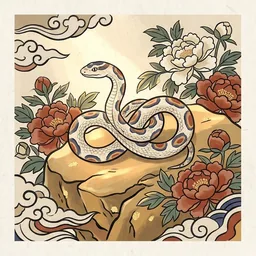
Sin-sa (辛巳) Day Pillar: Personality, Love and Career
Sin-sa (辛巳) is fine white wax metal by a hot furnace: calm, exact and dutiful, it sets its own high bar and grows sharper and wiser when put to the test.
- Exacting
- Dutiful
- Composed
- Inward
- Tempered by pressure
- Quietly competitive
At a glance
- Day stem (the "self")
- Sin (辛) · yin Metal
- Day branch
- Sa (巳) · Snake · yin Fire
- Growth stage of the day stem
- Stillness (死)
- Nayin ("sound") element
- White Wax Metal (白蠟金) · Metal
- Void branches (kongwang)
- Sin (申) · Yu (酉)
- Stem that combines with yours
- Byeong (丙) → Water
- Six-harmony partner
- Sin (申)
- Clashing branch
- Hae (亥)
- Triad branches
- Yu (酉) · Chuk (丑)
Hidden stems
- Mu (戊)Direct Resource (正印)
- Gyeong (庚)Rob Wealth (劫財)
- Byeong (丙)Direct Officer (正官) · main qi
Stems stored inside the branch, each shown with its ten god relative to your day stem. The last one is the main qi.
Stem and branch. The branch controls the stem. There is a constant pull of pressure and duty that builds discipline and inner tension together.
Growth stage of the day stem. A still stage: introspective, deep and focused, sometimes seeming detached. The mind leads more than action does.
Nature and personality
The Sin-sa (辛巳) day pillar is delicate metal over the snake's furnace: a jewel being worked under heat, or white wax metal softening just enough to take its shape. People born on a Sin-sa day tend to be composed, exacting and dutiful, with a private standard so firm that nobody else needs to set one for them. In Korean saju, the Four Pillars system, your birth date gives a day pillar made of two characters. The upper one, the day master, stands for you; the lower one, the day branch, is one of the twelve animals and describes your inner temperament and nearest circle. Here the day master is 辛, yin metal: not a blade but fine metal such as a ring, a clasp or a pair of precise tweezers. The branch is 巳, the snake, and it is fire, the sharpest heat of early summer. Fire melts and shapes metal, so the branch controls the stem. That is the engine of this pillar: a steady pull of duty and pressure that builds discipline and inner tension together. It is the person who rereads the message three times before sending, feels an unfinished task like a pebble in a shoe, and cannot quite relax until the thing is right. The snake holds three hidden stems, and each carries a ten gods role, a label for how another stem relates to the day master. The main one is 丙, Direct Officer: rules, duty and orderly standing, here in its straightforward form. It is also the stem that 辛 traditionally combines with, so the day master's classic partner sits in the main seat of its own branch, which tradition reads as a duty accepted willingly. Beneath it are 庚, Rob Wealth, a strong metal peer that shares and also compares, and 戊, Direct Resource, steady mountain earth, the formal kind of support such as teachers and institutions. The growth stage is Stillness (死), the image of a field after harvest: quiet, inward and reflective, with no hurry. The nayin, the pillar's poetic nickname, is White Wax Metal (白蠟金), metal that has not yet been cast and takes its form slowly under steady warmth.
Strengths
- Self-discipline that needs no supervisor
- Thorough, careful and hard to rush into mistakes
- Responsible when others drop things
- Calm, thoughtful presence in a heated room
- Refines work until it is clean
Challenges
- Perfectionism that makes delegating hard
- Holds feelings in and carries tension in the body
- Measures itself against peers more than it admits
- Takes on duties out of obligation, not desire
Love and relationships
Sin-sa takes a long time to say yes and a very long time to say goodbye. Courtship is cautious: the first signs are often small, such as always being the one who remembers to confirm the table, or answering a late-night message with a full, considered paragraph. Once committed, this pillar treats the relationship as a responsibility it intends to do well. In saju the day branch is the spouse palace, the traditional seat of the partner, and here it holds a Direct Officer. Tradition reads that as a liking for principled, dependable and self-respecting people. The Rob Wealth hidden beside it can show up as quiet comparison with a partner's friends or old flames, or as sharing money and chores very evenly. The honest weak spot is composure used as armour: feelings are weighed for propriety before they are voiced, so a partner may mistake calm for coolness. What helps is someone who asks a second question, who is steady without being rigid, and who does not need a performance of emotion to believe it exists.
Work and career
Sin-sa tends to do well in structures with clear standards and a meaningful duty: engineering and precision manufacturing, quality assurance, compliance and audit, public service, law-related administration, accounting, editing, technical writing, research, architecture drawings, and fine metalwork or jewellery. The Direct Officer likes a defined role and a clean line of reporting, so people with this pillar often rise through institutions steadily and with a reputation for reliability. A typical scene is the colleague who is handed the audit nobody else wanted and writes the checklist that is still being used years later. The weak point is control: perfectionism makes it hard to trust others with a part of the work, and the Rob Wealth makes peer comparison sting. Setting a clear standard for done, and a deadline for the last polish, protects both your evenings and your team.
Money
Money tends to come through position and salary, in a steady and orderly way, not through deals or lucky breaks, since its hidden stems carry no wealth star and the Direct Officer rewards duty. Spending often goes to obligations: supporting family, gift envelopes for weddings and funerals, the colleague's leaving present, and the cost of keeping up appearances. The Rob Wealth is the traditional picture of money shared with peers, so splitting costs fairly matters to Sin-sa. A monthly budget with a named line for obligations and an automatic transfer to savings on payday keeps generosity from becoming a quiet drain.
Energy and wellbeing
In the five-element view Sin-sa is metal over fire, and tradition reads that as heat and tension held in the body: a tight jaw, shoulders that climb toward the ears, a mind that keeps working after the day has ended. The Stillness stage asks for genuine stillness. Cool, slow habits suit this pillar, such as a warm bath, evening tea, a walk by water, a fixed hour to stop answering messages and regular sleep. If tension or sleeplessness lingers, a doctor is the right person to ask; saju is a lens for temperament, not a diagnosis.
Who you get on with
Traditionally the snake has a six-harmony bond with the monkey (申) and forms a metal triad with the rooster (酉) and the ox (丑), three signs that often feel like colleagues on the same wavelength, tidy, direct and quick to understand a standard. The clash is the pig (亥): water against fire, a hearty, easygoing sign meeting a careful one, which tends to feel like two different ideas of effort rather than anything hostile. Say plainly what you need and it usually softens. The void branches (空亡) of this pillar are 申 and 酉, which are the harmony partner and a triad member themselves; tradition reads that as links that feel quieter or need some effort to build, a nuance and not a barrier. The pillar before this one in the cycle is Gyeong-jin (庚辰), the next is Im-o (壬午), water over fire. By element, earth people support, water people loosen the tension and fire people intensify it. How these pairings feel in practice depends on the whole of both charts.
How life tends to unfold
Daewoon are the ten-year luck cycles of saju, each coloured by a stem and a branch; the starting age and the direction are worked out from the birth date. With the day master at the Stillness stage, many Sin-sa people are serious early, the child who preferred to watch before joining in, and grow more at ease and more distinct with age. In general, earth cycles add steady support and credentials; metal cycles bring peers, rivals and partners; water cycles release pressure and encourage movement, study abroad or a change of field; wood cycles open practical chances and can stretch the schedule; and fire cycles raise the officer pressure, with promotions, scrutiny and heavier duties, which can feel strenuous yet is the very heat that shapes White Wax Metal. Which stretch is which depends on the whole chart, so these are tendencies, not a timetable.
Advice
Write down what finished looks like before you begin, then stop when you reach it. Decline one obligation a month without a long explanation, and keep one evening where nothing is useful. Let a colleague finish something their own way and resist the final edit. When praise comes, take it for the full minute; the standard you hold for yourself is already visible to everyone else.
Frequently asked questions
Is the Stillness stage a bad sign for Sin-sa?
No. The character used for this growth stage, 死, usually means death, but in the twelve-stage cycle it simply marks a still, inward phase, like a field after harvest or a seed before spring. For Sin-sa it shows up as reflection, patience and depth, not as a lack of energy. It is a position, not a verdict.
Why do Sin-sa people feel so much pressure?
Because in this pillar the branch controls the stem: the fire of the snake presses on the fine metal above it, and the hidden Direct Officer is the star of duty. The result is a constant, self-applied sense of responsibility. It builds discipline and reliability, and the cost is tension, which rest and a clear definition of done can ease.
Is the Sin-sa personality cold or strict?
Reserved and exacting, yes, but not cold. Sin-sa people weigh feelings before voicing them, so warmth can arrive late or in small practical acts. With people they trust they are often funny and generous. The strictness is mostly pointed at themselves, and they relax when a partner or friend is patient enough to wait.
Learn the terms on this page
Is this your day pillar?
Your day pillar comes from your exact birth date, not your birth year. Enter it in our Four Pillars calculator and it shows all four of your pillars.
New to saju? Saju (四柱, "four pillars") describes a person by the year, month, day and hour of birth. The day pillar is the centre of it: its stem is you, and its branch is your closest circle and your home life.