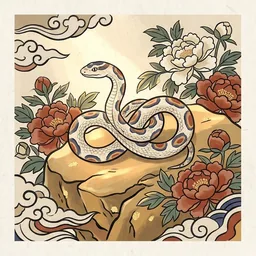
Gye-sa (癸巳) Day Pillar: Personality, Love and Career
Gye-sa (癸巳) is a long river in early sun: calm, neat and watchful, it plans far ahead, likes the proper way, and moves hard when the time is right for it.
- Composed
- Orderly
- Watchful
- Long-range planner
- Properly done
- Reserved
At a glance
- Day stem (the "self")
- Gye (癸) · yin Water
- Day branch
- Sa (巳) · Snake · yin Fire
- Growth stage of the day stem
- Conception (胎)
- Nayin ("sound") element
- Long-Flowing Water (長流水) · Water
- Void branches (kongwang)
- O (午) · Mi (未)
- Stem that combines with yours
- Mu (戊) → Fire
- Six-harmony partner
- Sin (申)
- Clashing branch
- Hae (亥)
- Triad branches
- Yu (酉) · Chuk (丑)
Hidden stems
- Mu (戊)Direct Officer (正官)
- Gyeong (庚)Direct Resource (正印)
- Byeong (丙)Direct Wealth (正財) · main qi
Stems stored inside the branch, each shown with its ten god relative to your day stem. The last one is the main qi.
Stem and branch. The stem controls the branch. You press on your surroundings and act on them; practical drive is high and so is the effort.
Growth stage of the day stem. A seed of potential: ideas are forming, plans come before action, and nurture matters a great deal.
Nature and personality
The Gye-sa (癸巳) day pillar is a long, slow river in the early-summer sun: a composed, orderly and watchful temperament that plans quietly, trusts the proper way of doing things and moves with real force once it has decided. People born on a Gye-sa day tend to look calm, keep a careful eye on money, standing and reputation, and turn out to be more ambitious than their quiet manner suggests. Saju, the Korean Four Pillars system, names every day with a pair of characters, and that pair is the day pillar (ilju). Its upper half, the day master, stands for you yourself; its lower half, the branch, stands for your private side and inner circle. Here the day master is 癸, yin water: mist, spring water, rain on warm stones. The branch is 巳, the snake, a fire sign tied to the late morning and the first heat of summer. Water meets fire, and in the cycle of the elements water is the one that controls fire, so the stem controls the branch. In saju terms that means you press on your surroundings and act on them: practical drive is high and so is the effort. Picture the steam that rises off a rock after a shower. This pillar is that meeting of cool and warm, and many Gye-sa people carry the same contrast, cool in manner and warm in aims. The snake holds three hidden stems, small energies tucked inside, each named with a ten god, one of ten labels for how another stem relates to the day master. The main one is 丙 (Direct Wealth), then 庚 (Direct Resource), and the faintest is 戊 (Direct Officer). All three are the Direct kind, the straight, orderly version of each ten god. Direct Wealth is earned money and steady habit: wages, budgets, a sense of what things cost. Direct Resource is formal learning, qualifications and a mentor. Direct Officer is rules, position and reputation, the person who answers for their work. The inner circle is therefore a household that believes in doing things properly: learn the craft, take the post, earn it in the right way. The day master sits at the Conception (胎) stage, the eleventh of the twelve growth stages, the picture of a seed that has just formed: invisible, but with a whole shape inside. It adds the habit of gestating plans long before anyone sees them and a reserve about showing a project before it is ready. The nayin, the traditional poetic name of the pillar, is Long-Flowing Water (長流水), a great river that keeps going, steady rather than sudden, which suits a person who works in long arcs and keeps their pace.
Strengths
- Plans ahead and keeps its own counsel
- Handles money, rules and paperwork with care
- Calm under pressure, with a steady stride
- Persistent over long projects
- Knows when to learn from a mentor and when to act
Challenges
- Reserved to the point that plans stay hidden until late
- Can become controlling about how things are done
- A cool manner that others read as distance
- Worry about reputation that stalls bold choices
Love and relationships
Gye-sa tends to love in a straight line: observe, decide, commit. The first months can look cool, even formal, because this pillar likes to know a person's character before it shows its own. What follows is dependable and concrete: arriving on time, having a view on next year, meeting the family properly. The snake's hidden stars are all of the Direct kind, which older readings connect with orderly, proper relationships rather than whirlwinds. The day branch is called the spouse palace, the seat of the closest partner in a chart, and here its main energy is Direct Wealth, with Direct Officer and Direct Resource beside it. Tradition reads that as a practical partner, a taste for a settled home and a person who makes the household work. Because the stem controls the branch, there is a pull to run the relationship: set the calendar, take the lead on money, correct how the dishwasher is loaded. A partner who loves the competence but wants a say will have to say so, and Gye-sa needs to make room for that. What Gye-sa needs in return is someone open about feelings, who names a want before it becomes a grievance and who is playful enough to soften the formal edge. Tradition also pairs 癸 with 戊, and 戊 sits inside the snake itself, so a steady, mountain-like partner type is said to feel natural here.
Work and career
Work goes well in settings with clear ladders and standards. Fields that fit include banking and accounting, public administration, legal and compliance support, education, research, publishing, project management, logistics, personnel work and consulting. The Direct Officer favours institutions with a recognised structure, and the Direct Wealth suits a business built slowly on dependable income, not a sudden bet. A typical pattern is the colleague who is not the loudest in the meeting but whose plan, three weeks later, is the one that gets adopted because it has already answered the objections. The weak spot is timing. Waiting for the perfect moment can hide good ideas for too long, and a cool manner can look like disinterest, so speak up at the sketch stage and let people see you are involved.
Money
Direct Wealth as the main hidden stem is a clear money signal, and tradition reads it as earned income, careful budgeting and a feel for what is reasonable. Typically Gye-sa tracks expenses, pays on time and prefers to know where things stand. The risk is not waste but anxiety: hesitating over a purchase that would make life easier, or tying self-worth to a figure. Habits that suit the pillar are an automatic monthly transfer to savings, a twenty-minute money review on a fixed day of the month, and a small enjoyment budget that does not have to be defended to anyone.
Energy and wellbeing
Water over fire is steam, and the five-element picture is of a mind that runs warm under a calm face: thoughts that keep working at night, pressure held in the neck or chest, a body that is tidy in routine and tight under the surface. Habits that let the steam out help: a wind-down routine before bed, a walk beside water or in moving air, regular meals, and laughter with a friend who does not need you to be impressive. The earth stem hidden in the snake also likes order and grounding, so simple, repeated routines serve this pillar well. Lifestyle symbolism, not medical advice.
Who you get on with
Traditionally the snake's six-harmony partner is the monkey (申), a pairing the old texts describe as turning toward water, which is your own element, so it often feels natural. The rooster (酉) and the ox (丑) join the snake in a metal triad, three branches that tend to feel organised and mutually competent; Gye-yu (癸酉) and Gye-chuk (癸丑) also share your water stem and are the two to look at first. The traditional clash is the pig (亥), itself water: the snake's deliberate pace against the pig's generous, unhurried one, which can look like two ways of being careful. By element, metal feeds your river, earth gives it banks and order, and wood draws the water into growth and eases the habit of control. The void branches (空亡) for this pillar are the horse (午) and the goat (未); tradition reads parts of a chart touched by them as lighter or less anchored, and the pillar after Gye-sa, Gap-o (甲午), carries one of them. That is a nuance depending on the rest of the chart, not a verdict.
How life tends to unfold
Daewoon, the ten-year luck cycles, colour each decade with one stem and one branch and are worked out from the birth date. Gye-sa is the thirtieth of the sixty pillars, the last of the third run of ten, and the Conception stage often gives a life with a preparatory feel: years of building credentials, relationships and savings before the shape of the work becomes visible to others. Like a long river, the pillar tends to gather force from tributaries. Metal and water cycles feed the stream and often bring study, mentors and a calmer pace. Wood cycles draw it outward into teaching, writing and making, and can ease the habit of holding everything in. Fire cycles carry the wealth element and bring money matters and responsibilities to the front, while earth cycles bring rules, positions and expectations that feel heavy and then settle into standing. Which of these arrives when depends on the rest of the chart, and the cycles are better read as seasons than as a timetable.
Advice
Show the plan when it is a sketch, not when it is finished; the people who will help you can only help what they have seen. Let one decision a week be made quickly and by feel. Say one sentence about what you are feeling each day to somebody you trust, even if it is about the weather in your head. And when you catch yourself correcting how someone else does a harmless thing, ask whether the result would really be different.
Frequently asked questions
Does the Gye-sa day pillar mean someone is cold or secretive?
Reserved is closer. The Conception stage and the Direct stars make Gye-sa keep plans and feelings close until they are in order, and the water stem looks calm from outside. Most people with this pillar are warm once they trust you, and show it through reliability rather than speeches. A little earlier sharing makes them easier to read.
What does Direct Wealth in the day branch mean for Gye-sa?
Direct Wealth is the ten god for earned income, budgets and steady habits, and in the snake it is the main hidden stem. Traditionally that points to a practical attitude toward money and a partner or home life that is run with care. It does not promise riches; it describes a temperament that respects what things cost.
Which day pillars are traditionally compatible with Gye-sa?
Tradition points to the monkey (six harmony) and to the rooster and the ox (metal triad), with the pig as the classic clash. These are leanings, never rules. Two people who say what they need plainly do better than any matching of branches, and the full picture also depends on the year, month and hour pillars.
Learn the terms on this page
Is this your day pillar?
Your day pillar comes from your exact birth date, not your birth year. Enter it in our Four Pillars calculator and it shows all four of your pillars.
New to saju? Saju (四柱, "four pillars") describes a person by the year, month, day and hour of birth. The day pillar is the centre of it: its stem is you, and its branch is your closest circle and your home life.