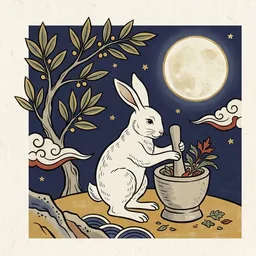
Gi-myo (己卯) Day Pillar: Personality, Love and Career
Gi-myo (己卯) is soft farmland with young rabbit wood in it: a kind, neat, keen soul with a strict code of duty that it holds to in private, out of sight.
- Conscientious
- Gentle on the surface
- Sensitive
- Self-disciplined
- Fine-grained eye
- Duty-minded
At a glance
- Day stem (the "self")
- Gi (己) · yin Earth
- Day branch
- Myo (卯) · Rabbit · yin Wood
- Growth stage of the day stem
- Illness (病)
- Nayin ("sound") element
- Earth of the City Wall (城頭土) · Earth
- Void branches (kongwang)
- Sin (申) · Yu (酉)
- Stem that combines with yours
- Gap (甲) → Earth
- Six-harmony partner
- Sul (戌)
- Clashing branch
- Yu (酉)
- Triad branches
- Mi (未) · Hae (亥)
Hidden stems
- Gap (甲)Direct Officer (正官)
- Eul (乙)Seven Killings (七殺) · main qi
Stems stored inside the branch, each shown with its ten god relative to your day stem. The last one is the main qi.
Stem and branch. The branch controls the stem. There is a constant pull of pressure and duty that builds discipline and inner tension together.
Growth stage of the day stem. Sensitive and thoughtful with a strong inner life. The body may tire easily; imagination and care run deep.
Nature and personality
The Gi-myo (己卯) day pillar is soft farmland with a rabbit's young wood growing through it: a gentle, conscientious personality with a fine eye for detail and a strict rulebook it keeps mostly to itself. People born on a Gi-myo day tend to be polite, sensitive to atmosphere and harder on themselves than anyone else is. In Korean saju, the Four Pillars system, your birth day is written as a pair of characters called the day pillar. The top one, the day master, is the self; the bottom one, the day branch, is one of the twelve animals and stands for your private temperament and nearest circle. Here the day master is 己, yin earth, a field or garden bed, receptive and made to be worked. The branch is 卯, the rabbit, which is young green wood, new shoots in spring. Wood presses on earth, so the branch controls the stem. The result is a constant light pressure of duty: the sense that something should be tidied, answered, finished or improved. It builds discipline and inner tension together, and in daily life it looks like the person who replies to every message properly, arrives early, and still lies awake over a sentence they said on Tuesday. Both hidden stems inside the rabbit belong to the wood element and both are Officer stars, the ten god roles about rules, authority and responsibility. 乙, the main one, is Seven Killings: pressure with an edge, a sense of deadlines and a drive to prove oneself. 甲, the smaller one, is Direct Officer: conscience, manners and the wish to be respectable. There is no Wealth or Resource star in the branch, so this pillar's energy runs on obligation more than on appetite. The growth stage is Illness (病), which tradition reads not as sickness but as a heightened sensitivity: someone who feels things early and in fine detail. The nayin, the poetic name of the pillar, is Earth of the City Wall (城頭土), the packed earth of a rampart: built up layer by layer, firm because of the effort that went into it.
Strengths
- Conscientious and reliable with small details
- Perceptive about mood, tone and what is unsaid
- Self-disciplined without being told
- Good manners and a gentle presence
- Builds character and skill layer by layer
Challenges
- Inner critic that is stricter than any boss
- Absorbs the mood of a room and carries it home
- Says 'it's fine' while keeping the strain inside
- Hard to switch off the duty clock for real rest
Love and relationships
Love for a Gi-myo person tends to start from a sense of responsibility: they notice who is left out of the conversation, who has not eaten, whose birthday is next week. Warmth is real but arrives in measured, careful forms, and it can take a long time before they say that they are the one who is struggling. The day branch is traditionally read as the spouse palace, the seat of the partner in a chart, and the rabbit here is full of Officer stars. Tradition links this to a partner or a relationship that carries expectations: a wish for someone steady, principled and respectable, and also a tendency to hold the relationship to a high standard. The danger is quiet over-giving, where you do more than needed and then resent not being asked how you are. What helps is a partner who is gentle and consistent, does not use criticism as a joke, and asks the second question, the one after 'I'm fine'. Saying 'I would like a night of doing nothing together' is a kindness to both.
Work and career
Work goes well when there are clear standards and a role in which care is the point: editing, accounting and compliance, public administration, quality control, teaching, library and archive work, nursing or caregiving support, design with fine detail, textiles, floristry and curating. The pair of Officer stars fits institutions and structured organisations, and this is often the colleague who writes the checklist that everyone ends up using. The pillar works less well under harsh, unpredictable supervision, since it already supplies plenty of its own pressure. Seek a manager who gives specific feedback and room to do it properly. The trap is perfectionism: set a good-enough line for each task before you begin, and let it be finished.
Money
There is no Wealth star in the rabbit's hidden stems, so money tends to come through a role, a salary or a profession, not a hunt for deals. Duty also shapes spending: the family expense, the colleague's leaving gift, the thing that a responsible person simply pays for. Many Gi-myo people are careful and tidy with accounts, and the usual stress is worry rather than waste. A fixed automatic transfer to a savings account each payday, plus one small monthly amount that is yours with no explanation required, keeps both the sense of security and the occasional pleasure.
Energy and wellbeing
In the five-element picture, earth over wood is a pressure pairing: the shoots press on the soil, and the body tends to show it in tension, often in the neck, shoulders and jaw, and in a mind that scans for what went wrong. Traditional habits that ease it are walking among plants, stretching, an unhurried meal and sleep at a regular hour. Because the Illness stage mostly marks sensitivity, noise, crowds and too many commitments may tire you faster than they tire others, so protect a quiet hour each day. This is lifestyle symbolism, not medical advice.
Who you get on with
Traditionally the rabbit has a six-harmony partner in 戌, the dog, a loyal, plain-spoken sign that settles the rabbit's nerves; goat (未) and pig (亥) join the rabbit in a wood triad, three branches said to run in one direction, so they often feel like family. The clash is 酉, the rooster, a pairing of delicate against exacting that can feel like constant correction. Since 酉 is also one of this pillar's void branches (申 and 酉), many readers see the clash as less sharp than the word suggests, with a link that is thinner or comes and goes. It is a tendency, not a verdict. A neat detail: the day stem 己 is said to combine with 甲 toward earth, and 甲 is exactly the stem hidden inside the rabbit. Tradition takes that as a natural softness toward people with that stem. By element, fire people (who gain strength from wood) bring warmth and relieve the pressure, water people refresh, and metal people can sharpen the pressure into critique. How these play out depends on the rest of each chart.
How life tends to unfold
Saju reads a life in ten-year stretches called daewoon, the great luck cycles. A stem and a branch set the colour of each decade, and the date of birth fixes when the first one starts. Gi-myo is number sixteen in the cycle, and its early adult years are often shaped by responsibility: a role given young, a family expectation, a strict teacher. Fire cycles usually relieve the pressure and give the quiet pillar voice and visibility; earth cycles give the soil company and firmness, so confidence comes from steadier footing; metal cycles can bring sharper standards and honest critics, which may feel stressful and are also what lets you set limits; water cycles feed the wood and can bring growth along with more to carry. Like a city wall, this pillar's strength is built over time. The void branches (申 and 酉) mark places that tradition reads as less anchored, so put agreements in writing. Which of these decades arrives, and when, is something only the full four-pillar chart can show.
Advice
Set the finish line before you begin: decide what 'good enough' looks like, then stop there. Say the true answer to 'how are you?' to one safe person each week. Give the inner critic a job title and a limited agenda, such as reading the document once before it goes out. And schedule rest like a duty, because for this pillar it will only happen if it is written down.
Frequently asked questions
Is Gi-myo a stressful day pillar?
It carries more built-in pressure than many pillars, because the wood branch controls the earth stem and both hidden stars are about duty. That pressure mostly shows up as conscientiousness and self-discipline. It becomes stressful when there is no outlet, so rest and honest conversation matter. It does not mean a hard life.
Does the Illness growth stage mean poor health?
No. Illness is one of twelve stages that describe the arc of a life, and the image is of someone who is delicate and extra aware, not unwell. In practice it is read as sensitivity, intuition and a fine feel for atmosphere. Saju is not a medical tool, and nothing in this pillar says anything about real health.
Which day pillars suit Gi-myo?
Tradition favours the dog branch for six harmony, the goat and pig for the wood triad, and a 甲 day master through the stem combination. The rooster is the traditional clash. These are only leanings, and gentle, honest people with good communication will usually matter more than any chart pairing.
Learn the terms on this page
Is this your day pillar?
Your day pillar comes from your exact birth date, not your birth year. Enter it in our Four Pillars calculator and it shows all four of your pillars.
New to saju? Saju (四柱, "four pillars") describes a person by the year, month, day and hour of birth. The day pillar is the centre of it: its stem is you, and its branch is your closest circle and your home life.