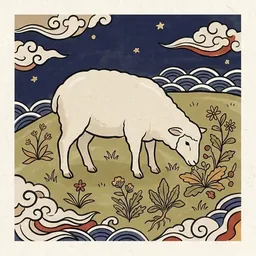
Gi-mi (己未) Day Pillar: Personality, Love and Career
Gi-mi (己未) is soft soil on dry, sunlit ground: steady, proud and set in its ways, with a warm core that shows only once it has come to trust you fully.
- Grounded
- Single-minded
- Self-contained
- Presentable
- Stubborn
- Warm underneath
At a glance
- Day stem (the "self")
- Gi (己) · yin Earth
- Day branch
- Mi (未) · Goat · yin Earth
- Growth stage of the day stem
- Capping (冠帶)
- Nayin ("sound") element
- Fire of the Sky (天上火) · Fire
- Void branches (kongwang)
- Ja (子) · Chuk (丑)
- Stem that combines with yours
- Gap (甲) → Earth
- Six-harmony partner
- O (午)
- Clashing branch
- Chuk (丑)
- Triad branches
- Hae (亥) · Myo (卯)
Hidden stems
- Jeong (丁)Indirect Resource (偏印)
- Eul (乙)Seven Killings (七殺)
- Gi (己)Companion (比肩) · main qi
Stems stored inside the branch, each shown with its ten god relative to your day stem. The last one is the main qi.
Stem and branch. Stem and branch share one element. The energy is concentrated and single-minded, strong in focus and short on variety.
Growth stage of the day stem. Coming of age: ambition, pride in appearance and a wish to be recognised for what you can do.
Nature and personality
The Gi-mi (己未) day pillar is soft garden soil set on a dry, sunlit hillside, which makes for a grounded, self-contained and single-minded personality: someone who picks one thing and keeps at it. People born on a Gi-mi day tend to be steady, proud of doing things properly and slow to be moved by fashion or pressure, with more warmth under the calm surface than they let show at first. In Korean saju, the Four Pillars system, the day pillar is the two-character pair for your birth day. The upper character is the day master, the core self; the lower is the branch, the private side and closest circle. Here the day master is 己, yin earth, cultivated soil. The branch is 未, the goat, which is also earth, the dry end-of-summer kind. Soil sits on soil, 己 over 未, so nothing dilutes the energy: it runs concentrated and single-minded, deep in focus and light on variety. You may know this person as the one who has ordered the same lunch for six years and has never once been late. The goat contains three hidden stems, each named by a ten god, a saju label for how another stem relates to the day master. The main one is 己 again, called Companion: self-reliance, stubbornness and a strong sense of one's own way. In the middle sits 乙, a vine of wood, called Seven Killings. The name is dramatic, but it is the star of pressure, challenge and discipline, and it gives this pillar a sudden nerve and a competitive streak when things get hard. The faintest is 丁, a candle flame, called Indirect Resource: unconventional learning, intuition and an odd private interest or two. The growth stage is Capping (冠帶), the coming-of-age moment of putting on cap and belt, when a young person first dresses as an adult: pride in appearance and manner, and a wish to be taken seriously. The nayin, the traditional poetic name, is Fire of the Sky (天上火): the sun high above the land, a distant warmth over a plain landscape.
Strengths
- Reliable focus that sees a task to the end
- Self-sufficient and hard to push off course
- Neat, dignified manner that earns trust
- Nerve that appears when real pressure arrives
- Quiet, loyal warmth to the few who are close
Challenges
- Sticking to one way past the point it works
- Difficulty asking for help or changing course
- Taking criticism as a verdict on the whole self
- A narrow circle, and a slow welcome to new people
Love and relationships
Gi-mi is rarely the first to declare anything. Interest shows as steady presence: turning up on time, remembering the hard week you mentioned once, fixing the thing in your flat without a word about it. The day branch is traditionally called the spouse palace, the seat of the partner, and here it holds a second 己, so the pillar tends to seek a partner who feels like a companion and an equal, not a project or an audience. The weak spot is the shared element: two people of firm habit, or one person with unmoving preferences, can get stuck. The hidden Seven Killings can also turn a disagreement into a sudden hard line. What helps is a partner who is patient with the slow warm-up, who does not read quiet as indifference, and who is willing to say the change out loud and then give Gi-mi a day to think. A relationship with a small shared routine, such as a weekly walk or Sunday cooking, suits them better than grand gestures.
Work and career
Gi-mi does well in work that rewards consistency: the person who runs the process, the department or the shop that is dependable year after year. The picture is the carpenter, the bookkeeper or the librarian whose records have never needed correcting. Fields that fit include administration and operations, farming and food, ceramics and crafts, construction and maintenance, education, caregiving professions, record-keeping and anything that rewards patience and precision. Capping gives a taste for credentials and presentable results, so recognised qualifications and a good portfolio count for this pillar. The Seven Killings means that, once the pressure is truly on, this is the person who stays calm and does the hard shift. The pitfall is narrowness: a role that never changes can become a rut. A planned rotation or a skill outside the main job keeps the pillar from turning stale.
Money
Gi-mi usually handles money the way it handles everything else, with one reliable method used for years. Earth on earth tends to store, so many people with this pillar save without effort and dislike debt and surprises. Neither a wealth star nor an output star appears among the hidden stems, so income comes from steady reliability rather than from quick turns. The soft spot is rigidity: continuing with an old habit, supplier or account long after a better arrangement exists. A yearly check of subscriptions and standing orders keeps a good system current.
Energy and wellbeing
With earth on both levels and a trace of fire and wood inside, the common theme is stagnation: sitting too long, eating the same things at the same time, carrying a tense jaw and shoulders that nobody sees. Earth is traditionally linked with digestion and routine, so regular meals help, but variety in movement and food helps more. A walk with a changing route, stretching, and talking about a problem before it has set are the sort of habits that suit this pillar. This is the five-element view of lifestyle, not medical advice.
Who you get on with
Traditionally the goat has a six-harmony bond with the horse (午), the sun over dry earth, a warm and steady pairing in which the horse's energy draws the goat out of its shell. The goat also forms a wood triad with the pig (亥) and the rabbit (卯); the Gi-hae pillar shares this stem and sits in the same triad, so that company often feels like a home language. The clash is the ox (丑), another stubborn earth sign, which is also a void branch here (子丑), so the friction is read as softened or distant rather than sharp. Many goat and ox pairs share a love of routine. As 己 combines with 甲 toward earth, a 甲 day master is the classic pairing of the stem. By element, fire people warm the earth, wood people give direction and a little pressure, and water people loosen it. The neighbouring pillars are Mu-o and Gyeong-sin. These are traditional leanings; the rest of each chart matters more.
How life tends to unfold
Saju divides a life into ten-year luck cycles called daewoon, each with its own stem and branch; the start age is worked out from the birth date. Gi-mi's growth stage is Capping, the age of first adult dress, so the early decades often carry a strong wish to be competent and presentable, and the pillar can look mature for its age. The Fire of the Sky nayin suggests that warmth and recognition arrive from above, over time, as the record of reliable work builds. Fire cycles tend to support and warm, and wood cycles add challenge and structure, sometimes as a demanding boss or a goal that stretches you. Earth cycles can feel like more of the same, which suits the steady temperament but can encourage a rut. Metal cycles bring output and the chance to show what you make, and water cycles bring income and movement. Traditionally 子 and 丑 are void branches for this pillar, so cycles or years that carry them can feel less anchored, a hint to keep records. What each decade holds depends on the whole chart.
Advice
Treat one habit a year as a trial, not a law: change a route, a supplier or a routine for a month and see what happens. Ask for help before the load is heavy, because the request costs less when it is early. When criticism comes, separate the point from the person: it is usually about one task. And invite one new person a season into the quiet circle, since the warmth you keep inside deserves a few more places to land.
Frequently asked questions
What is the Gi-mi day pillar like in personality?
Gi-mi is usually steady, self-reliant and focused, with a neat manner and a stubborn streak. Earth sits over earth, so the energy is concentrated and has little variety. People often see calm and reserve first and discover loyal warmth later. The challenge is flexibility, since an old method can become a habit well past its use.
Why is Gi-mi called stubborn in saju?
The main hidden stem in the goat is 己 itself, called Companion, the star of self-reliance and holding your own line, and stem and branch are both earth. Together they make a pillar that does not change course easily. Tradition treats this as endurance as much as stubbornness: it is the same trait seen from two sides.
What does the Seven Killings star mean in Gi-mi?
Seven Killings (七殺) sounds alarming, but it is the saju name for the star of pressure and challenge, here the wood vine 乙 hidden in the goat. For Gi-mi it reads as discipline, nerve and a competitive streak that surfaces when stakes are high. It is one of three hidden stars, and not a sign of danger or violence.
Learn the terms on this page
Is this your day pillar?
Your day pillar comes from your exact birth date, not your birth year. Enter it in our Four Pillars calculator and it shows all four of your pillars.
New to saju? Saju (四柱, "four pillars") describes a person by the year, month, day and hour of birth. The day pillar is the centre of it: its stem is you, and its branch is your closest circle and your home life.