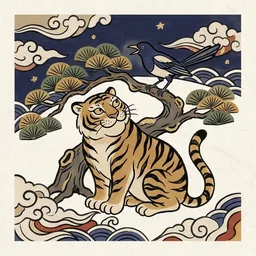
Gyeong-in (庚寅) Day Pillar: Personality, Love and Career
Gyeong-in (庚寅) is an axe in a spring wood: hands-on and self-made, it acts on the world, works hard to get a result and stays green when it is cold out.
- Axe in the forest
- Hands-on
- Self-made
- Restless drive
- Frank
- Evergreen
At a glance
- Day stem (the "self")
- Gyeong (庚) · yang Metal
- Day branch
- In (寅) · Tiger · yang Wood
- Growth stage of the day stem
- Severance (絕)
- Nayin ("sound") element
- Pine and Cypress Wood (松柏木) · Wood
- Void branches (kongwang)
- O (午) · Mi (未)
- Stem that combines with yours
- Eul (乙) → Metal
- Six-harmony partner
- Hae (亥)
- Clashing branch
- Sin (申)
- Triad branches
- O (午) · Sul (戌)
Hidden stems
- Mu (戊)Indirect Resource (偏印)
- Byeong (丙)Seven Killings (七殺)
- Gap (甲)Indirect Wealth (偏財) · main qi
Stems stored inside the branch, each shown with its ten god relative to your day stem. The last one is the main qi.
Stem and branch. The stem controls the branch. You press on your surroundings and act on them; practical drive is high and so is the effort.
Growth stage of the day stem. A break and a fresh start: independent and unconventional, with several turning points in a lifetime.
Nature and personality
The Gyeong-in (庚寅) day pillar is an axe in a spring forest, with a tiger at its side: a hands-on, self-reliant personality that presses on its surroundings and changes them. People born on a Gyeong-in day tend to be practical, frank and restless, someone who would rather build the shelf than discuss it, and who starts from their own effort and not from what they were handed. In saju, the Korean Four Pillars system, a chart has four pillars (year, month, day, hour), each pair made of a heavenly stem on top and an earthly branch below, one of the twelve animals. The day pillar is the personal one. Its stem is the day master, the core self, and its branch is your private temperament and closest circle. Here the day master is 庚, yang metal, the raw blade rather than the jewel. The branch is 寅, the tiger, wood, the energy of early spring when the sap starts to rise. Metal cuts wood, so the stem controls the branch. That is a very hands-on arrangement: you act on your surroundings and press on them, and practical drive is high, and so is the effort it costs. Gyeong-in people often look like they are always doing, whether it is organising the move, repairing the thing or turning an idea into something with edges. Three hidden stems sit inside the tiger, each tagged with a ten god, a saju term for how another energy relates to the day master. The main one is 甲, Indirect Wealth: big timber, the instinct for raw material, opportunity and deals, and wealth that comes through activity. Beneath it is 丙, Seven Killings: pressure, drive and a taste for risky or demanding tasks. The faintest is 戊, Indirect Resource: broad earth, self-taught and unorthodox learning. The day master's growth stage is Severance (絕), the point where an old form has ended and the next one has not yet begun: a clean break and a blank slate, often read as independence and a start from zero. The nayin, the poetic name given to each pair, is Pine and Cypress Wood (松柏木): evergreens that stay green through winter, a picture of endurance and plain integrity.
Strengths
- Gets things built and moving without waiting for permission
- Spots practical openings and raw material early
- Frank speech that clears the air
- Independent, able to start again from nothing
- Endurance that lasts long after enthusiasm fades in others
Challenges
- Doing everything yourself and then feeling the weight of it
- Bluntness when the pace is high
- Restlessness that treats finished things as old news
- Keeping people at arm's length when closeness would help
Love and relationships
The Gyeong-in partner is usually the one who has already looked at the map: the weekend is planned, the train is booked and the bag is half packed before you were asked. Affection takes the form of doing things together, building, cooking, travelling or fixing, and tends to be generous and unfussy. The tiger holds Indirect Wealth, an open-handed, easily attracted energy, so this is a pillar that is often sociable, magnetic and quick to say yes to an adventure. The day branch is called the spouse palace, the seat of the closest partner in a chart. A tiger with Seven Killings inside it likes a partner with spirit and a mind of their own, and gets bored by someone who only agrees. Severance adds a strong need for personal space and a habit of self-sufficiency, so the closeness has to be offered, not demanded; a partner who clings feels like a cage. What helps is someone who has their own work and enthusiasm, who says directly what they need, and who understands that a quiet evening alone is not a rejection. The pillar's own task is to let people in on the unfinished parts and not only present the finished project.
Work and career
Work goes well where effort turns into something visible and the terrain is open. This is the colleague who gets the pop-up shop open on time, who walks the site and notices what is missing, and who finds the supplier everyone else forgot. Construction and engineering, carpentry and furniture, woodworking and landscaping, logistics, procurement, import and export, trade and sales, early-stage start-ups, outdoor leadership and any role that takes raw material and gives back a result fit the picture. The Indirect Wealth at the tiger's heart favours running your own line or having several streams of work, and the Indirect Resource leans towards learning by doing instead of by syllabus. Dull, repetitive desk work with no visible output drains this pillar fast. The weak spot is stamina after the novelty is gone: pairing with a steadier colleague, or scheduling milestones, keeps the later stages of a project from feeling like a chore.
Money
Money here is something to be earned through action: trade, projects, commissions and deals, with more than one source of income being the natural pattern. The Indirect Wealth in the tiger is the classic picture of wealth that moves in waves, with strong stretches and quiet ones, and it spends with the same energy it earns. Equipment, travel, materials and good tools are the usual outlets, as is generosity towards friends and family. A practical rhythm helps most: keep one account that only receives a fixed transfer on every pay day and does not get touched, and keep the working account separate. Writing down the quiet months in advance means they are a plan and not a surprise.
Energy and wellbeing
A pillar that presses outward all day is mainly at risk of overuse: a body used to doing as much as it can and a mind that does not log how much that costs. The tiger's hidden fire adds heat and a short fuse late in the day. Time outdoors, ideally among trees, long walks, stretching and a proper rest day suit the wood in the branch, and a regular meal and bedtime routine takes the strain off the metal. The Severance stage is independent by nature, so remember to ask other people for company as well as for tools. Treat all of this as lifestyle colour for a Gyeong-in day, never as medical advice.
Who you get on with
Traditionally the tiger's six harmony partner is the pig (亥): water that feeds the tiger's wood in a quiet, supportive pairing. The Eul-hae (乙亥) day pillar is the neat example, holding the pig below and 乙, the stem that combines with 庚, above. The tiger also sits in a fire triad with the horse (午) and the dog (戌), though the horse is one of this pillar's void branches (午未), which tradition reads as a link that feels lighter or arrives later than expected. The clash is the monkey (申), another quick, hands-on animal, so the pairing can be a rivalry of two people who both want to drive. Many such pairs are close friends and just need to agree about who leads which task. By element, water feeds the forest and calms the pillar, fire refines the metal and gives it direction, and other metal people understand its bluntness at once. The neighbours in the cycle are Gi-chuk (己丑) before and Sin-myo (辛卯) after, earth over the ox and polished metal over the rabbit. Anything beyond the day pillar depends on the rest of both charts.
How life tends to unfold
Saju divides life into ten-year stretches called daewoon, the great luck cycles, each a stem-and-branch pair that colours a decade the way a season colours a year. When they begin and which way they run is worked out from the birth date. With a Severance day master, the early decades often feel self-made: leaving a path set by others, moving, and learning what is yours by trying it. In general, water cycles feed the wood and often bring learning and calm; wood cycles bring more material and more to do, so work and opportunity arrive together; fire cycles add pressure and heat, which can feel like sharpening or like a long stretch of hard effort; earth cycles give the metal ground and steadier support; and metal cycles bring peers, competitors and partners to the table. The branches 午 and 未 are traditionally void, so years carrying them may feel less anchored: a good time to put things in writing. What any decade actually brings depends on the rest of the chart.
Advice
Schedule a handover. Once a quarter, pick something you are holding and give it to someone, even though they will do it differently. Mark one day a month as a rest day, off the list entirely. Tell people close to you what is going on while it is still unfinished. And when you want to start something new, finish the nearest thing first, and enjoy that for an evening before you move on.
Frequently asked questions
How is Gyeong-in different from other Gyeong day pillars?
All Gyeong days share the same raw yang metal day master, but the branch changes the inner circle. With the tiger of Gyeong-in the metal acts on wood and the pillar is hands-on, with a wealth star inside. With the horse of Gyeong-o it is tested by fire, and with the dragon of Gyeong-jin it is supported by earth. Same stem, different temperament.
What does Severance mean in the Gyeong-in day pillar?
Severance is one of the twelve growth stages and pictures a clean break, where the old form has ended and the new one is yet to start. It is not an unlucky stage. For Gyeong-in it points to independence, a taste for starting afresh and a self-made path, and it can also mean a need for space in close relationships.
Is metal cutting wood a conflict for Gyeong-in?
Not as a flaw. In the five elements metal controls wood, as an axe fells a tree, and in saju this is called the stem controlling the branch. For Gyeong-in it describes someone who acts on the world: practical, driven and often tired by the amount of effort required. The wood here is also wealth, so the acting often brings results.
Learn the terms on this page
Is this your day pillar?
Your day pillar comes from your exact birth date, not your birth year. Enter it in our Four Pillars calculator and it shows all four of your pillars.
New to saju? Saju (四柱, "four pillars") describes a person by the year, month, day and hour of birth. The day pillar is the centre of it: its stem is you, and its branch is your closest circle and your home life.