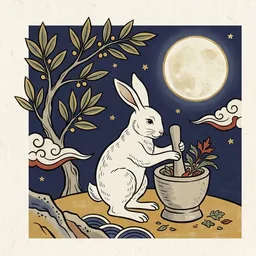
Sin-myo (辛卯) Day Pillar: Personality, Love and Career
Sin-myo (辛卯) is a fine blade in a young pine grove: precise, practical and self-made, it shapes what is near and builds its own way up, one step at a time.
- Precise
- Practical
- Self-made
- Tidy-minded
- Resourceful
- Hard-working
At a glance
- Day stem (the "self")
- Sin (辛) · yin Metal
- Day branch
- Myo (卯) · Rabbit · yin Wood
- Growth stage of the day stem
- Severance (絕)
- Nayin ("sound") element
- Pine and Cypress Wood (松柏木) · Wood
- Void branches (kongwang)
- O (午) · Mi (未)
- Stem that combines with yours
- Byeong (丙) → Water
- Six-harmony partner
- Sul (戌)
- Clashing branch
- Yu (酉)
- Triad branches
- Mi (未) · Hae (亥)
Hidden stems
- Gap (甲)Direct Wealth (正財)
- Eul (乙)Indirect Wealth (偏財) · main qi
Stems stored inside the branch, each shown with its ten god relative to your day stem. The last one is the main qi.
Stem and branch. The stem controls the branch. You press on your surroundings and act on them; practical drive is high and so is the effort.
Growth stage of the day stem. A break and a fresh start: independent and unconventional, with several turning points in a lifetime.
Nature and personality
The Sin-myo (辛卯) day pillar is a pruning knife or a pair of fine scissors working in a grove of young trees. People born on a Sin-myo day tend to be precise, practical and quietly self-made, someone who reshapes whatever is within reach until it is tidier and more useful than they found it. In Korean saju, the Four Pillars system, your birth date gives you a day pillar of two characters. The upper one, the day master, is you; the lower one, the day branch, is one of the twelve animals and describes your private temperament and closest circle. Here the day master is 辛, yin metal, the delicate kind: a needle, a razor edge, a jeweller's file. The branch is 卯, the rabbit, which is wood: soft, green and growing. Blade against green shoots: metal cuts wood, which puts the stem in control of the branch. You press on your surroundings and act on them; practical drive is high and so is the effort. This is the person who rewrites the group plan the night before, trims the budget to what it needs and cannot walk past a crooked picture without straightening it. The rabbit contains two hidden stems, each named by a ten gods role, a way of describing how another stem relates to the day master. Both are wealth. The main one is 乙, Indirect Wealth: flexible, many-handed money sense, side projects and an eye for trade and opportunity. The smaller one is 甲, Direct Wealth: steady, earned income, being trusted with resources and the pride of a fair price for honest work. An inner circle made only of wealth stars puts attention on what can be built, saved and sold. The day master sits at Severance (絕), the twelve-stage position where an old form ends and a new seed begins, so many Sin-myo people start their own path, not following a family script. The nayin, the pillar's poetic nickname, is Pine and Cypress Wood (松柏木), evergreen trees that stay green in winter and are valued for lasting.
Strengths
- Exact hands and a clean finish
- Turns plans into practical steps
- Makes its own way, with little need for a script
- Good sense for price, trade and timing
- Endures: keeps working through a long winter
Challenges
- Edits people and plans without being asked
- Works so hard that rest is postponed indefinitely
- Slow to lean on others at the start of anything
- Sharp remarks that land as criticism, not care
Love and relationships
Sin-myo courts through usefulness. The first signs are practical: your slow laptop is suddenly fixed, a better route to the airport appears in your messages, the draft of your application comes back neatly marked. Saying I like you in so many words comes later, if at all, and the care is real even when it is wrapped in logistics. The day branch is the spouse palace, the traditional seat of the partner, and the rabbit there is gentle, social and fond of good looks and a pleasant home. Some traditions also read wealth stars as partner stars in a man's chart, so the two hidden wealth stars are sometimes taken to show an early interest in relationships; treat that as a lean and not a prediction. The pillar's weak spot is the controlling stem: Sin-myo may improve a partner like a project, correcting small habits with the best intentions. A partner who laughs, says that is enough for tonight and still makes a point of thanking the improvements will do very well. And since Severance can leave a person slow to depend on anyone, give this pillar time to learn that leaning is safe.
Work and career
Sin-myo tends to be at its best where careful hands make something that can be seen: tailoring, woodworking and carpentry, landscape and florist work, interiors and design, editing and publishing, printing, retail and buying, merchandise and trade, bookkeeping and small-business administration. Since metal over wood is literally the toolmaker and the tree, careers that shape or prune something living and growing, such as gardens, text, or a team's processes, are natural fits. The pair of wealth stars favours commerce and the self-directed route. Many Sin-myo people prefer freelancing, a small shop or a role with their own budget over a large hierarchy. The weakness is overwork: the effort is high and the habit of fixing one more thing never ends, so deciding in advance what a finished week looks like matters more than talent.
Money
With both wealth stars hidden in the branch, money is a topic Sin-myo thinks about a lot, and tends to manage with care: steady earnings from skill, a small side income or two, and a good eye for what something should cost. Spending usually goes into the means of making things better: tools, materials, courses, a nicer workspace. The risk is reinvesting every spare note into the next project, so that the account never builds a cushion. An automatic transfer to savings on payday, with a separate small fund for projects, lets the practical streak work without eating the base.
Energy and wellbeing
In the five-element picture Sin-myo is metal pressing on wood, which tradition reads as energy spent outward on the surroundings, with little left for the self. Wood likes to stretch and metal likes order, so the helpful routine is simple: a window with something green, walks among trees, regular stretching of the neck, shoulders and hands after fine work, and breaks from the screen for the eyes, which tradition links with wood. Fix a time to stop working, and treat it like a meeting. This is lifestyle symbolism, not medical advice.
Who you get on with
Traditionally the rabbit has a six-harmony bond with the dog (戌), a loyal and direct sign that quickly earns a Sin-myo's trust. The rabbit forms a wood triad with the goat (未) and the pig (亥), friendly signs that tend to make company easy; the goat is also one of this pillar's void branches (空亡, together with the horse), which tradition reads as a link that feels thinner or comes later, a nuance not a barrier. Sin-mi (辛未), the same metal stem placed directly on the goat, is the closest pillar to look at for that triad feeling. The clash is the rooster (酉), which is metal itself: two exacting eyes, each seeing the other's errors, which can sharpen or chafe. By element, water feeds the wood and softens the blade, earth gives the metal a base, fire tempers it and tests it, and other metal people bring both peers and rivals. The neighbouring pillars are Gyeong-in (庚寅) before and Im-jin (壬辰) after. How any of it plays out for Sin-myo depends on the rest of each person's chart.
How life tends to unfold
Daewoon are the ten-year luck cycles of saju, each coloured by its own stem and branch; where they begin and which direction they run is worked out from the birth date. With the day master at Severance, Sin-myo often reads as a person who makes a fresh start, perhaps leaving a town, a field or a family expectation, and many describe a second beginning in the middle of life. Pine and Cypress Wood suggests a later, durable standing built on endurance. In general, earth cycles give metal a base and make work steadier; metal cycles bring peers, partners and competitors; water cycles let the blade move, with more travel, ideas and speaking; wood cycles add wealth and volume, plenty of material but also plenty to prune; and fire cycles bring pressure, review and a position to live up to, which tempers the metal. The result in a given decade depends on the whole chart and on the year, month and hour pillars, so treat these as tendencies.
Advice
Choose three things to stop before you add one. Ask before you edit another person's work, and begin with what is already good in it. Put the rest day in the calendar where a meeting would go. And find one friend who is of no use to any of your projects, since the pillar that fixes everything also needs somewhere it does not have to.
Frequently asked questions
What does the Severance stage mean for a Sin-myo day pillar?
Severance (絕) is the stage in the twelve growth cycle where an old form is cut off and a new seed is not yet visible. It reads as independence, a fresh start and a path that is one's own, often with little inherited from family. It is not a sign of loss or bad luck, and it can show as self-reliance and a talent for reinvention.
Does Sin-myo have a strong wealth chart?
It has two wealth stars hidden in its branch, Direct and Indirect Wealth, which shows an interest in money, trade and practical results, but it does not promise riches. Saju reads the whole chart, and nothing in this pillar alone decides earnings. It does suggest attention to value and a taste for making and selling things.
Is Sin-myo a good day pillar for running your own business?
It fits well. The stem controlling the branch gives drive, the two wealth stars favour trade, and Severance often goes with doing things one's own way. Still, no pillar guarantees success, and the same energy can turn into overwork. A partner or adviser for the parts you like least, and fixed rest, matter more than the chart.
Learn the terms on this page
Is this your day pillar?
Your day pillar comes from your exact birth date, not your birth year. Enter it in our Four Pillars calculator and it shows all four of your pillars.
New to saju? Saju (四柱, "four pillars") describes a person by the year, month, day and hour of birth. The day pillar is the centre of it: its stem is you, and its branch is your closest circle and your home life.