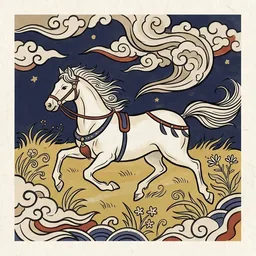
Mu-o (戊午) Day Pillar: Personality, Love and Career
Mu-o (戊午) is a mountain in the noon sun: warm, proud and well backed, with a firm centre, a love of study and a pride that hates to ask for help.
- Dignified
- Well supported
- Proud
- Studious
- Protective
- Self-assured
At a glance
- Day stem (the "self")
- Mu (戊) · yang Earth
- Day branch
- O (午) · Horse · yang Fire
- Growth stage of the day stem
- Peak (帝旺)
- Nayin ("sound") element
- Fire of the Sky (天上火) · Fire
- Void branches (kongwang)
- Ja (子) · Chuk (丑)
- Stem that combines with yours
- Gye (癸) → Fire
- Six-harmony partner
- Mi (未)
- Clashing branch
- Ja (子)
- Triad branches
- Sul (戌) · In (寅)
Hidden stems
- Byeong (丙)Indirect Resource (偏印)
- Gi (己)Rob Wealth (劫財)
- Jeong (丁)Direct Resource (正印) · main qi
Stems stored inside the branch, each shown with its ten god relative to your day stem. The last one is the main qi.
Stem and branch. The branch feeds the stem. The day master is supported from below, so help and nourishment tend to arrive without much asking.
Growth stage of the day stem. The height of strength: confident and commanding, with a real risk of overreaching or going it alone.
Nature and personality
The Mu-o (戊午) day pillar is a broad mountain lit by the high sun of midday: a warm, dignified and self-assured personality that people instinctively lean on. People born on a Mu-o day tend to carry authority without trying, to love study and the people who teach them, and to be proud enough that they would sooner struggle quietly than admit they need a hand. The saju Four Pillars system describes a birth chart with four pairs of characters, and the pair marking the day of birth is the day pillar, the part of the chart about you personally. The top character is the day master, the core self. The bottom one is the day branch, your private temperament and closest circle. Here the day master is 戊, yang earth, a mountain. The branch is 午, the horse, fire at its height: the noon hour and the middle of summer. Fire produces earth, so the branch feeds the stem, and the mountain is warmed from below the way a south-facing slope is warmed by the sun. In daily life help tends to arrive without much asking: an elder who offers to teach you, a family that makes room, an opening passed along by someone who simply liked you. The horse holds three hidden stems, each named by a ten god, the saju label for how another energy relates to the day master. The main one is 丁, a candle flame, Direct Resource: formal learning, protection and a parent's kind of care, which shows as the instinct to study properly and to look after others the same way. Under it sits 己, yin earth, Rob Wealth: a peer very like you and, in tradition, a rival for the same share, so it appears as loyalty to equals and as keen comparison. The faintest is 丙, the sun itself, Indirect Resource: unconventional teachers, self-study, odd interests and hunches. With two Resource stems and one peer, this inner circle is made of nourishment and self-regard, which is why the pillar can be so generous and so hard to correct. The growth stage of the day master is Peak (帝旺), the fullest strength of the twelve stages, and the nayin, the poetic nickname of the pillar, is Fire of the Sky (天上火), the sun and stars, the high and far light. Together they describe someone who feels capable early, stays steady in a crisis, and whose main lesson is to remain teachable when everything seems to say they are right.
Strengths
- Natural authority that does not need a raised voice
- Love of learning and respect for good teachers
- A warm, steady presence in a crisis
- Loyalty to friends and equals
- Draws mentors and practical help with little effort
Challenges
- Pride that would rather struggle in silence than ask
- So sure of its own view that correction arrives slowly
- Can wait for support to come instead of moving first
- Compares itself with peers more than it admits
Love and relationships
The Mu-o partner is a protector by temperament: the one who takes charge of the plan when the flight is cancelled and stays up until you are safely home. The day branch is called the spouse palace, the seat of the closest partner in a chart, and here it holds a horse, which is warm and openly affectionate but needs open ground and respect. Criticism in front of other people lands hard on a proud mountain. The main hidden stem is Direct Resource, so the style is nurturing, and nurturing can slide into parenting a partner: planning their week, correcting their coat choice. Asking 'do you want help or just company?' keeps the care from becoming control. The Rob Wealth hidden beside it adds a competitive streak and a loyalty to old friends that a partner may feel as a crowd. What tends to work is a partner with a life and standards of their own who gives sincere respect, voices affection plainly, and is willing to say 'I need you' first. That small admission makes it far easier for Mu-o to say it back.
Work and career
Mu-o is the person a department looks to for steadiness. Because the branch feeds the stem and the Peak stage gives early confidence, responsibility tends to arrive young and be carried well. Fields that match the mountain-in-sunlight image include teaching and training, universities and research, publishing and editing, public service and administration, counselling and human resources, museums and cultural institutions, managing teams, non-profit work and the family business. Two Resource stems make qualifications, structured paths and good mentors unusually valuable, and the pillar often becomes a mentor in turn. The friction points are delegation and rivalry: the Rob Wealth makes colleagues at the same level feel like competitors, so clear roles and shared credit matter, and letting others carry real parts of the load is a skill to practise rather than a favour to hand out.
Money
Support from others is part of this pillar's money story: a family that helps, a mentor who opens a door, courses and books that pay back over years. No wealth stem is hidden inside, and tradition reads that as income arriving through standing, study and position more than through deals. Money tends to flow toward learning, family and the comfort of people you look after. The leak is the Rob Wealth's habit of matching and covering peers: paying for the group, lending to a friend, picking up the larger share so as not to look behind. Keep a named reserve that is not for lending, say the terms of any loan out loud when it is made, and set a monthly study or books budget as a pleasure rather than an expense.
Energy and wellbeing
Fire sits under earth with no water anywhere inside the pillar, the dry, warm summer-noon corner of the five elements. The usual theme is heat that is held in: a short temper late in the day, pride that will not rest, and long hours worked alone because asking felt like weakness. Cooling habits help, such as shade at midday, water, an earlier bedtime, and sharing tasks. The nayin Fire of the Sky points to the evening and the night sky, so unhurried time outdoors after the sun has dropped is a gentle reset. This is a traditional lifestyle reading, not medical advice.
Who you get on with
The traditional six harmony partner of the horse is the goat (未), also an earth branch: warm, dry ground under a summer sun, and the neighbouring Gi-mi (己未) is the classic picture of comfort. The horse also sits in a fire triad with the dog (戌) and the tiger (寅); Mu-sul (戊戌) shares your day stem and one of those branches, so it often feels like a familiar face. The traditional clash is the rat (子), water against fire, which tends to feel like opposite tempos more than anything fated. The rat is also one of this pillar's void branches (子丑), which tradition reads as a link that feels thinner or arrives later, so that tension is often gentler than the label suggests. Separately, the day stem 戊 is said to combine with 癸, rain, toward fire, and a 癸 day master often cools a sunlit mountain. By element, fire and earth are already plentiful here, so water is the surprising friend, metal gives the energy an outlet, and wood adds fuel that is welcome in small quantities.
How life tends to unfold
Mu-o's life is read, like any pillar's, in ten-year chapters called daewoon, the great luck cycles. Each chapter is a stem-and-branch pair that tints a decade the way a season tints a year; the starting age and the direction of travel come from the birth date. With a day master at Peak strength and a branch that feeds it, this pillar is often handed responsibility early, and the question of adult life becomes less how to be capable and more how to stay open. As a loose guide, earth and fire cycles reinforce what is already there: a decade of consolidation, of being well regarded, and of getting set in your ways if you are not careful. Metal cycles open an outlet, with more writing, speaking and making. Water cycles meet the fire head on and bring money to manage and unfamiliar situations, which can feel cooling at first. Wood cycles add pressure and structure, usually in the form of a role that needs you. What an actual decade brings depends on the rest of the chart, so read these as tendencies, not a calendar.
Advice
Ask for one thing this week, however small, and notice that the sky stays where it is. Hand over a real piece of a task, not a token piece, and let it be done differently. Keep a regular place for being taught something new, because the pillar goes stale when it stops being a student. Give credit in public and correction in private. Rest on purpose before you are tired, because a mountain that is never visited by shade still weathers.
Frequently asked questions
Is the Mu-o day pillar the same as an Earth Horse year?
Mu-o is the same two characters whether it sits on a year or a day, but the job it does is different. The last Earth Horse year was 1978 and the next is 2038, while 2026 is a Fire Horse year. A Mu-o day pillar belongs to your birth date and is about you personally; the year pillar is only one other layer of the chart, and a person of any birth year can have a Mu-o day.
Does the Peak growth stage make Mu-o a lucky pillar?
Peak (帝旺) is the name of the strongest of the twelve growth stages, and it means the day master has plenty of strength, not extra luck. It tends to appear as early confidence and a pull toward leading. Saju does not rank the sixty pillars, and how things go depends on the rest of the chart and the luck cycles.
Are Mu-o people proud or stubborn, and how do they handle feedback?
Often both, in a dignified way. The two Resource stems give a good ear for teachers they respect, but the mountain's pride resists being corrected in public or by someone they do not respect. Feedback lands best in private, with a reason, from a person who has shown real competence, and with room left to decide for themselves.
Learn the terms on this page
Is this your day pillar?
Your day pillar comes from your exact birth date, not your birth year. Enter it in our Four Pillars calculator and it shows all four of your pillars.
New to saju? Saju (四柱, "four pillars") describes a person by the year, month, day and hour of birth. The day pillar is the centre of it: its stem is you, and its branch is your closest circle and your home life.