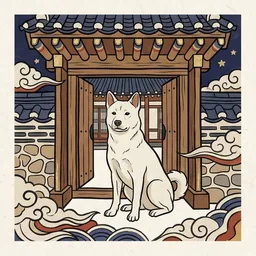
Dog
Dog people tend to be loyal, fair and honest, keep their word, and worry more than they show. Best with the Tiger, Horse and Rabbit; the Dragon is a test.
- Element
- Earth
- Birth Years
- 1946 · 1958 · 1970 · 1982 · 1994 · 2006 · 2018 · 2030
Character
Loyal, fair-minded, responsible and plain-spoken: that is the traditional Year of the Dog personality, and most Dog people recognise themselves in it. The other half of the portrait is a watchful mind that worries more than it lets on and takes its time before trusting anyone new.
In Korea your birth animal is your ddi, the sign of the year you were born, and the Dog's version is called gae-tti. Ask a gae-tti person to hold your keys, keep a secret or cover your shift, and it gets done without a reminder. Dogs tend to treat a promise as something closer to a debt than a figure of speech, which is why friends call them first when they need a witness, a reference or a ride to the airport at five in the morning.
That loyalty sits next to a strong sense of fairness. A Dog is the one who quietly points out that the bill was split wrongly, or that a teammate's work went uncredited in the meeting. Dogs tend to say what they see, sometimes before checking whether the room wants to hear it, and they rarely enjoy flattery, giving or receiving.
The guard-dog instinct has a cost. You may scan a new workplace for who can be relied on before you relax, rehearse worst cases at night, or keep a friendly stranger at a polite distance for months. Once someone is let in, though, the door stays open for a very long time. These are tendencies the old calendar describes, not a script you have to follow.
The Earthly Branch
- Branch
- 戌
- Yin or yang
- Yang
- Element
- Earth
- Solar month
- around October
- Hours
- 19:00–21:00
- Direction
- Northwest
The Dog stands on the earthly branch 戌, read sul in Korean and inu in Japanese, the eleventh of the twelve branches that East Asian calendars use for years, months, hours and compass points. It is yang, and its fixed element is earth: specifically the dry earth of late autumn, the field after the harvest is in. As a month it covers roughly October in the solar-term calendar, its direction is the northwest, and its hours run from 19:00 to 21:00.
Those evening hours explain a great deal. In an old Korean village this was when the gate was barred, the animals were brought in and the household settled down for the night, and the white Jindo dog in this page's minhwa (Korean folk painting) sits at the wooden gate of a hanok, a traditional Korean house, in exactly that watchful pose, ears up, guarding the house as the light fades.
戌 is also the last of the fire triad 寅午戌, the place where that fire is stored once the season cools, so tradition pictures it as dry ground keeping embers warm beneath the surface. That image fits the Dog well: steady and a little reserved on top, with a loyal heat underneath that does not go out easily.
The Five Element Types
Wood · 1994 (甲戌)
A great tree stands on the dry hill of 戌 here, and since wood controls earth, its roots have to work hard to hold the ground. Wood Dogs are often pioneers with a conscience, willing to break a new path if it serves people they care about, and happiest when the effort is shared.
Fire · 1946, 2006 (丙戌)
The stem is the sun and the branch is autumn soil, so fire feeds earth and the result looks like land glowing at sunset. Fire Dogs tend to be the warmest and most outspoken of the five, generous hosts and loyal friends, though their sense of justice can flare into heat when they see a wrong.
Earth · 1958, 2018 (戊戌)
Mountain earth on top of field earth makes this the most solid Dog of the cycle. Earth Dogs are usually steadfast, patient and very hard to move once they have taken a position. People lean on them in a crisis, and the growth edge is letting a new idea in before it has been proven twice.
Metal · 1970 (庚戌)
Earth feeds metal, so the dry autumn ground produces ore, and the character that results is principled and decisive. Metal Dogs tend to draw clear lines between right and wrong and keep them under pressure. Their honesty can sound sharp, so a softer opening sentence often helps their point land.
Water · 1982 (壬戌)
Earth controls water, which here means ground that holds a deep lake instead of letting it run away. Water Dogs are often the most reflective of the group: good listeners, careful thinkers, and keepers of confidences. They feel a great deal beneath a calm surface, and saying some of it aloud brings them closer to others.
Strengths
People trust you, and with good reason. You keep confidences, show up when you said you would, and stay through the difficult part of a friendship or a project instead of only the fun beginning. Your sense of fairness makes you a natural referee: colleagues bring you disputes because they know you will not take a side just to be liked. You notice risks early, which saves teams from mistakes, and your honesty, while sometimes blunt, means nobody has to guess what you really think.
What to Watch
Watchfulness can tip into worry. You may read a short reply from a friend as a sign of trouble, or lie awake replaying a conversation that the other person has already forgotten. You can be slow to accept newcomers and quick to judge someone who bends a rule you hold dear, even when they had a reason. Defending others is a gift, but you sometimes guard everyone except yourself, and come home with nothing left for your own needs.
Love and Partnership
Loyalty is the Dog's love language. Once you commit, you tend to stay, keep anniversaries, defend your partner in their absence and quietly take care of the dull things: the renewed insurance, the spare charger, the umbrella left by the door on a rainy morning. Partners often say they have never felt so safe with anyone.
The challenge lies earlier and deeper. You can take a long time to open up, and while you decide, you watch closely: does this person keep small promises, speak kindly about their ex, treat a waiter well? Inside a relationship, worry can come out sideways, as a cool tone or a test, when what you mean is 'I felt uneasy when you did not call'. Saying that sentence plainly, without building a case first, does more for your bond than any quiet test could. The right partner for a Dog is someone consistent, who answers doubt with patience rather than irritation and lets your devotion feel returned.
Compatibility
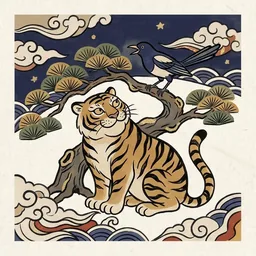
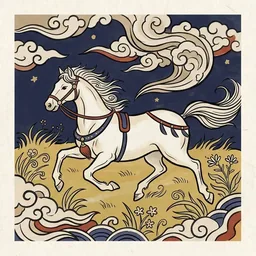
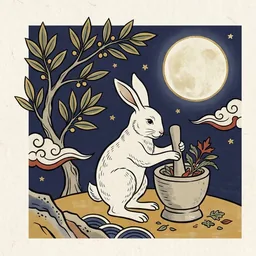
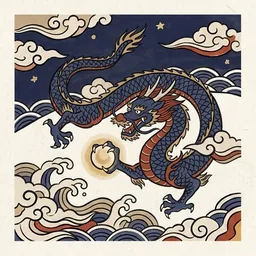
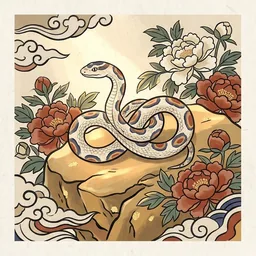
Korean matchmaking compares the earthly branches of two people's birth years, and four relationships come up most often. They are traditional tendencies, useful for understanding a rhythm, not verdicts on who you can love.
Triad (三合, samhap in Korean, three branches that pull together): the Dog completes the fire triad 寅午戌 with the Tiger (寅) and the Horse (午). The Tiger shares your instinct to protect the underdog and adds boldness; the Horse brings speed and cheer that lift your worries, while you give both of them a steady base to come home to. Many Dogs find their closest friends and most comfortable partners among these two signs.
Six harmony (六合, yukhap in Korean, a one-to-one pairing that binds well): your partner is the Rabbit (卯). 卯 and 戌 combine into fire, and the match tends to feel gentle and loyal on both sides; the Rabbit's tact softens your bluntness, and your reliability gives the Rabbit the security it looks for.
Clash (冲, chung in Korean, the branch directly opposite yours): this is the Dragon (辰). Both branches are earth, but 辰 is damp spring soil and 戌 is dry autumn soil, so the pair often sees the same situation from opposite seasons. The Dragon thinks in big pictures and wants momentum; you think in principles and want proof first. Named openly, that tension can make a strong team.
Wonjin (怨嗔, a Korean folk pairing of quiet friction): yours is the Snake (巳), and an old verse says the snake is startled by the dog's bark. Your directness can feel loud to the Snake's private, careful style, and its silence can look secretive to you. Patience with each other's pace usually settles it.
Work and Money
At work, Dogs tend to earn trust before they earn titles. You are drawn to roles where responsibility and fairness matter: teaching, public service, healthcare support, compliance and quality checking, editing and fact-checking, human resources, security, or any team that needs someone to make sure the rules apply to everyone. You are often the colleague who reads the whole contract, remembers what was promised to a client, and speaks up when a shortcut would hurt someone later. Office politics rarely suits you, and you may find a workplace hard to bear once you stop believing in its fairness.
With money, Dogs usually lean toward caution. Many like to know there is a cushion for the household, prefer not to owe anyone, and feel uneasy when spending is careless. You can also be very generous when a friend or relative is in real need, sometimes more than you can comfortably spare, because loyalty runs into your wallet as well.
In Korean Culture
Korea's best-known dog is the Jindo, a native breed from Jindo Island off the southwest coast and a designated natural monument. Jindo dogs are famous for devotion to one family and for a keen guarding instinct, and the white Jindo is a familiar picture of loyalty in Korea. Another native breed, the shaggy Sapsal dog, is also a natural monument; its name is commonly explained as 'the dog that drives away evil spirits', and it was long kept as a household charm against bad luck before being brought back from near extinction.
The classic loyal-dog story comes from the Goryeo scholar Choe Ja's collection Bohanjip. A man named Kim Gae-in fell asleep by the road after drinking, and when a wildfire spread toward him, his dog soaked itself in a stream again and again to wet the grass around him, until it died of exhaustion. The man planted his walking stick to mark the grave, the story says it grew into a tree, and the place came to be called Osu, 'dog tree', in today's Imsil County.
Koreans also use a dog in a favourite proverb: a day-old puppy does not know enough to fear a tiger, said of someone too new to see the danger they are taking on.
In Japanese Culture
In Japanese eto (干支, the cycle of twelve animals combined with ten stems), the eleventh sign is 戌, inu, and the dog is closely tied to safe childbirth. Because dogs are said to have easy births, many families visit a shrine on a dog day, inu no hi, in about the fifth month of pregnancy to pray for a safe delivery and receive a maternity sash, the haraobi; Tokyo's Suitengu is crowded on these days. The papier-mâché inu-hariko, a sitting dog toy, is a traditional gift for newborns, kept near children as a protective charm. And outside Shibuya Station stands the statue of Hachiko, the Akita who kept coming to meet his late owner's train for nearly ten years and became Japan's emblem of faithfulness. When a Dog year comes round, people born under 戌 become toshi-otoko and toshi-onna, men and women whose own sign has returned.
Advice
Guard yourself as carefully as you guard others; an exhausted watchdog protects no one. When worry starts building a story, check the facts by asking one simple question instead of waiting for proof. Give new people a fair trial period rather than a long probation, and remember that someone who bends a rule may have a reason worth hearing. Let your evenings close like the Dog's hour does: shut the gate on the day's problems, and save tomorrow's watch for tomorrow.
Frequently Asked Questions
Which signs are most compatible with the Dog?
The Tiger, the Horse and the Rabbit. The Tiger and Horse share the Dog's fire triad, so they tend to move in the same direction, and the Rabbit is the Dog's six-harmony partner, a gentle one-to-one bond. These are traditional leanings, and two people who keep their promises to each other matter far more than any chart.
Are the Dog and the Dragon a bad match?
No, though it is a challenging one. The Dragon sits directly opposite the Dog among the twelve branches, which makes the pair a clash: damp spring earth against dry autumn earth. In practice that shows up as vision versus principle, speed versus caution. Couples who respect the other's way of deciding often balance each other very well.
I was born in January or early February. Am I a Dog?
It can go either way, so check the exact date. Born in January or early February of a Dog year, before the cut-off, you may still count as a Rooster, the sign before the Dog; born in the same weeks of the year after a Dog year, you may still be a Dog. Korean saju, the four-pillar birth chart, changes the year at Ipchun, the start of spring around 4 February, while everyday Korean usage often follows Lunar New Year, which falls between late January and mid-February. In Japan the eto year is usually counted from 1 January, although traditional reckoning also turns at Risshun, the day after Setsubun.
What does the Korean phrase '58-year Dog' mean?
It is a name for a generation. In Korea, people born in 1958, an Earth Dog year, are widely called the '58-year Dogs', and the phrase has become shorthand for the large post-war generation that grew up alongside the country's rapid growth. It describes a shared era and the experiences that came with it, not the personality of everyone born that year.