Rat
Clever, not sneaky: in Korea the Rat (子) is quick, thrifty and adaptable, a sign of plenty and new starts. It gets on best with the Dragon, the Monkey and the Ox.
- Element
- Water
- Birth Years
- 1948 · 1960 · 1972 · 1984 · 1996 · 2008 · 2020 · 2032
Character
Rat-year people are traditionally described as clever rather than cunning: quick to read a situation, adaptable, observant and careful with what they have. The rat may be a pest in Western imagination, but in Korea, China and Japan it has long stood for fertility, abundance and a storehouse that never runs empty, so having it as your ddi (the animal of your birth year, as Koreans call it) is no insult.
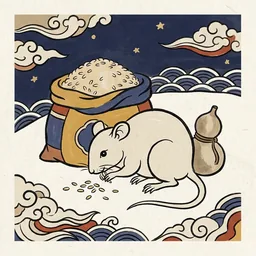
The painting on this page keeps that older meaning in view: a plump rat nibbling grain beside an overflowing rice sack and a small gourd, under a night sky full of stars, plenty gathered quietly while everyone else sleeps.
In daily life the Rat's cleverness looks a lot like radar. You may be the one who knows which carriage stops nearest the station exit, which shop discounts bread after eight, and which colleague has been quietly updating their CV. You settle into a new city or team faster than most, because you watch before you commit. Rats also like a reserve: a spare charger in the bag, a second route if the first is closed, leftovers turned into tomorrow's lunch.
Socially, Rats are often lively and easy company, good at small talk and at remembering who knows whom. Letting people further in takes longer. The 'sneaky' label usually comes from that gap: a Rat thinks several steps ahead and does not always show the working, so a well-prepared answer can look like a hidden agenda. The same alertness can tip into worry, with too many scenarios running at once. These are leanings people have noticed in the sign for centuries, not a script anyone has to follow.
The Earthly Branch
- Branch
- 子
- Yin or yang
- Yang
- Element
- Water
- Solar month
- around December
- Hours
- 23:00–01:00
- Direction
- North
The Rat's earthly branch is 子 (ja in Korean, ne in Japanese), the very first of the twelve branches that East Asian calendars use to count years, months, hours and compass points. It is yang, and its fixed element is water. In the solar-term calendar its month falls roughly in December, the stretch that contains the winter solstice; its hours run from 23:00 to 01:00, and its direction is north.
Each of those markers is a turning point. The 子 hour straddles midnight, so a new day begins inside it, and the everyday Korean word for midnight, jajeong, simply names the middle of this hour. The solstice is the longest night of the year and also the moment the light starts to return. So the branch that opens the cycle sits exactly where one round ends and the next quietly begins.
The water here is midwinter water: still on the surface, perhaps under ice, but moving underneath. That image fits the Rat well. Rat people often look calm and say little in a new setting while their minds work fast, sorting who matters, what things cost and where the exit is. The branch also lends the Rat its taste for beginnings. Rats tend to notice the first sign of a change, the new shop on the corner, the shift in a friend's tone, long before it becomes obvious to others.
The Five Element Types
Wood · 1984 (甲子)
Water feeds wood, so the Rat's branch nourishes the 甲 stem above it, like a deep spring under a young tree. This pair also opens the whole sixty-year cycle, and Japan's Koshien baseball stadium is named after the 甲子 year in which it was built. Wood Rats tend to be generous, curious and good at growing small starts into something lasting.
Fire · 1996 (丙子)
Here the sun-fire of 丙 sits on top of midwinter water, and water controls fire. The result is a warm, sociable surface over a cool, calculating core. Fire Rats are often charming and quick with words, yet they weigh every offer privately, and they feel the pull between acting on impulse and holding back.
Earth · 1948, 2008 (戊子)
戊 is mountain earth, and earth controls water the way a bank holds a river. This gives the steadiest, most realistic Rat of the five. Earth Rats tend to plan carefully, keep their promises and resist schemes that sound too good, though they can be slow to loosen their grip on a plan once it is set.
Metal · 1960, 2020 (庚子)
Metal feeds water, like rock giving minerals to a cold spring, so the 庚 stem sharpens the Rat's natural intelligence. Metal Rats are often precise, decisive and good at spotting the flaw in an argument. The same edge can make them sound critical, and a softer delivery usually helps their sharp judgement land.
Water · 1972 (壬子)
壬 is the water of rivers and seas, poured onto the Rat's own water, which makes this the deepest Rat of all. Water Rats tend to be intuitive, resourceful and hard to read, with more going on beneath the surface than they show. They adapt easily, but they can also sink into worry when nothing gives their thoughts a channel.
Strengths
You notice things early: the price that changed, the friend who went quiet, the deadline nobody else has written down. That makes you useful in a crisis, because you have usually thought about the problem before it arrived. You are resourceful with whatever is at hand, turning a half-empty fridge into dinner or an awkward schedule into a workable one. You learn fast, network naturally and rarely waste effort, time or money on things that do not matter to you.
What to Watch
Alertness has a cost. Rats can keep so many what-ifs running that a simple decision turns into a week of rehearsing outcomes. Caution can harden into keeping score, or into holding back help until you are sure it will be returned, and people do feel that. You may also hold information close for safety and leave others feeling outmanoeuvred. Letting a plan be visible, even unfinished, often builds more trust than presenting a perfect one at the end.
Love and Partnership
Rats tend to love through attention to detail. You remember that your partner hates cold coffee, you have the umbrella ready when the forecast turns, you book the restaurant with the calmer corner tables. Words of affection may come less easily than these practical acts, so a Rat's partner sometimes needs to learn that 'I sorted out the train tickets' can mean 'I care about you.'
Early on, you are usually cautious. You watch how someone treats waiting staff, whether they keep small promises and how they handle money, and you open up step by step. Once you commit, you are loyal and protective, and you work hard to make a shared life comfortable.
The weak spot is worry. A late reply or a change of tone can set off a chain of scenarios that has little to do with what actually happened. Saying the worry out loud, simply and early, usually dissolves it faster than investigating it alone. Partners who are steady and straightforward tend to calm that anxious streak, and in return they get someone who will notice what they need before they ask.
Compatibility
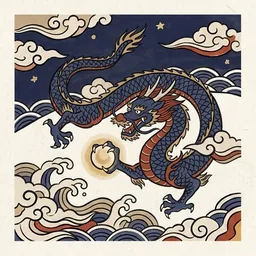
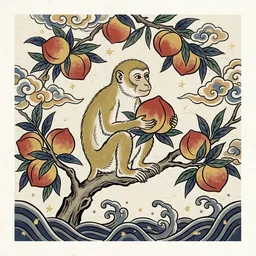
The Rat's natural allies are the Dragon (辰) and the Monkey (申), its partners in the triad (三合, samhap in Korean), a set of three branches spaced four places apart that combine into one element. Together 申子辰 form the water triad. The Dragon brings vision and confidence to the Rat's careful planning, and the Monkey matches the Rat's quick mind with inventiveness and humour.
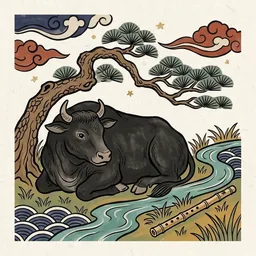
The Rat's one-to-one partner is the Ox (丑), through the six harmony (六合, yukhap in Korean), a bond between two branches that tradition says binds them into earth. The Ox's patience and stamina ground the Rat's restless thinking, while the Rat supplies ideas and spots the openings the Ox might plod past. It is a partnership of plan and follow-through.
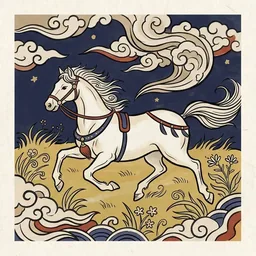
The clash (冲, chung in Korean) partner is the Horse (午), which sits directly opposite the Rat among the twelve: midnight against noon, water against fire. The difference is mostly one of speed and expression. The Rat holds back, weighs options and keeps some cards hidden; the Horse decides on feeling and says everything out loud. Each can find the other either exhausting or freeing, depending on whether that contrast is named.
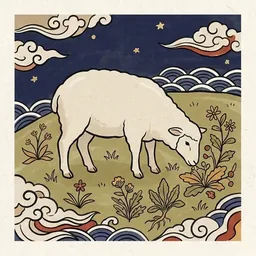
Wonjin (怨嗔), a Korean folk idea of a pair between whom small grievances quietly pile up, links the Rat with the Goat (未). Classical texts also count this pair among the six harms (相害). In practice the friction is subtle: the Rat's brisk, practical care can feel cool to the Goat, while the Goat's need for gentleness and time can look indecisive to the Rat. Saying what each of you needs, rather than assuming it, usually takes the sting out. None of these patterns decides a relationship on its own.
Work and Money
Rats tend to do well wherever information is the raw material. You notice openings early, gather facts before you speak and keep track of details others lose, so research, analysis, journalism, editing, purchasing, logistics, planning and running a small shop or business often suit you. You also tend to be the person in a team who knows how things actually get done, which form to file and whom to call. Work that rewards careful preparation and quick reactions to change brings out your best; rigid roles with no room to improve the system can feel stifling.
At home, Rats usually have strong household sense. You dislike waste, compare before you buy and like knowing there is something set aside for a rainy day, a habit that matches the full rice sack in the painting. The tendency to watch for is holding on so tightly that you skip the things money is for: a shared meal, a gift, an experience that would really matter. For many Rats, the balance lies between that careful instinct and a little room for generosity.
In Korean Culture
Korean speech is full of rats. The proverb 'birds hear what is said by day, and rats hear what is said by night' warns that no word stays secret, however private the moment seems. A more hopeful one says that 'even a rat hole gets sunshine one day', meaning that hard times do not last forever. Both picture the rat as small and overlooked, yet always close by.
In farming villages, the rat was also the target of jwibul-nori, the rat-fire game, held around Jeongwol Daeboreum, the first full moon of the lunar year. People set fire to the dry grass on the ridges between rice paddies to drive out field mice and burn off insect eggs, and the ash enriched the soil for spring. Children whirled cans punched with holes and filled with burning embers, drawing circles of fire in the dark. Today it survives mainly as a supervised festival event.
Korea also tells the story of the race that set the order of the twelve animals: the Rat rode on the Ox's back and jumped off at the finish to come first, which is why the cycle begins with the Rat and the Ox comes second. A further folk tale warns against throwing away fingernail clippings, because a rat that eats them might turn into a double of their owner; in the best-known tellings, a cat finally exposes the impostor.
In Japanese Culture
In Japan the rat is ne, the first sign of eto (the Japanese name for the twelve-animal cycle), and it is widely regarded as the messenger of Daikokuten (大黒天), the god of plenty usually shown with a mallet and rice bales. That connection is why rats often appear beside him in carvings and lucky charms. The Edo-period arithmetic book Jinkoki included a puzzle about rat parents whose offspring multiply month after month, and nezumi-zan, 'rat arithmetic', still means anything that grows explosively. The folk tale Nezumi no yomeiri, 'the rat's wedding', tells of rat parents seeking the mightiest husband for their daughter, from the sun to the cloud to the wind to the wall, only to learn that a rat is strongest of all. The old hour ne no koku marks the dead of night. In a Rat year, people born under the sign become toshi-otoko or toshi-onna, the men and women whose own animal has come round again.
Advice
Share your thinking a little earlier than feels comfortable. When people can see how you reached a decision, your caution reads as care rather than calculation. Give worry a limit: write the scenarios down once, pick the one you can act on, and leave the rest. Practise small generosity with no account kept, such as covering a coffee or passing on a useful tip, because it builds the trust your sharp mind deserves. And lean on steady people, often an Ox or a Dragon, when your thoughts start running in circles.
Frequently Asked Questions
Is the Rat a bad sign in the Korean zodiac?
No. The rat's poor reputation is mostly a Western one. In Korea, China and Japan it is the first of the twelve animals and a long-standing image of fertility, plenty and resourcefulness, which is why it appears beside rice sacks and gods of good fortune. Rat-year people are associated with intelligence, adaptability and thrift. Like every sign, it describes tendencies, not a fixed fate.
Which signs are most compatible with the Rat?
By tradition, the Dragon and the Monkey, who share the Rat's water triad, and the Ox, its six-harmony partner. The Dragon adds confidence to the Rat's planning, the Monkey matches its quick wit, and the Ox turns its ideas into steady progress. Real relationships depend far more on how two people talk and listen than on their birth animals.
Are the Rat and the Horse, or the Rat and the Goat, a bad match?
Not by default. The Horse is the Rat's clash partner, which in this tradition means opposite rhythms: the Rat is careful and private, the Horse quick and outspoken. The Goat is its wonjin pair, where small misunderstandings can collect unless they are aired. Both pairings work well when each person states needs plainly and treats the difference as something to learn from.
My birthday is in January, early February or December. Am I a Rat?
It depends on the convention. Korean saju (the four-pillar birth chart) starts the year at Ipchun, around 4 February, while many Korean families count from Seollal, the Lunar New Year. In Japan, everyday eto usually changes on 1 January, and shichu suimei (Japanese four-pillar astrology) uses Risshun, the day after Setsubun. December births are a separate case: in saju, most of December falls in the 子 month (which begins at Daeseol, around 7 December), a Rat month, which is one part of the chart and not the same as a Rat birth year.