Rabbit
Born in a Rabbit year (卯)? You tend to be gentle, tactful and quick to read a room, with fine taste and a careful streak; Goat, Pig and Dog suit you best.
- Element
- Wood
- Birth Years
- 1939 · 1951 · 1963 · 1975 · 1987 · 1999 · 2011 · 2023
Character
If you were born in a Rabbit year, you are often the gentlest person in the room and also the one who has noticed the most: who is tired, who feels left out, which joke landed badly. People tend to describe you as tactful, careful and quietly stylish, and in the Korean zodiac, where your birth-year animal is called your ddi, your warmest matches are traditionally the Goat, the Pig and the Dog. Your caution is not timidity. You like to see the ground before you step on it, so you rarely commit on the first evening you hear about a plan, and you would rather send a considered message the next morning than a hasty one tonight. That care reaches your surroundings too: the right mug, a tidy desk, lighting that does not glare. Open conflict tends to bother you more than it bothers others, so you look for the way around a quarrel rather than through it, and you often end up as the friend who calms a group chat after someone has said too much. Underneath the soft manner there is usually a clear sense of what you like and what you will not accept; you simply prefer to show it through choices rather than speeches.
The Earthly Branch
- Branch
- 卯
- Yin or yang
- Yin
- Element
- Wood
- Solar month
- around March
- Hours
- 05:00–07:00
- Direction
- East
The Rabbit's earthly branch is 卯, read myo in Korean and u in Japanese, the fourth of the twelve branches that East Asian calendars have long used to count years, months, hours and directions. It is yin, and its fixed element is wood, but this is wood in mid-spring at full growth: less a tall trunk than vines, grasses and fresh leaves that bend in the wind and keep climbing. Its month falls roughly in March of the solar-term calendar, beginning in early March rather than on the first of the month. Its hours are 05:00 to 07:00, the time of sunrise, and its direction is east, where that sun appears. Put together, 卯 adds three things to the Rabbit's character: a gentleness that keeps growing instead of snapping, a sensitivity to small shifts in weather and mood, and a feel for timing, the sense of exactly when a door is ready to be opened.
The Five Element Types
Wood · 1975 (乙卯)
Yin wood sits on top of the Rabbit's own wood, so the trait doubles. This is the most rabbit-like of the five, soft-spoken and persistent like ivy finding its way up a wall; it tends to flourish beside a steady person or structure and to wilt in harsh, rushed settings.
Fire · 1987 (丁卯)
The stem 丁 is lamplight, and the Rabbit's wood feeds it. Warmth that other Rabbits keep private becomes visible here, so Fire Rabbits are often expressive, artistic and lovely company at a small table, though the flame can burn through their energy when too many people want a share of it.
Earth · 1939, 1999 (己卯)
己 is cultivated garden soil, and wood controls earth, the way roots grip and break up the ground. Earth Rabbits tend to be practical, patient tenders of projects, homes and savings; their quiet tension is a pull between restlessness and comfort, eased by giving the restless side a real outlet.
Metal · 1951, 2011 (辛卯)
辛 is fine metal, like the blade of pruning shears, and metal controls wood. The result is a sharper, more decisive Rabbit with a jeweller's eye for quality. Pruning helps a plant grow, so that edge is useful, but Metal Rabbits are often harder on themselves than anyone else would be.
Water · 1963, 2023 (癸卯)
癸 is rain and morning dew, and water feeds wood. Water Rabbits tend to be the most intuitive and sympathetic of the group, sensing what someone needs before it is said. Their care point is drifting: plenty of nourishment but not always a clear direction, so small written goals help.
Strengths
You can disagree without wounding anyone, which makes you a natural go-between at work and in families. Your eye for detail catches the typo in the contract and the chipped corner on the gift box. You learn people quickly and remember what they told you months ago, and your patience lets slow things, from friendships to handmade work, reach their full shape.
What to Watch
The same tact can turn into avoidance: you may leave a problem alone because naming it feels rude, and by the time you mention it, it has grown. Caution can slide into indecision, so good chances drift past while you are still checking. Saying yes to keep the peace leaves you carrying other people's tasks, and absorbing tension in silence can wear you out without anyone around you noticing.
Love and Partnership
Rabbit-year people tend to fall in love slowly and then very loyally. You notice small things, how someone treats a waiter or whether they remember your coffee order, long before you notice grand gestures, and you show affection the same way: a book left on the desk, the heating switched on before they get home. You do best with a partner who is reliable and calm, because loud arguments and unpredictable moods make you withdraw. The weak spot is that you keep the peace by staying quiet about what you need, and resentment builds where the other person cannot see it. A useful habit is a regular, low-stakes check-in, a walk or a late cup of tea, where either of you can raise a small irritation before it hardens. When you do speak up you are usually fair and kind, and a partner who welcomes that will find you a remarkably steady companion.
Compatibility
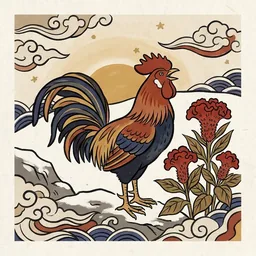
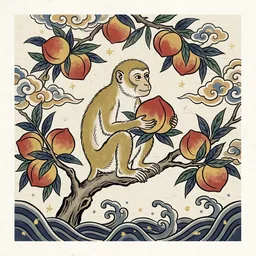
Korean matchmaking reads four kinds of relationship between birth animals. The strongest is the triad (三合, samhap in Korean): Rabbit, Goat (未) and Pig (亥) form the 亥卯未 group, the wood triad, with the Rabbit at its centre. The Pig brings the water that young wood grows from and the Goat stores wood's later harvest, so these three tend to share values and pull in one direction, and such friendships often feel easy from the first meeting. Six harmony (六合, yukhap in Korean) pairs you with the Dog (戌): the loyal, plain-spoken Dog gives your soft manner something firm to lean on, while you round off the Dog's bluntness. The clash (冲, chung in Korean) is the Rooster (酉), sitting directly opposite you on the circle, west to your east and autumn to your spring. The Rooster states things outright while you hint, so misunderstandings come from style rather than ill will, and they ease once both of you name the difference. Finally there is wonjin (怨嗔), a folk 'resentment' pairing in which two people grate on each other in small, daily ways; for the Rabbit it is the Monkey (申). An old verse on wonjin says 兎怨猴不平, the rabbit resenting the monkey for being uneven: the Monkey's quick, restless improvising can unsettle someone who likes a plan. None of these pairings forbids anything. They show where patience will be needed, not whether a relationship can work.
Work and Money
At work you tend to shine where care and taste matter more than volume: design, editing, crafts, interiors, hospitality, teaching, and roles that smooth the way between people, such as client relations or HR. You check the details others skip and can deliver bad news gently, so colleagues come to trust your judgement. Open-plan chaos and constant confrontation drain you, and a role with some quiet hours usually suits you better than a permanent sales floor. With money, Rabbits are usually careful: you compare prices, keep a little set aside and dislike owing anyone. Your trap is the opposite of recklessness: spending to please others on gifts or group plans you never wanted. Generosity sits best with you when it is something you choose, not something you feel unable to refuse.
In Korean Culture
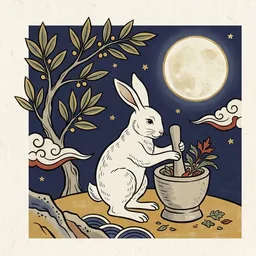
Korean children meet the Rabbit early through 'Bandal' (Half Moon), a 1924 song by Yun Geuk-yeong that pictures the half moon as a little white boat on the Milky Way, carrying one gyesu tree (the laurel or cassia of moon legends) and one rabbit. Behind it is the moon rabbit: Koreans traditionally say the shadows on the full moon are a rabbit pounding grain for rice cakes under that tree, an image parents still point out at Chuseok, the harvest full-moon holiday. Older Chinese versions have the rabbit grinding a medicine of long life, so the motif carries patience, quiet craft and healing together. The Rabbit's other famous role is in Byeoljubujeon, also called Tokki-jeon (The Tale of the Rabbit) and sung as the pansori epic Sugungga. The Dragon King of the sea falls ill and only a rabbit's liver will cure him, so a terrapin courtier coaxes the rabbit down to the undersea palace with promises of rank. Once trapped, the rabbit calmly explains that he left his liver on land to dry, rides back to shore on the terrapin's back to fetch it, and escapes. An early form of the tale appears in the Samguk sagi, the 1145 history of the Three Kingdoms, where it is told to the Silla envoy Kim Chunchu as a hint for getting out of Goguryeo. Koreans still cite it as wit beating strength.
In Japanese Culture
Japan shares the moon rabbit, but here it pounds mochi (餅つき) rather than medicine, and it appears on sweets and decorations at otsukimi, the autumn moon-viewing night of dango and pampas grass. The oldest Japanese rabbit story is the White Hare of Inaba in the Kojiki (712): a rabbit tricks a row of wani into forming a bridge across the sea, is stripped of its fur for the deceit, and is healed when the god Ōkuninushi tells it to rinse in fresh water and roll in cattail pollen; Hakuto Shrine in Tottori still honours it. In eto custom (eto is the Japanese word for the zodiac signs) each sign has a guardian Buddha (mamori-honzon), and for 卯 it is Monju Bosatsu, the bodhisattva of wisdom. Rabbit years also hand New Year card writers an easy theme: the rabbit's jump, commonly read as a leap forward (飛躍) for the year ahead, and people born under the sign greet it as toshi-otoko or toshi-onna, men and women whose own animal year has come round.
Advice
Say the small thing early: a one-line 'that bothered me a bit' on Tuesday spares everyone a cold silence on Friday. Give your caution a deadline, a set number of days to research, and then decide. Keep one corner of the week for making something with your hands, whether cooking, sketching or mending, since quiet craft is how you recharge. When someone praises your taste, believe them; it is a real skill. If you are curious how the coming Fire Goat year treats Rabbits, the separate 2027 forecast covers it.
Frequently Asked Questions
Who is the best match for a Rabbit?
The Goat, the Pig and the Dog. Goat and Pig complete the Rabbit's wood triad (亥卯未), so the three tend to share a pace and a sense of what matters. The Dog is the six-harmony partner: steadier and more direct than you, it balances your gentleness well. Other signs can match well too; these are simply the traditional easy fits.
Is a Rabbit and Rooster a bad match?
No, it is a clash pair, which means opposite styles rather than a doomed match. 卯 and 酉 face each other across the circle, spring against autumn, wood against metal. The Rooster speaks plainly and you speak softly, so the work is learning each other's signals. Couples who do that often value how different the other's strengths are.
Is the fourth sign a rabbit or a hare?
Either is correct. The character 兎, Korean tokki and Japanese usagi are umbrella words that cover rabbits and hares alike, and the wild rabbits most people see in Korea and Japan are hares. The exception is Japan's Amami rabbit, a protected special natural monument found only on Amami Ōshima and Tokunoshima, which is a true rabbit rather than a hare. English uses Rabbit by convention, which is why 'Year of the Rabbit' is the usual name, but books that say hare are not wrong. In Vietnam the fourth sign is a cat instead.
I was born in January or early February. Am I a Rabbit?
It depends on the dividing line. Korean saju, reading the Four Pillars of birth, changes the zodiac year at Ipchun (立春, the Start of Spring), around 4 February, while the popular lunar calendar uses Lunar New Year. Someone born on 10 February 1988 is a Dragon in saju but still a Rabbit by the lunar calendar, since Lunar New Year fell on 17 February that year. Japan usually switches the animal on 1 January.