Monkey
Monkeys are witty, curious, fun to be with and quick to improvise, but may get bored fast. The Rat, Dragon and Snake suit them best, while the Tiger sits directly opposite.
- Element
- Metal
- Birth Years
- 1944 · 1956 · 1968 · 1980 · 1992 · 2004 · 2016 · 2028
Character
If the Monkey is your ddi (the animal of your birth year in the Korean zodiac), you are usually described as witty, curious and quick to improvise: the sociable one who can talk with anyone and find a way round almost any obstacle. The same quick mind gets restless, though, so Monkeys can scatter their attention across too many things and lose interest once the puzzle is solved.
Think of the colleague who fixes the jammed printer while everyone else is still reading the error message, or the traveller who has picked up enough of the local language from menus and street signs to bargain at a market by day three. When a train is cancelled, the Monkey has usually found a bus, a café to wait in and a funny story to tell about it before the others have finished complaining. This is a mind that learns by handling things: pick it up, turn it over, try it, keep what works.
Monkeys are often the best company at the table. They are good mimics, quick with a joke and honestly curious about other people's jobs and hobbies, the ones who ask the follow-up question that gets a shy guest talking. They collect people the way they collect skills, so their circles tend to be wide and surprisingly varied.
So is the Monkey a clever friend or an unreliable prankster? Mostly the first. The trickster image owes a lot to the Monkey King of the Chinese novel Journey to the West and to the sign's playful streak. The real weak spots are quieter: the fifth hobby bought before the fourth is unpacked, a joke used to slip past a serious question, a shortcut that looks like corner-cutting to people who prefer the long way. These are tendencies the old calendar describes, not a fixed fate, and many Monkeys learn to stay with one thing long enough for their talent to deepen.
The Earthly Branch
- Branch
- 申
- Yin or yang
- Yang
- Element
- Metal
- Solar month
- around August
- Hours
- 15:00–17:00
- Direction
- Southwest
The Monkey stands on the earthly branch 申, read sin in Korean and saru in Japanese, the ninth of the twelve branches that East Asian calendars use to count years, months, hours and directions. It is yang, and its fixed element is metal. The 申 month opens at Ipchu, the solar term called the start of autumn, so it corresponds roughly to August. Its hours run from 15:00 to 17:00, the long slanting afternoon, and its direction is the southwest.
Metal in this system is the energy of harvest: the sickle that cuts the first ripe grain, the moment when fruit is ready to be picked. At 申 that metal is new and keen rather than heavy, an edge just drawn. It suits the Monkey's sharp wit and its eye for whatever is ripe for the taking, whether that is an opportunity, a punchline or the one fix that will actually work.
申 also belongs to the four branches 寅申巳亥 (Tiger, Monkey, Snake and Pig) that open the four seasons. Traditional readings link them with movement and travel, and Korean fortune-tellers call that quality yeokma (驛馬), the post-horse of the old relay roads: a life with many moves, trips and changes of scene. Read it as a liking for motion and new ground rather than as a warning.
The Five Element Types
Wood · 1944, 2004 (甲申)
A yang wood stem, 甲, the tall tree, sits on a metal branch, and metal controls wood, so the picture is a pine growing out of bare rock. Wood Monkeys tend to be more idealistic and principled than other Monkeys, with a stubborn streak under pressure, and that inner tension often makes them careful thinkers who test a plan twice before trusting it.
Fire · 1956, 2016 (丙申)
丙 is the fire of the sun, and fire controls metal the way a smith's forge works a blade into shape. Fire Monkeys are often the boldest and most charismatic of the five, quick to perform and quick to take the lead, and the heat usually sharpens their talents rather than dulling them, provided they let an idea cool before judging it.
Earth · 1968 (戊申)
Earth feeds metal, so the 戊 stem, a broad mountain of earth, holds up the branch the way a hillside holds a seam of ore. Earth Monkeys are usually the steadiest of the group: practical, dependable, slower to get bored and more willing to finish what they start, while keeping the Monkey's knack for an inventive fix.
Metal · 1980 (庚申)
When 庚, yang metal, sits on a metal branch, the sign's own element doubles and the edge is at its sharpest. Metal Monkeys tend to be decisive, self-reliant and frank to the point of bluntness. In Japan this pairing of stem and branch gives its name to Koshin-machi, an old folk custom of keeping watch together through the whole of a 庚申 night.
Water · 1992 (壬申)
Metal feeds water, so the branch pours its strength into the 壬 stem, the water of great rivers and the open sea. Water Monkeys tend to be the most fluent and diplomatic of the five, quick to read a mood and talk a group round to agreement, though they can slide around a commitment as easily as they slide around an obstacle.
Strengths
Your greatest gift is resourcefulness. When a plan breaks, Monkeys are often the first to spot a second route, and you can build a working solution from whatever happens to be on hand. You learn fast, by doing rather than by reading the manual, and you move between subjects and social circles with very little friction. People enjoy your company: you lighten tense meetings, put newcomers at ease, and can explain a complicated idea with a funny comparison that everyone remembers afterwards.
What to Watch
Boredom is the Monkey's soft spot. Once you have worked out how something works, the repeating part can feel like a waste of time, so projects stall at eighty percent and hobbies pile up in the cupboard. Quick wit can also turn sharp: a joke at the wrong moment, or a clever shortcut that others read as cutting corners, can spend trust you never meant to spend. You may keep your options open for so long that people start to wonder whether you are really in. Saying plainly what you will finish helps others take your talent seriously.
Love and Partnership
As a Monkey, you rarely let romance get dull. You tend to court with humour and surprises: a ridiculous nickname, a detour to a night market, a running joke that lasts for years. You are curious about your partner's world and genuinely good at making them laugh after a hard day, and that lightness is a real gift in a relationship.
The difficulty shows up when a conversation needs to be heavy. Monkeys may deflect with a joke, change the subject, or suddenly get busy with something else rather than sit with an uncomfortable feeling, and to a partner that can look like not caring. Monkeys in lasting relationships usually learn to notice the moment when a laugh would be an escape, and to stay in the serious talk a little longer than feels comfortable.
You do best with someone who enjoys your curiosity and does not mind when weekend plans change halfway through. In return, you owe them steadiness on the things that matter: turning up when you said you would, and answering the hard question instead of the easy one.
Compatibility
Korean and Japanese zodiac matching looks at fixed relationships between the twelve branches. They describe how two temperaments tend to meet, not whether a relationship can work.
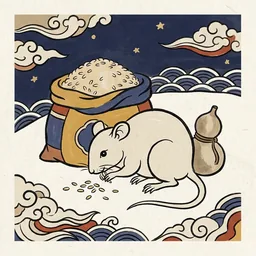
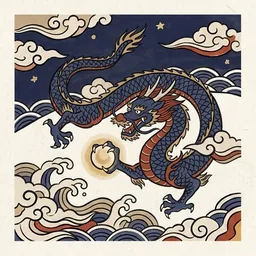
The triad (三合, samhap in Korean, a group of three signs that pull together) for the Monkey is 申子辰, with the Rat (子) and the Dragon (辰), and together the three form a water frame. In that trio the Monkey is where the water rises, the Rat is its full flow and the Dragon its reservoir. In everyday terms the Rat matches your quick mind with careful planning, and the Dragon gives your ideas scale and nerve, so brainstorming with either tends to feel like playing on the same side.
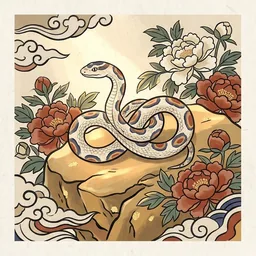
Six harmony (六合, yukhap in Korean, a one-to-one pairing) joins you with the Snake (巳), and 巳申 together combine into water. The Snake is slow, deep and discreet where you are fast and playful, so each supplies what the other skips: you bring movement, the Snake brings judgement.
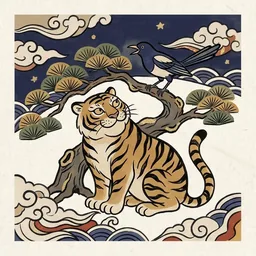
The clash (冲, chung in Korean) is with the Tiger (寅), the branch directly opposite yours: wood against metal, the opening of spring against the opening of autumn. The two decide in different ways. The Tiger commits on conviction and charges ahead, while you test, adjust and keep a back door open, which can look like stubbornness from one side and slipperiness from the other. That is a difference in method rather than a bad match, and a Tiger and Monkey who agree early on how decisions get made can cover each other's blind spots well.
Wonjin (怨嗔, a Korean folk pairing of small, lingering irritation) links you with the Rabbit (卯). The careful, tactful Rabbit may find your improvising unsettling, and you may find the Rabbit's caution slow. Naming those two speeds out loud, and being able to laugh about them, usually does more good than any chart.
Work and Money
At work Monkeys tend to shine wherever the problem changes every day: troubleshooting, negotiation, sales and marketing, product development, journalism, teaching, performance, consulting, and small teams where everyone wears several hats. You are often the person colleagues come to when something breaks, and across a negotiating table you can read the other side quickly enough to find a deal both can accept. Rigid routine, or a manager who insists everything be done the old way, can drain you faster than hard work ever does.
With money, the Monkey's pattern tends to follow its curiosity. Income may come from more than one direction, and spending often trails new interests: gadgets, courses, trips, the gear for a hobby that may be gone by spring. Monkeys who feel most at ease with money tend to be the ones who turn the same curiosity on their own habits, telling apart the purchases they go on enjoying from the ones that only scratched the itch of something new.
In Korean Culture
Monkeys do not live wild on the Korean peninsula, and have not in historical times, so Koreans long knew them from stories, paintings and imported books rather than from the forest. The old native word for the animal is jannabi, and older Koreans sometimes still say jannabi-tti instead of wonsungi-tti, the everyday modern name for the Monkey sign.
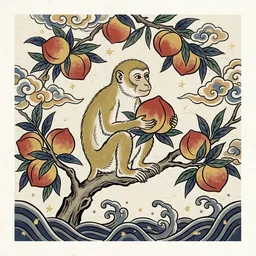
The monkey most Koreans picture first is a literary one: Son Ogong, the Monkey King Sun Wukong of the Chinese novel Journey to the West. He even sits on palace roofs, where he goes by Son Haengja (孫行者, "Pilgrim Sun"), another name the novel itself gives him. The little clay figures called japsang that line the sloping ridges of Joseon palace buildings, at Gyeongbokgung among others, are there to keep misfortune away from the hall, and the first figures in each row are traditionally identified with the pilgrims of that novel, led by their monk with Son Haengja close behind. The picture on this page, a clever monkey on a peach branch holding a ripe fruit in the style of Korean folk painting (minhwa), draws on the same tale: the peach stands for long life across East Asia, and the Monkey King famously helps himself to the heavenly peaches of immortality (蟠桃).
Korean also has a proverb everyone knows: even a monkey falls from a tree. Japanese has the same saying, saru mo ki kara ochiru. It is said when a skilled person makes a slip, a gentle reminder that expertise makes no one immune, and a fitting one for a sign famous for its cleverness.
In Japanese Culture
Japan, unlike Korea, has its own wild monkey, the Japanese macaque, and the animal runs through shrine life and wordplay. In eto, the Japanese name for the twelve-animal cycle, the sign 申 is read saru, which sounds like 去る, 'to leave', so Monkey-year New Year cards often wish that troubles will leave. At Hiyoshi Taisha in Shiga the sacred monkeys are called masaru (神猿), heard as 魔去る, 'evil departs'. The country's most famous monkeys are the three carved on the sacred stable of Nikko Toshogu, covering their eyes, mouth and ears: mizaru, iwazaru, kikazaru, see, speak and hear no evil, every name ending once more in a play on saru. Monkeys were believed to keep horses healthy, which is why they watch over a stable. When the sign comes round, people born in Monkey years become that year's toshi-otoko and toshi-onna, literally 'year man' and 'year woman', the people whose own animal has come round again.
Advice
Choose one skill, project or friendship and stay with it past the point where it stops feeling new; a Monkey's talent compounds when it is allowed to deepen. Before you start the next thing, either finish the last one or put it down on purpose, so nothing is left hanging half-open. When a serious conversation arrives, notice the joke forming and save it for later. And keep a few Rat, Dragon or Snake friends close, since they tend to enjoy your ideas and also help you carry them through.
Frequently Asked Questions
Is jannabi-tti a different sign from the Monkey?
No, it is the same sign. Jannabi is an older native Korean word for monkey and wonsungi is the word used today, so jannabi-tti and wonsungi-tti both mean someone born in a 申 year. The older word survives mostly in this phrase and in the speech of older generations, which gives it a slightly old-fashioned, affectionate ring.
Which signs are the best match for a Monkey?
Traditionally the Rat and the Dragon, who share the Monkey's water triad 申子辰, and the Snake, its six-harmony partner. The Rat steadies your speed with planning, the Dragon lends ambition and scale, and the Snake's calm judgement balances your improvising. These point to easy rapport, but how two people listen to each other and keep promises matters far more.
Are the Monkey and the Tiger a bad match?
No, not by default. They are a clash pair, sitting opposite each other among the twelve branches, which in this tradition signals contrast rather than hostility. The Tiger tends to act on conviction and the Monkey to test and adjust, so they may argue about how to decide. Pairs who name that difference often find each covers the other's weak side.
Are Monkey-year people untrustworthy?
No. The trickster reputation comes mostly from the mischievous Monkey King of Journey to the West and from the sign's playful humour. Monkeys tend to be warm and loyal to the people they care about. When trust does wobble, it is usually because plans changed too quickly or a joke dodged a serious moment, and both are habits a person can change.
If my birthday is in January or early February, am I a Monkey?
That depends on the convention. Everyday Korean usage often switches the animal at Seollal, the Lunar New Year, whose date moves between late January and mid-February. For saju, the four-pillar birth chart, the year turns at Ipchun (the start of spring), usually on 4 February. In Japan, everyday eto follows 1 January, while fortune-telling uses risshun (立春), the day after Setsubun. Check your birth date against the system you follow.