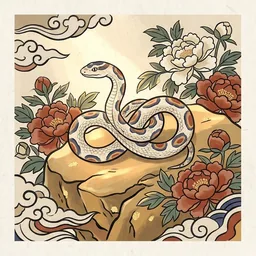
Snake
Calm, wise and private, the Korean Snake (巳) thinks before it acts and has a warm heart under a cool face. It gets on best with the Rooster, Ox and Monkey.
- Element
- Fire
- Birth Years
- 1941 · 1953 · 1965 · 1977 · 1989 · 2001 · 2013 · 2025
Character
If you were born in a Snake year, tradition sees you as wise, intuitive and composed: an elegant, private person who reads a room quickly and quietly plans several moves ahead. Your most natural partners are the Rooster and the Ox, who share your triad, and the Monkey, your six-harmony match. In the West the snake still carries the shadow of the Garden of Eden, so some people are a little dismayed to learn their sign; across East Asia the picture is far kinder, and the snake is admired for wisdom, poise and a low-key charm that draws people in. In Korea your sign is your ddi, the zodiac animal of your birth year, and Snake ddi people are often described as the ones who listen more than they talk. In a meeting you may say almost nothing for an hour and then ask the one question that changes the plan. You like to understand something fully before committing, which can look like hesitation to faster signs but usually means your decisions hold. Privacy matters to you: some friends know only one side of you, and that suits you fine. Under the calm there is real feeling and a good deal of determination. Once you decide a person or a cause deserves your loyalty, you rarely let go, and you remember kindnesses, and slights, for a long time.
The Earthly Branch
- Branch
- 巳
- Yin or yang
- Yin
- Element
- Fire
- Solar month
- around May
- Hours
- 09:00–11:00
- Direction
- Southeast
The Snake's earthly branch is 巳 (sa in Korean, mi in Japanese), the sixth of the twelve branches that the old East Asian calendar uses to count years, months, days and hours. 巳 is yin fire, the fire of early summer. Its month begins around early May with the solar term the Beginning of Summer (立夏), so the dates are approximate; its double hour runs from 09:00 to 11:00; and its direction is the southeast. Japanese calls that corner tatsumi (辰巳), the direction the Snake shares with the Dragon, also written with the single character 巽. Yin fire is fire held inside: the glow of embers, or a lamp behind paper, rather than a bonfire. That image is the key to the Snake temperament, a cool surface over steady inner heat that does not need to show itself to keep burning. Tradition reads the Snake's hour, late morning, as the time when the day's work gets going and so as a time suited to focus, which fits the sign's gift for concentration. The animal's habit of shedding its skin adds one more layer: 巳 is linked with renewal, the ability to leave an old self behind without fuss and come out fresh.
The Five Element Types
Wood · 1965, 2025 (乙巳)
The stem is yin wood and the branch is fire, and wood feeds fire, so this Snake's inner warmth has a steady fuel supply. Wood Snakes are often gentle, cultured and quietly persuasive, growing an idea slowly until it takes root.
Fire · 1977 (丁巳)
A yin fire stem on a fire branch doubles the heat. Fire Snakes are usually the most expressive of the five, magnetic in conversation, passionate about their causes and quick to see through pretence. Doubled fire needs an outlet: work or art they truly care about keeps the intensity bright instead of restless.
Earth · 1989 (己巳)
Fire feeds earth, so the branch's heat flows into a yin earth stem, like sun-warmed soil in a field. Earth Snakes tend to be the most practical and patient Snakes, reliable with details, slow to anger and good at turning a sharp insight into something useful that lasts for years.
Metal · 1941, 2001 (辛巳)
Here the fire branch controls the metal stem, the way a jeweller's flame shapes fine silver. Metal Snakes are typically precise, discerning and self-disciplined, with high standards and a keen eye for quality. The same pressure that refines them can make them exacting with others, so gentleness is a skill worth practising.
Water · 1953, 2013 (癸巳)
Water controls fire, so a yin water stem cools the branch's heat. Water Snakes are often the calmest and most reflective of the group, intuitive readers of mood who think in long arcs. The cooling keeps their judgement clear, though it can also keep their feelings out of sight longer than loved ones would like.
Strengths
Your clearest strengths are judgement and depth. You notice details others skip, such as a change of tone in a message or a figure that does not quite add up, and you connect them into a picture before anyone else does. You keep confidences, so people trust you with things they tell no one else. When you set out to learn a skill you go deep and stay with it, which is why many Snakes become the quiet expert a team relies on. Composure is another gift: in a crisis you tend to get calmer, not louder.
What to Watch
The privacy that protects you can leave others guessing. Friends and partners may read your silence as coldness or disapproval when you are simply thinking. Snakes can also carry a hurt for years without mentioning it, so the other person never gets the chance to make it right. Watch for over-planning: waiting until every piece of information is in can mean the moment passes. And the habit of quietly testing people before trusting them can feel, from the other side, like being watched.
Love and Partnership
The Snake falls in love slowly and selectively, and then stays. You are drawn to people with substance, someone whose mind interests you as much as their looks, and you often sense within a few conversations whether there is a future. Snakes court through attention rather than grand gestures: remembering a book someone mentioned weeks ago and turning up with a copy. Once committed, you are loyal and protective, and you expect the same in return. Jealousy can surface when you feel shut out, partly because you notice everything. The real work in a Snake relationship is saying things out loud. Your partner cannot see the inner glow you keep behind the calm face, so tell them when you are hurt, and tell them just as clearly when you are happy. A partner who respects your need for space and is honest without drama tends to bring out your warmest, most playful side.
Compatibility
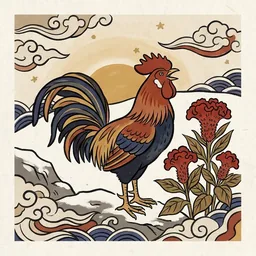
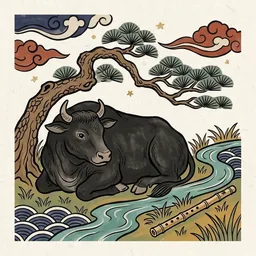
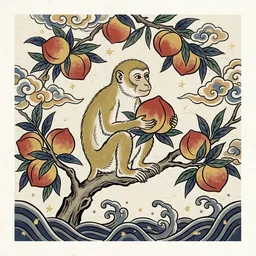
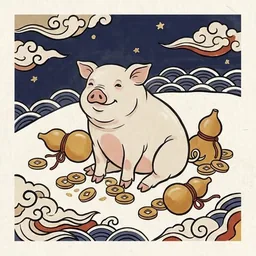
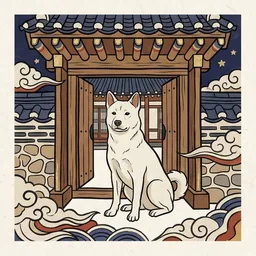
Korean and Chinese tradition reads compatibility through the earthly branches. Your strongest bond is the triad (三合, samhap in Korean): 巳酉丑, the Snake, the Rooster and the Ox. Together these three branches form a metal combination, and the Snake is its starting point, the place where metal is said to be born. In practice you bring the insight, the Rooster brings precision and the Ox brings endurance, so shared projects and friendships with these signs tend to feel purposeful. Your six-harmony partner (六合, yukhap in Korean) is the Monkey (巳申), a one-to-one pairing that traditionally signals an easy, mutually helpful bond: the Monkey's quick ideas meet your careful judgement, and each covers what the other lacks. Your clash (冲, chung in Korean) is with the Pig (巳亥), the branch directly opposite yours on the twelve-branch wheel, fire facing water. Clashing signs run on very different rhythms, the Pig open-handed and trusting where you are reserved, which can spark real attraction as well as misunderstanding. Finally, Korean folk tradition names a wonjin (怨嗔), a 'resentment' pairing, between the Snake and the Dog (巳戌). Wonjin describes two people who irritate each other in small ways without quite knowing why: your guardedness can seem secretive to the plain-spoken Dog, while the Dog's bluntness can seem tactless to you. None of these pairings decides a relationship. They simply show where ease comes naturally and where patience and clear words help most.
Work and Money
Snakes do their best work where depth and discretion count. Research, analysis, strategy, editing, accounting and other numbers-heavy work, advisory roles, design and any craft that rewards long concentration suit the Snake's working style. You prefer to work the plan out quietly and present something finished, so constant interruptions drain you, while a clear brief and room to think bring out your best. Colleagues often come to you for a second opinion. With money, Snakes are usually careful and private. You may not talk about what you earn or save, and you tend to make spending decisions slowly, comparing and waiting rather than buying on impulse. You like to know where your money goes, and that clarity is a large part of what makes you feel secure. The risk lies at the edges: being so cautious that you never treat yourself, or so private that a partner or spouse feels left out of shared plans.
In Korean Culture
In Korean folk belief the snake is less a villain than a household guardian. Traditional homes were said to shelter an eop, a protective spirit that kept the family's fortune, and one of its best-known forms was the eop-gureongi, a large snake living quietly under the floor, in the storehouse or in the stone wall. Families left it alone, because if the eop left the house, the family's luck was believed to leave with it. Snakes are also a classic image in taemong, the conception dreams Koreans traditionally share when a baby is on the way; folk readings often take a snake dream as a hint of a daughter, though interpretations vary from family to family. Each Snake year also takes a colour from its heavenly stem, which is why the most recent wood Snake year, 乙巳, was popularly called the year of the 'blue snake'. The picture on this page follows Korean folk painting, minhwa: a snake coiled calmly on a sunlit rock among peonies, the flower of wealth and honour.
In Japanese Culture
In Japan the snake is closely tied to good fortune. White snakes are honoured as messengers of Benzaiten (弁財天), the goddess of music, eloquence and wealth, and shrines and temples dedicated to her draw visitors on 巳の日 (mi no hi), the Snake days that come round every twelve days. The rarer 己巳の日 (tsuchinoto-mi no hi), once every sixty days, is considered an especially auspicious day for a visit and is popularly associated with money luck. A long-standing folk custom is to tuck a piece of shed snakeskin into a wallet as a charm. When a Snake year approaches, 年賀状 (New Year cards) often pair the animal with 脱皮, shedding the skin, as a wish for a fresh start, and people born under the sign become toshi-otoko or toshi-onna, men and women whose own animal year has come round. The guardian Buddha (守り本尊) for people born in the Snake year is Fugen Bosatsu (普賢菩薩), whom they share with the Dragon.
Advice
Let a few more people see what you are thinking. You do not have to give up your privacy; choose one or two trusted people and share the half-formed idea, the worry, the small win. When something bothers you, name it within a day or two instead of filing it away. Give yourself a decision deadline so careful thought does not turn into waiting. And protect the way you recharge: an unhurried morning, a long walk, an evening alone with a book. Like the snake on its warm rock, you think best once you have found your own patch of sun.
Frequently Asked Questions
Is the Snake a bad sign in the Korean and Chinese zodiac?
No. The sinister snake belongs mostly to Western storytelling. In East Asia the Snake is admired for wisdom, intuition and grace, Korean folk belief treats a snake living in the house as a guardian of the family's fortune, and in Japan white snakes are messengers of a goddess of wealth and the arts.
Who is the best match for a Snake?
The Rooster, the Ox and the Monkey. The Rooster and Ox share your triad (巳酉丑), a three-way bond that tradition reads as purposeful teamwork, and the Monkey is your six-harmony partner (巳申), an easy one-to-one match where quick ideas and careful judgement balance each other well.
Is a Snake and Pig relationship a bad match?
Not necessarily. Snake and Pig are a clash pair, opposite branches with fire facing water, so your rhythms differ: the Pig trusts openly while you take your time. Many such couples do well once they talk about that difference instead of reading it as indifference or naivety.
I was born in January or early February. Am I a Snake?
Possibly, if the year before your birth year was a Snake year. Korean saju (the four-pillar reading of birth date and time) starts the year at Ipchun, the Beginning of Spring around February 4, so a January birthday belongs to the previous animal, and a Snake-year baby born before Ipchun counts as a Dragon. Many families count from Lunar New Year instead, and in Japan the eto (the Japanese word for the zodiac signs) usually changes on January 1.