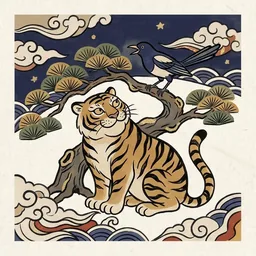
Tiger
Tigers tend to be bold, protective and quick to act when a thing is not fair. Best with the Horse, Dog and Pig; the Monkey and Rooster can test them a bit.
- Element
- Wood
- Birth Years
- 1938 · 1950 · 1962 · 1974 · 1986 · 1998 · 2010 · 2022
Character
If you were born in a Tiger year, you tend to be courageous, protective and principled, with a magnetic, independent streak and a habit of acting the moment something strikes you as unjust. Your best partners are traditionally the Horse, the Dog and the Pig. In Korea this sign is your ddi, the zodiac animal of your birth year, and it is usually called beom-tti: beom is the old native Korean word for tiger, used alongside the everyday horangi. People often notice you before you say a word. Picture a meeting where a junior colleague is being blamed for someone else's mistake: while others study the table, you are the one who says so out loud. The same instinct makes you the friend who drives across town at midnight when a car breaks down. You like to choose your own route, and being micromanaged can feel like a cage. Your moods tend to run hot and cool: enthusiasm arrives in a rush, and when a project stops feeling meaningful, the spark can take a while to return. Tradition reads this as wood energy at the start of spring, everything pushing upward at once.
The Earthly Branch
- Branch
- 寅
- Yin or yang
- Yang
- Element
- Wood
- Solar month
- around February
- Hours
- 03:00–05:00
- Direction
- Northeast
The earthly branch behind the Tiger is 寅 (Korean reading in, Japanese tora), the third of the twelve branches used to count years, months and hours. It is yang, and its fixed element is wood. As a month, 寅 begins at Ipchun, the 'start of spring' solar term in early February, which is where the year turns over in saju, the Korean art of reading the four pillars of birth year, month, day and hour. In other words, the Tiger opens the solar year. Its hours are 03:00 to 05:00, the dark stretch just before dawn when the earliest risers are already lacing their shoes, and its direction is the northeast. Put together, 寅 adds a taste for beginnings: sap rising in trees that still look bare, an urge to get moving before conditions are perfect, and a readiness to take the first step that others then follow.
The Five Element Types
Wood · 1974 (甲寅)
A wood stem sits on a wood branch, so the sign's own element is doubled. This is the most purely Tiger of the five, with tall ambitions, firm convictions and little taste for waiting. The growth edge is learning to bend, as a young tree does in wind, instead of standing rigid in every argument.
Fire · 1986 (丙寅)
Here the branch's wood feeds the stem's fire, like logs under a bright blaze. Fire Tigers tend to be warm, expressive and persuasive, at their best rallying a team or speaking in front of a crowd. Because that fuel burns fast, pacing yourself between big pushes matters more for you than for other Tigers.
Earth · 1938, 1998 (戊寅)
Wood controls earth, as roots pry their way into packed ground, so the Tiger's drive works on a steady, mountain-like earth stem. Earth Tigers often pair boldness with practical sense. They want to build something that lasts, whether a home, a team or a reputation, and they can be stubborn about how it gets done.
Metal · 1950, 2010 (庚寅)
Metal controls wood, an axe meeting a trunk, so the stem keeps pressure on the branch beneath it. Metal Tigers tend to be the most disciplined and outspoken of the five, with sharp standards and little patience for half-measures. That tension makes them formidable in a crisis; a softer delivery helps others hear the point.
Water · 1962, 2022 (壬寅)
Water feeds wood, like a river watering a forest, so this combination nourishes the Tiger rather than testing it. Water Tigers are often the most reflective of the sign: curious, adaptable and good at reading a room before charging in. Their courage tends to show as quiet persistence, and they may need a nudge to act on what they already know.
Strengths
Your courage is practical rather than showy. You will make the awkward phone call, speak up for the person who cannot, or take charge when a group trip goes wrong and nobody knows who should call the hotel. People trust that you mean what you say, and your energy is contagious: a team that was drifting tends to sharpen once you commit. You also bounce back from setbacks quickly, treating a rejection as information about where to push next rather than as a verdict on you.
What to Watch
The same speed that makes you useful can leave others feeling steamrolled. You may decide halfway through a discussion that a plan is wrong and say so before you have heard the reasons behind it. Pride can make it hard to ask for help or admit a mistake, and a perceived slight may stay with you longer than you let on. When interest fades, you sometimes drop things abruptly, which confuses people who were still invested. Waiting one beat before you react solves a surprising amount of this.
Love and Partnership
In love you tend to be direct and generous. When you like someone, they usually know, because you are the one who suggests the plan, books the table and shows up when it counts. You are loyal and protective of a partner, sometimes to the point of wanting to fight their battles for them. What you need in return is room: a partner with a world of their own, who does not take your solo weekend hike as a rejection. Constant check-ins or jealous questions can make you restless. The usual friction point is pace. You may be ready to move in together while your partner is still deciding about a holiday, and letting them catch up is a form of care, not a loss. Arguments with you flare fast and clear fast, and partners who understand that rarely hold the heat against you.
Compatibility
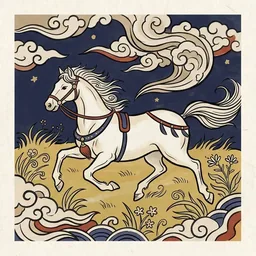
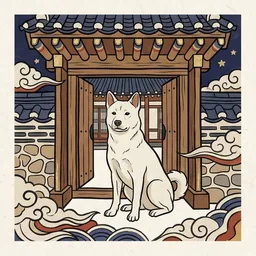
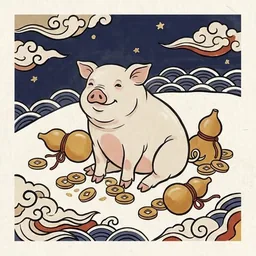
Korean and Chinese astrology pair the animals through fixed patterns between their earthly branches, and these describe tendencies, not destinies. The Tiger's triad (三合, samhap in Korean) is 寅午戌: Tiger, Horse and Dog, three signs that together form a fire frame. The Horse (午) matches your energy and love of freedom, while the Dog (戌) brings loyalty and the same sense of justice, so partnerships with either tend to feel like being on one team. Your six-harmony partner (六合, yukhap in Korean) is the Pig (亥). In this quieter bond, the Pig's depth of feeling and big-hearted tolerance settle your restlessness, and 寅 and 亥 combine into wood, so you feel supported rather than outshone. Your clash partner (冲, chung in Korean) is the Monkey (申), directly across the circle. The Monkey enjoys poking at ideas you hold sincerely, which can spark chemistry and arguments in equal measure. Finally, the Rooster (酉) is your wonjin (怨嗔), a Korean folk 'resentment' pairing in which small irritations build up if left unsaid. Your broad strokes meet the Rooster's precision; naming expectations early turns that rub into a useful second opinion. None of these pairings rules anyone in or out.
Work and Money
At work you tend to thrive where you can take ownership: launching something new, steering a team through a hard stretch, or fixing the process everyone complains about and nobody touches. Roles with visible stakes, such as advocacy, sales, coaching, emergency services, project management or running your own business, often suit you better than quiet upkeep. Rigid hierarchies and slow sign-offs can wear you down; a manager who sets the goal and leaves the route to you gets your best work. With money, you can be generous and impulsive in the same week, treating friends to dinner or buying good gear the moment a new interest takes hold. Since your spending follows your enthusiasm, you tend to feel freest when part of your money is already out of reach of the impulse of the moment.
In Korean Culture
Few animals are as close to the Korean heart as the tiger. The well-loved folk paintings called kkachi-horangi, 'magpie and tiger', show a striped tiger under a pine, often goggle-eyed and almost comical, while a magpie chatters on a branch above. The magpie is the bird said to bring good news, and tiger pictures were traditionally hung at the New Year to keep misfortune out, so the animal is guardian and lovable clown at once. In the Dangun founding myth, a tiger and a bear ask to become human; the bear endures the dark cave and its diet of mugwort and garlic, while the tiger gives up. Folktales often make the tiger fierce but gullible, as in the story of the tiger who flees from a dried persimmon after hearing that it silenced a crying child. Old stories still open with 'back when tigers smoked', meaning long, long ago. The affection carried into modern times: Hodori, mascot of the 1988 Seoul Olympics, and Soohorang, the white tiger of the 2018 PyeongChang Winter Olympics, were both tigers.
In Japanese Culture
In Japan the sign is 寅 (tora), and eto tradition (eto is the Japanese word for the zodiac signs) gives each animal a guardian Buddha, or mamori-honzon; for people born in Ox and Tiger years it is Kokuzo Bosatsu, the bodhisattva of boundless wisdom and memory. Chogosonshi-ji on Mount Shigi in Nara ties Bishamonten to the tiger: legend says the deity appeared to Prince Shotoku in the year, day and hour of the tiger, and the temple grounds are full of tiger figures, including a giant one. The proverb tora wa senri itte senri kaeru, 'the tiger goes a thousand ri and comes back a thousand', describes boundless vigour. Nodding papier-mâché tigers, hariko no tora, are familiar folk toys and a favourite New Year card motif in tiger years, when people born under the sign become toshi-otoko or toshi-onna, men and women whose own animal year has arrived. The northeast, written 丑寅 (ushitora), is also the direction named kimon in traditional direction lore.
Advice
Keep the courage and add a pause. Before you jump into a fight on someone's behalf, ask what help they actually want. Pick one or two causes a year that deserve your full force instead of spending it on every irritation. Build rest into busy seasons, the way a tiger lies in the shade between hunts. When your enthusiasm for a shared project fades, tell people plainly so they can plan, rather than going quiet. For how the coming Goat year treats your sign, see the separate 2027 Tiger forecast.
Frequently Asked Questions
Are beom-tti and horangi-tti the same sign?
Yes, they are the same sign. Both are Korean names for the Tiger year: beom is the older native word for the animal and horangi is the everyday one, so Koreans use either. The branch 寅, the five element versions and every compatibility pattern stay exactly the same; only the vocabulary changes, much as English speakers say 'Year of the Tiger' or simply 'Tiger year'.
Who is the best match for a Tiger?
Traditionally the Horse, the Dog and the Pig. The Horse and Dog share the Tiger's triad 寅午戌, a fire frame built on shared ideals and energy, and the Pig is the six-harmony partner whose depth of feeling and tolerance steady the Tiger. These are tendencies drawn from the branches, so a good match still depends on two real people, their habits and how they handle disagreement.
Is a Tiger and Monkey pairing a bad match?
No, not a bad match, just a lively one. 寅 and 申 sit opposite each other on the circle, which tradition calls a clash: the Tiger acts on conviction, while the Monkey likes to question and improvise. That can mean sharp debates, but also a pair that keeps each other from getting lazy. Couples who agree on how to argue fairly often find the contrast is the attraction.
I was born in January or early February. Am I a Tiger?
It depends on which boundary you use. The Tiger month, and with it the saju year, starts at Ipchun, around 4 February, so early-February birthdays sit right on the line and need the exact date and hour. Everyday Korean usage often switches animals at Seollal, the lunar New Year, between late January and mid-February, while in Japan many people simply go by 1 January, though Japanese tradition treats Setsubun, the day before the start of spring in early February, as the line between one eto year and the next. For a saju reading, Ipchun decides.