Horse
Born in a Horse year? You tend to be quick, warm, sociable and freedom-loving, happiest on the move. Your easiest matches are said to be the Tiger, the Dog and the Goat.
- Element
- Fire
- Birth Years
- 1942 · 1954 · 1966 · 1978 · 1990 · 2002 · 2014 · 2026
Character
If the Horse is your ddi (the zodiac animal of your birth year, as Koreans call it), you are traditionally described as energetic, freedom-loving and quick on your feet, a warm-hearted, sociable person who grows restless the moment life feels fenced in. Your most natural partners are said to be the Tiger, the Dog and the Goat.
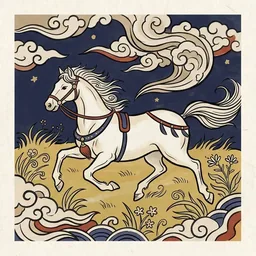
The picture on this page sums it up well: a white horse galloping across open grassland while the wind pushes the clouds along. Horse people often think best in motion. You may decide where to live after one weekend visit, pick up a new hobby on a Tuesday and be teaching friends by Friday, or solve a problem at work while pacing the corridor rather than sitting at your desk. Ideas arrive fast and you like to act on them while they are still fresh.
That speed comes with real warmth. Horses tend to be the friend who notices someone standing alone at a party and pulls them into the conversation, and who remembers the name of your sister's dog. You are usually honest to the point of bluntness, quick to laugh and quick to forgive, and you rarely hold a grudge long enough for it to harden.
The flip side is impatience with anything that feels like a stall door closing: long approval chains, rules nobody can explain, partners who want a schedule for every evening. You can lose interest once the exciting first stretch is over, and finishing can be harder for you than starting. None of this is fixed fate. It is a tendency the old calendar noticed, and plenty of Horses learn to pace themselves without losing their spark.
The Earthly Branch
- Branch
- 午
- Yin or yang
- Yang
- Element
- Fire
- Solar month
- around June
- Hours
- 11:00–13:00
- Direction
- South
Behind the Horse sits the earthly branch 午, one of the twelve signs the East Asian calendar uses to count years, months, hours and directions. 午 is yang and its fixed element is fire; it marks midsummer, when fire is at its peak, and it corresponds roughly to June in the solar-term calendar, to the south, and to the hours from 11:00 to 13:00.
That last link is still in daily use. Korean and Japanese both build the words for noon, morning and afternoon on this branch: 正午 is the exact middle of the 午 hour, 午前 is the time before it and 午後 the time after it. So every time someone in Seoul or Tokyo writes AM or PM in their own language, they are quietly naming the Horse.
What the branch adds to the character is high-noon energy: brightness, visibility and heat. Horse people tend to be seen, to say what they think in the open and to warm up a room. Midday sun also burns hot and fast, and that is the lesson inside the symbol. Fire at its peak needs pacing, shade and a cool evening, or it scorches what it meant to light up.
The Five Element Types
Wood · 1954, 2014 (甲午)
Wood feeds fire, so the 甲 stem adds fuel to the Horse's flame. Wood Horses are often idealistic and outgoing, full of plans that grow as they talk about them, and they do well when someone helps them pick which plan to grow first.
Fire · 1966, 2026 (丙午)
Fire doubles fire, giving the brightest and most famous of the five. Fire Horses tend to be bold, expressive and generous, natural leaders of the room. The Japanese folk belief about this year is a superstition, explained in the questions below.
Earth · 1978 (戊午)
Fire feeds earth, so the Horse's heat goes into something solid. Earth Horses are often the steadiest of the group, practical and dependable, able to stay with a project long enough to see it through while keeping the Horse's warmth.
Metal · 1990 (庚午)
Fire controls metal, and the friction shapes a sharp, determined character. Metal Horses tend to be independent, decisive and hard to talk out of a goal. In Korea this combination is the so-called white horse, the subject of an old saying about girls that has no basis.
Water · 1942, 2002 (壬午)
Water controls fire, cooling the Horse's heat. Water Horses are often more reflective and adaptable than other Horses, good at reading people and changing course gracefully, though they can hesitate between options longer than they would like.
Strengths
Your energy is contagious. Horses are often the ones who get a stalled group moving, whether that means booking the trip everyone kept talking about or making the first phone call on a project. You adapt fast to new places and people, speak plainly, and bring a generous, unguarded warmth that makes strangers feel welcome. When something goes wrong, you tend to bounce back quickly and look for the next road rather than dwelling on the closed one.
What to Watch
The same speed can leave a trail of half-finished things: a language course dropped at the halfway mark, a renovation with one wall still unpainted. You may say yes in the excitement of the moment and feel trapped later, or answer bluntly when a softer word would have done the same job. Routine can feel like a cage, so you might quit things that only needed a little patience. Noticing when you are bored rather than truly unhappy is a useful skill for a Horse.
Love and Partnership
In love, Horses tend to fall quickly and openly. You are usually easy to read: if you like someone, you show it with plans, jokes and a lot of messages, and that warmth is one of your most attractive qualities. Early dates often involve doing something rather than sitting still, such as a long walk, a concert, a spontaneous drive to the coast.
What you need from a partner is trust and room to breathe. Horses rarely do well with someone who wants to know where they are every hour; given space, you tend to come back on your own and stay loyal. The challenge is the second chapter, when the first rush fades and a relationship asks for routine, shared chores and slower conversations. Horses who learn that calm does not mean boredom often build very lasting partnerships. It helps to say plainly when you need time alone, so your partner does not read your restlessness as a loss of feeling.
Compatibility
Korean and Japanese zodiac matching uses a few classic patterns between the twelve branches. None of them decides a relationship, but they describe how two temperaments tend to meet.
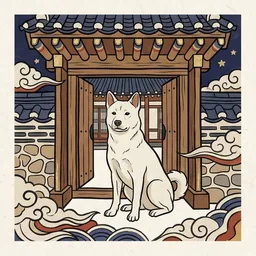
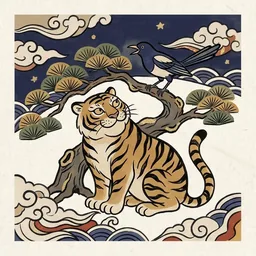
Triad (三合, samhap in Korean): the Horse forms the fire triad with the Tiger (寅) and the Dog (戌). The three branches are said to pull in the same direction. The Tiger matches your courage and appetite for adventure, while the Dog brings loyalty and a steady sense of right and wrong that anchors your speed. These are often the friends and partners who keep up with you without trying to rein you in.
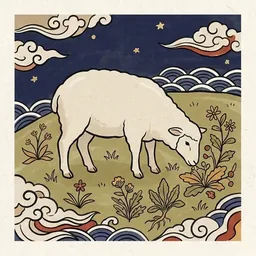
Six harmony (六合, yukhap in Korean): your one-to-one partner is the Goat (未). Where you are fast and outward, the Goat is gentle, artistic and attentive to small comforts, and the pair tends to complete each other like two halves of a whole. Because 2027 is a Goat year, the Horse's 2027 forecast page looks at this pairing in more detail.
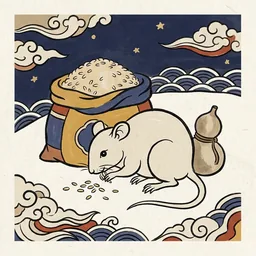
Clash (冲, chung in Korean): the Rat (子) sits directly opposite the Horse on the zodiac circle, midnight to your noon, water to your fire. Opposite energies can create sparks of both kinds; the Rat plans carefully and saves, you move quickly and spend, and each can learn a great deal from the other once that difference is named.
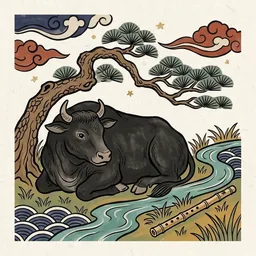
Wonjin (怨嗔, a folk 'resentment' pairing in Korean tradition): for the Horse this is the Ox (丑). The idea is not hatred but small irritations that build up, here between the Horse's spontaneity and the Ox's love of a fixed plan. Couples and coworkers in this pairing usually do well when they agree on rhythms early, for example who decides the weekend and how much notice a change of plan needs.
Work and Money
Horses usually work best where things move: front-line roles, people-facing jobs and work that involves travel or a change of scene. Sales, events, hospitality, journalism, sports, tour guiding, field research and launching new projects all suit the Horse's quick reactions and easy way with strangers. A desk job is not impossible, but you tend to thrive when the day has variety and you can see the results of your effort quickly. Long meetings and slow approval processes can drain you more than hard work does.
With money, Horses often earn readily and spend just as readily, on travel, gatherings, gifts and spur-of-the-moment plans. Money tends to come and go quickly. What tends to suit a Horse best is the view that a little steadiness with money is exactly what keeps the next adventure possible.
In Korean Culture
One of the most famous horse images in Korea comes from Cheonmachong, the 'Heavenly Horse Tomb' in Gyeongju, the old capital of the Silla kingdom. When the tomb was excavated in 1973, archaeologists found a birch-bark saddle flap painted with a white horse in full flight. The tomb was named after that painting, and the horse has become one of the best-known pieces of Silla art.
The horse also appears in a well-worn proverb: send horses to Jeju and send people to Seoul. Jeju Island has raised horses for centuries, and its small native breed is still part of the island's identity, while Seoul was where ambitious people went to study and find work. The saying is used to mean that everyone should go where they can grow best.
Koreans also give each year a colour drawn from its heavenly stem, so 2026, a 丙午 year, is popularly called the year of the red horse. It is a name for the calendar rather than a forecast. A related folk saying about 'white horse' girls (born in 庚午 years) being strong-willed still comes up in conversation, but it is a superstition with no basis.
In Japanese Culture
In Japan, the horse is closely tied to shrine life. Ema, the small wooden plaques people write wishes on at shrines, trace back to the custom of offering horses to the gods; over time, a real horse gave way to a model, and then to a painted picture of one on a board. On hatsuuma, the first 午 day of February, Inari shrines across the country hold festivals for good harvests and thriving business. When a Horse year comes round, New Year cards (nengajo) often play on the word for horse with the pun umaku iku, 'may things go well', and people born in Horse years become toshi-otoko or toshi-onna, men and women whose own animal year has come round. In the tradition of guardian Buddhas for each birth sign, the Horse is protected by Seishi Bosatsu (勢至菩薩), the bodhisattva of wisdom.
Advice
Keep your speed, but give it a finish line. Before you start something new, decide what 'done' looks like, even if it is small: three chapters, one painted wall, a single finished prototype. Build some open space into each week so freedom does not have to come from quitting things. When you feel the urge to bolt, wait a day and ask whether you are tired of the thing itself or only of its slow middle. And let the steadier people around you, often the Dog or the Goat, help you pace the run.
Frequently Asked Questions
Is the Fire Horse year unlucky, especially for women?
No. The idea that women born in a Fire Horse (丙午, hinoe-uma) year are headstrong and hard to marry is an old Japanese superstition with no basis. It was still strong enough in 1966 that births in Japan fell by roughly a quarter compared with 1965, according to national population statistics. Korea has a similar folk saying about 'white horse' girls born in 庚午 years. Both describe a fear of independent women more than anything about the people born then.
Who is the best match for a Horse?
Traditionally, the Tiger and the Dog, who share the Horse's fire triad, and the Goat, its six-harmony partner. The Tiger matches your love of adventure, the Dog adds loyalty and steadiness, and the Goat balances your speed with gentleness and care. These are tendencies, though; two people who communicate well matter more than any pairing on a chart.
Are the Horse and the Rat a bad match?
Not necessarily. The Rat sits directly opposite the Horse on the zodiac circle, which makes them a clash pair: opposite energies rather than enemies. The Rat tends to be careful and strategic, while the Horse acts fast and on feeling. That difference can cause friction, but it can also make a strong team when each respects what the other does well.
I was born in January or early February. Am I a Horse?
It depends on which calendar you use. Many charts change sign at Lunar New Year, which falls between late January and mid-February. Korean saju (the four-pillar birth chart) changes the year at Ipchun, the start of spring, around 4 February. In Japan, the eto year (eto is the Japanese word for the zodiac signs) is usually counted from 1 January. If your birthday falls in that window, check the exact date against the convention you follow.