Rooster
Hard workers with a sharp eye and a frank voice, Roosters like a job done right and can be a little fussy about it. Ox, Snake and Dragon suit them; the Rabbit is the clash.
- Element
- Metal
- Birth Years
- 1945 · 1957 · 1969 · 1981 · 1993 · 2005 · 2017 · 2029
Character
People born in a Rooster year are known in Korea as diligent, observant and exact: they keep their word, notice what others miss and say plainly what they think, often with a certain flair. The same high standards can tip into a critical or perfectionist streak, which is less a character flaw than a sharp tool that sometimes gets pointed at the wrong job.
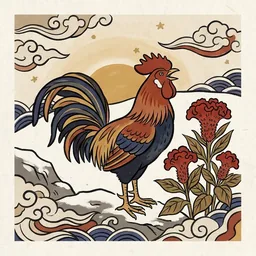
In Korean the sign is dak-tti. Ddi is the word for the zodiac animal of your birth year, and asking someone's ddi is still an everyday way to place them in a generation. The Rooster is the tenth of the twelve animals, and its picture on this page says a good deal about it: a red-combed cock crowing toward the sunrise, standing beside cockscomb flowers in the style of Korean folk painting. The flower's East Asian name, 鷄冠花, means 'rooster's comb flower', the same image English hides in 'cockscomb' and Japanese in keitō (鶏頭, 'rooster head'), so the plant echoes the bird's crest, while the rising sun stands for the steady habit of being up and working before anyone asks.
In daily life that habit looks like this. Roosters are often the ones who arrive with the agenda printed, who notice that the train timetable changed this week, or who quietly re-fold the map so it closes properly. They tend to like systems they can see, such as labelled shelves, colour-coded calendars or a wardrobe sorted by season, because order frees their minds for the work that matters. They also enjoy being seen doing things well. Roosters rarely hide a good result; they present it neatly, dress for the occasion and are happy to explain how it was done.
Your honesty is a large part of your charm. Friends ask your opinion because they know you will not flatter them, and you would rather point out the flaw in a plan now than watch it fail later. The cost is that a remark meant as help can land as criticism, especially when you are tired or when the other person did not ask. Many Roosters also hold themselves to a stricter standard than anyone else, and can redo a finished piece of work three times when once would have been fine.
None of this is a fixed fate. The old calendar describes tendencies, and Roosters who learn when to let 'good enough' stand often find that their precision becomes something people trust rather than something they brace for.
The Earthly Branch
- Branch
- 酉
- Yin or yang
- Yin
- Element
- Metal
- Solar month
- around September
- Hours
- 17:00–19:00
- Direction
- West
酉, read yu in Korean and tori in Japanese, is the earthly branch the Rooster stands for: the tenth of the twelve signs East Asian calendars use to count years, months, hours and directions. It is a yin branch with metal as its fixed element, and it sits in the middle of autumn: roughly September in the solar-term calendar, the hours from 17:00 to 19:00, and the west, where the sun goes down.
The hours are easy to picture. Early evening is when chickens head back to their roost and settle for the night, so the bird that opens the day with its crowing is also the one that closes it in good order. The character itself began as a drawing of a jar used for wine and fermented foods, which is why it appears inside 酒 (alcohol); the link is to harvest and ripening rather than to the bird.
酉 is one of the four 'peak' branches, together with 子 (midwinter), 午 (midsummer) and 卯 (midspring). Each marks the moment a season is at full strength, and for 酉 that season is the time of harvest, when grain is cut, sorted and stored. The metal here is yin metal, refined rather than raw: closer to a cut gem, a fine needle or a well-honed knife than to iron ore. That is what the branch adds to the character. Roosters tend to sort, trim and polish, and they value the finished edge on a thing as much as the effort that went into it.
The Five Element Types
Wood · 1945, 2005 (乙酉)
Here the stem 乙 is yin wood, a soft stalk of grass, and the branch's metal controls wood, like a blade resting against a tender stem. Wood Roosters are often the most sensitive of the five, gentle and perceptive, with an eye for beauty, though they can feel criticism, including their own, more sharply than they show.
Fire · 1957, 2017 (丁酉)
The stem 丁 is a candle or lamp flame, and fire controls metal, the way a small steady heat works and refines it. Fire Roosters tend to be warm, expressive and persuasive, happy to take the stage, and their exacting side is softened by a real wish to bring others along with them.
Earth · 1969 (己酉)
With 己, soft field soil, as the stem, earth feeds metal, so the ground below supports the Rooster's metal instead of fighting it. Earth Roosters are usually practical, patient and dependable, the members of a team who keep the records straight and still remember to thank everyone at the end.
Metal · 1981 (辛酉)
When 辛 sits on 酉, yin metal meets yin metal, and the result is the most concentrated, purest metal of the five. Metal Roosters tend to be the most precise and principled of all, clear-cut in their judgements and loyal to a standard; their task is to leave a little room for other people's ways of doing things.
Water · 1993 (癸酉)
The stem 癸 is rain or dew, and metal feeds water, much as cool metal gathers clear droplets overnight. Water Roosters are often calm, thoughtful and fair-minded, with a quiet clarity of judgement, and they tend to give advice that is honest without being sharp.
Strengths
Reliability is the Rooster's calling card. When you say you will send the file by Thursday, it arrives on Thursday, checked and properly named. You spot inconsistencies quickly, whether a number that does not match last month's or a step missing from a set of instructions, and you are willing to mention them while there is still time to fix them. You plan ahead, keep good records and take pride in presenting work cleanly. Your candour also makes you a trustworthy friend: people know your praise is meant.
What to Watch
Your eye for flaws does not switch off at five o'clock. Partners, flatmates and colleagues may feel inspected when you correct how they load the dishwasher or phrase an email, even when you are right. You can also be hardest on yourself, polishing a piece of work long past the point anyone else would notice, or replaying a small mistake for days. Pride in a good appearance can make it difficult to ask for help or admit you are unsure. Choosing which details truly matter is the Rooster's ongoing practice.
Love and Partnership
Roosters tend to be steady, committed partners. You show affection through reliability: turning up when you said you would, remembering the plan you made a month ago, fixing the loose hinge on the cupboard before anyone mentions it. You like a relationship with clear agreements and you keep your side of them, which makes partners feel safe. Many Roosters also enjoy the visible side of romance, a well-chosen outfit for a date or a carefully arranged anniversary, because doing something properly is itself a way of saying 'you matter'.
The friction point is the habit of pointing things out. What you mean as a helpful note, 'you left the lights on again', can sound like nagging once it has been said a few times, and a partner may start to feel that nothing is quite good enough. It helps to separate the few things you genuinely need from the many you merely prefer, and to say the appreciative things out loud as often as the corrections. A Rooster who lets a partner do things their own way, and praises them for it, usually finds the relationship grows warmer and more relaxed. In return, you need someone who takes promises seriously and who can tell you, kindly, when you are being too strict.
Compatibility
Matching by birth animal in Korea and Japan relies on a handful of fixed relationships between the twelve branches. They describe how two rhythms tend to meet, not whether a relationship will work.
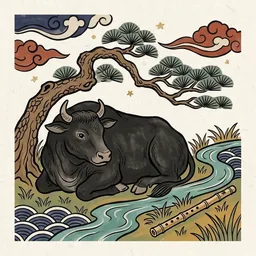
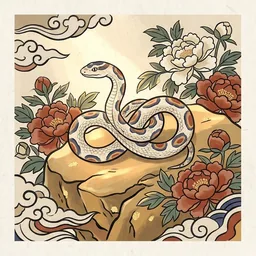
Triad (三合, samhap in Korean, a group of three branches that combine): the Rooster forms the metal triad with the Ox (丑) and the Snake (巳). The Snake brings quiet strategy and depth, and the Ox brings patience and endurance, so together with your precision the three cover planning, steady effort and a finished result. These pairings often feel easy because each partner values doing a job properly.
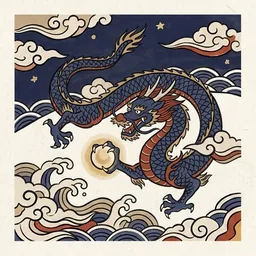
Six harmony (六合, yukhap in Korean, a one-to-one pairing): your partner is the Dragon (辰), and the pair 辰酉 combines into metal. The Dragon thinks big and loves a grand vision; you supply the structure and the detail that turn it into something real. Each tends to admire what the other cannot do alone.
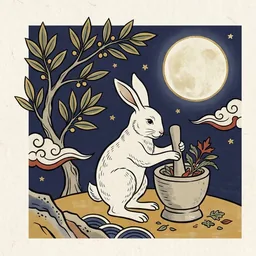
Clash (冲, chung in Korean, two branches directly opposite each other): for the Rooster this is the Rabbit (卯). The Rabbit is east, spring and wood, while you are west, autumn and metal, so the difference is between feeling and principle. The Rabbit reads the mood of a room and avoids hard words; you prefer to name a problem and settle it. That contrast can cause friction, but it also lets each cover the other's blind spot, and the pair does well once both agree that tact and honesty are allies.
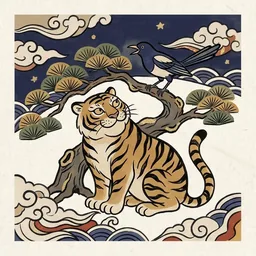
Wonjin (怨嗔, a Korean folk pairing for two signs that rub each other the wrong way): for the Rooster it is the Tiger (寅). The idea is not enmity but small irritations that pile up when nobody names them. The Tiger acts on bold instinct and paints in broad strokes, while you want the details right, so each can feel judged by the other. Agreeing early on who handles the big decisions and who handles the fine print usually turns the pair into a capable team.
Work and Money
At work, Roosters tend to flourish wherever order, accuracy and a high finish are part of the job. Quality control, project coordination, laboratory and technical work, cataloguing and archives, translation and subtitling, tailoring, pastry kitchens and stage management all reward the Rooster's habit of checking twice and keeping clear records. You usually enjoy a role where the standard is visible and your work can be shown, and you are often the person colleagues ask to review a document before it goes out. You may grow frustrated in places where plans change without explanation or where nobody seems to care how things are done; a short, honest conversation about expectations usually serves you better than silent resentment.
With money, Roosters tend to be organised and conscious of where it goes, and many find a clear picture of their spending reassuring in itself. The other side is a liking for quality and good presentation, from well-made clothes to tools that last, which can make you spend more on appearances than you planned. Most Roosters are at ease when their careful nature and their taste for fine things are both given room.
In Korean Culture
In Korean folk belief, the rooster's crow does more than wake the village. Because it announces the end of night, it was said to send away the restless spirits that roam in the dark, and in many old ghost tales the spirits must withdraw at the first cock-crow. The rooster is a bird of dawn, punctuality and a fresh start.
The rooster also appears at the origin of a royal family. According to the Samguk Sagi (History of the Three Kingdoms, compiled in 1145), King Talhae of Silla heard a rooster crowing in a wood west of the capital. When his envoy went to look, he found a golden chest hanging from a branch with a white rooster crying beneath it, and inside the chest was a baby boy, named Kim Alji and honoured as the ancestor of the Gyeongju Kim clan. The wood was renamed Gyerim, 'rooster forest' (鷄林), and for a time the name was used for Silla itself. The grove still stands in Gyeongju today.
Everyday speech keeps the bird close too. The proverb dak jjotdeon gae jibung chyeodabodeut, 'like a dog that chased a chicken staring up at the roof', describes someone whose target has flown out of reach and who is left looking on, empty-handed.
In Japanese Culture
In Japanese eto (the twelve zodiac signs, combined with the ten stems), the tenth sign is tori, which simply means bird, and the chicken is the bird in question. Each November, shrines such as the Ōtori shrines hold Tori no Ichi, fairs on the days of 酉, where shopkeepers buy decorated bamboo rakes called kumade to 'rake in' good business for the coming year. The sign is also used in wordplay with toru and torikomu, 'to take in', which makes it a welcome symbol for trade. The bird has a place in myth as well: when the sun goddess Amaterasu hid in the Ama-no-Iwato cave, the gods made the long-crowing birds of Tokoyo (常世の長鳴鳥) cry out to draw her back into the world. At Ise Jingū, sacred chickens still roam the shrine grounds. When a Rooster year comes round, people born under the sign become toshi-otoko or toshi-onna, men and women in their own animal year.
Advice
Keep your standards, and choose where to spend them. Before you correct something, ask yourself whether it will still matter in a week; if not, let it go and save your voice for the issues that count. When you do raise a point, open with what works before what does not, because people take in precise feedback more easily once they feel noticed. Allow yourself a set 'finished' point for your own work rather than polishing indefinitely. And lean on your natural allies: a Dragon's big picture or an Ox's patience can remind you that a good result is not always a flawless one.
Frequently Asked Questions
Is it the Year of the Rooster or the Year of the Chicken?
Both names refer to the same sign. Rooster is the usual English choice, but the original words are broader: in Korean the sign is dak-tti, and dak simply means chicken, with no hint of male or female. The Japanese reading tori means bird, and the bird meant is the chicken. Chinese texts likewise use the general word for chicken. Rooster stuck in English because the crowing cock is the most striking image of the sign.
Which signs are the best match for a Rooster?
Tradition points to the Ox and the Snake, which share the Rooster's metal triad, and the Dragon, its six-harmony partner. The Ox matches your work ethic, the Snake shares your eye for detail with a more strategic calm, and the Dragon's ambition pairs well with your practical precision. These are tendencies only; how two people talk and listen to each other matters far more than their birth years.
Are the Rooster and the Rabbit a bad match?
No, they are a clash pair, which is different from a bad match. The Rabbit and the Rooster sit directly opposite each other, spring facing autumn and wood facing metal, so they approach problems from opposite ends: the Rabbit protects the mood, the Rooster protects the standard. Once both see that difference as complementary rather than personal, the pair can balance kindness with clarity very well.
I was born in January or early February. Am I a Rooster?
Check the date against the convention you follow. Korean saju (the four-pillar birth chart) starts the new animal year at Ipchun (立春), the solar term that opens spring, around 4 February, while in everyday life many Koreans count the change from Seollal, the Lunar New Year, which moves between late January and mid-February. In Japan the eto year is usually counted from 1 January in daily life, while traditional almanacs change it at Risshun, the day after Setsubun in early February.